Gene loss worsened obesity in male mice fed a high-fat diet
After 16 weeks on a high-fat diet, male mice lacking the gene weighed 13.8% more than littermates with it intact.
Our read
Mechanisms- Studied:
- Experiments in male mice lacking Depp1, 16 weeks, against littermates with the gene intact
- What changed:
- Male mice lacking Depp1 weighed 13.8% more than littermates with the gene intact on a high-fat diet
- The catch:
- The experiments examined gene loss, not the benefits of increasing DEPP1 protein
- Stake:
- An author holds shares in Novo Nordisk. An author holds shares in Medtronic.
Editor of record: Boris Djordjevic · AgingResearch.News
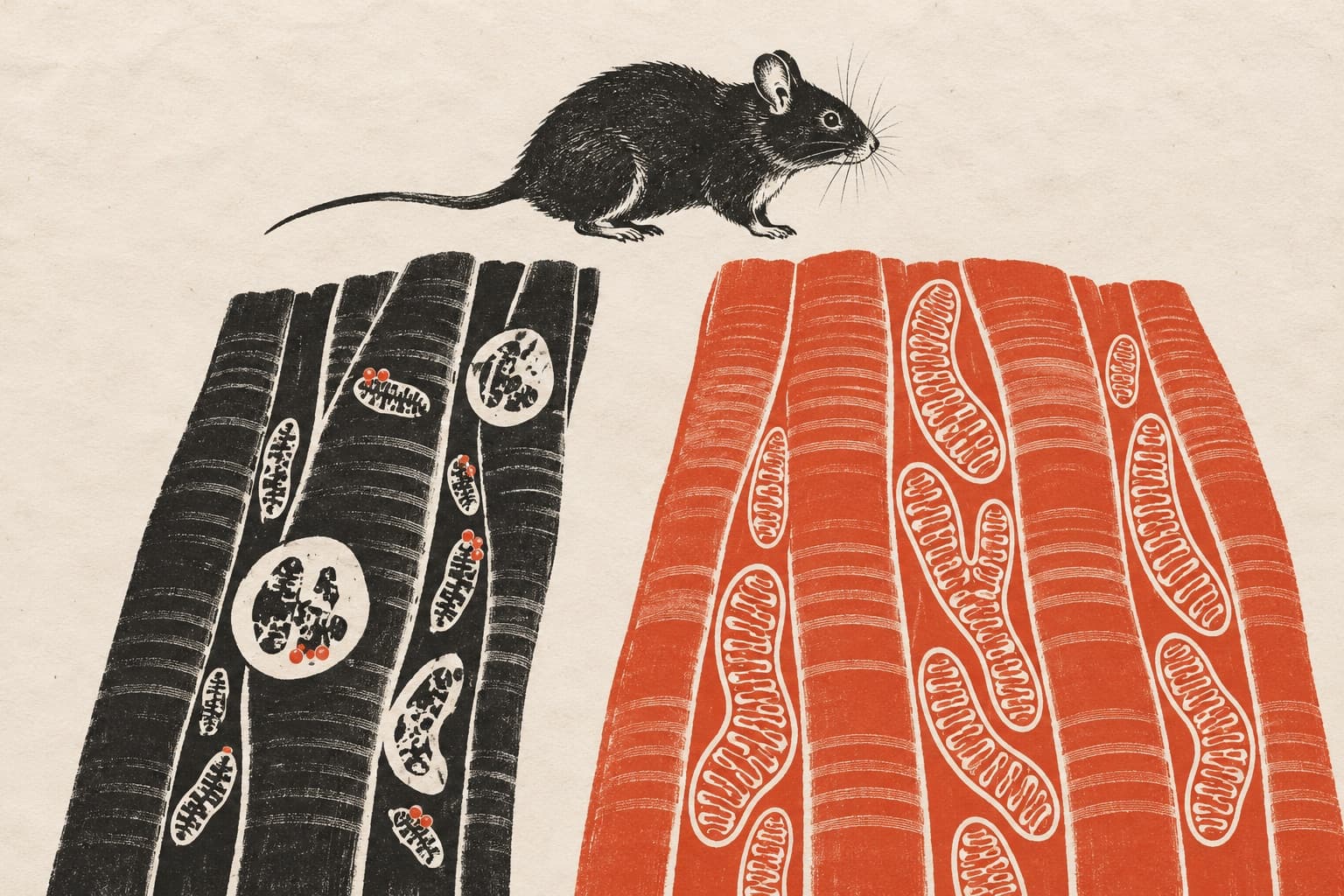
Researchers compared four-week-old male mice lacking Depp1, the gene for the DEPP1 protein, with littermates whose gene was intact. In this animal experiment, both groups could eat freely from a high-fat diet for 16 weeks. Mice lacking Depp1 ate more, gained more weight and had more fat and lean mass. They also handled a glucose dose less well, indicating poorer blood sugar regulation.
Calorie restriction increased Depp1 gene activity in several tissues. But in a separate nine-day calorie-restriction experiment, male mice lacking Depp1 showed changes in weight, body composition and blood sugar similar to those of littermates with the gene intact.
Why it matters
Calorie-restriction responses raise a question relevant to aging research: whether the genes involved also help maintain metabolic health under other nutritional conditions.
Caveats
Deleting a gene does not show whether increasing its protein would provide benefits, and these experiments did not assess aging or lifespan. Female mice did not show the worsened obesity or glucose intolerance seen in males.
Caloric restriction is part of Bryan Johnson's Blueprint
The paper
Loss of the calorie restriction response protein DEPP1 worsens diet-induced obesity
The University of Texas Southwestern Medical Center
Endocrinology, Jul 3, 2026, Open access

Comments
Be the first to comment.