Protein loss shortened lifespan and destabilized DNA in yeast
Experiments in budding yeast cells found that RNA–DNA structures accumulated in repeated ribosomal RNA genes when a protein involved in RNA production was lost.
Limit: The abstract omits the lifespan change's size and how lifespan was measured
Edited by Boris Djordjevic · AgingResearch.News
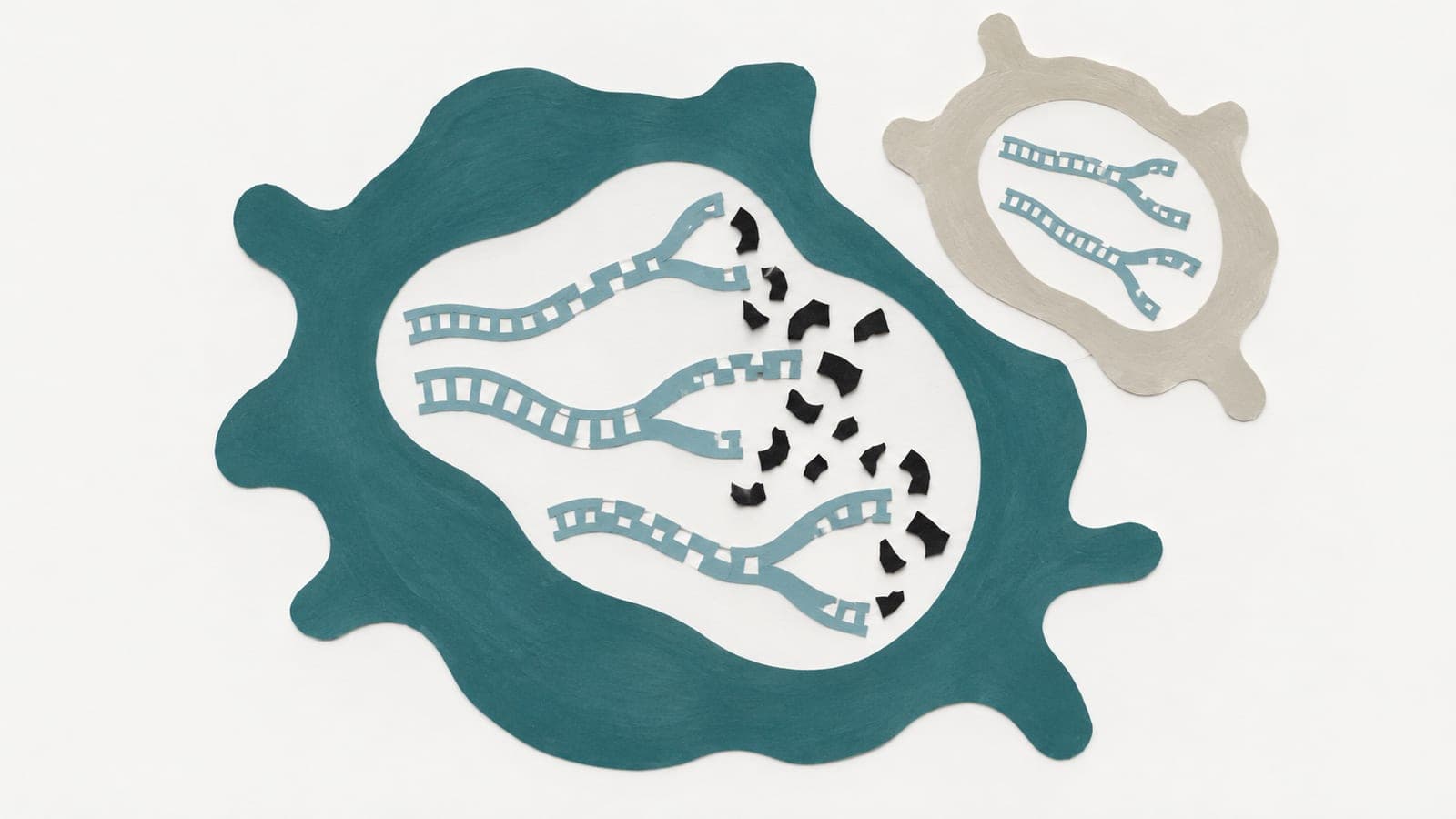
Experiments in budding yeast cells found that loss of Paf1, a protein that helps cells copy DNA into RNA, reduced lifespan and the stability of ribosomal DNA. These repeated genes provide instructions for making ribosomal RNA, part of the cell’s protein-making machinery. Loss of Paf1 also reduced RNA production from these genes.
In yeast lacking Paf1, RNA–DNA structures called R-loops accumulated within the ribosomal DNA. These generated single-stranded regions prone to breaking. Breaks in both DNA strands occurred where DNA was being copied. The number of ribosomal DNA copies varied, and DNA broke into fragments. These abnormalities depended partly on pathways involved in increasing ribosomal DNA copy number.
Why it matters
DNA instability contributes to senescence, a state in which cells stop dividing, and cancer. The work addresses how cells maintain highly repetitive genes while using them to make RNA.
Caveats
These were experiments in budding yeast cells, not people. The abstract does not report the size of the lifespan change or how lifespan was measured.
The paper
Paf1 Counteracts transcriptional arrest to maintain rDNA stability during pol I elongation
The University of Tokyo
Cell Reports, Jun 25, 2026, Open access
Comments
Be the first to comment.