Hormone loss alters metabolism in calorie-restricted mice
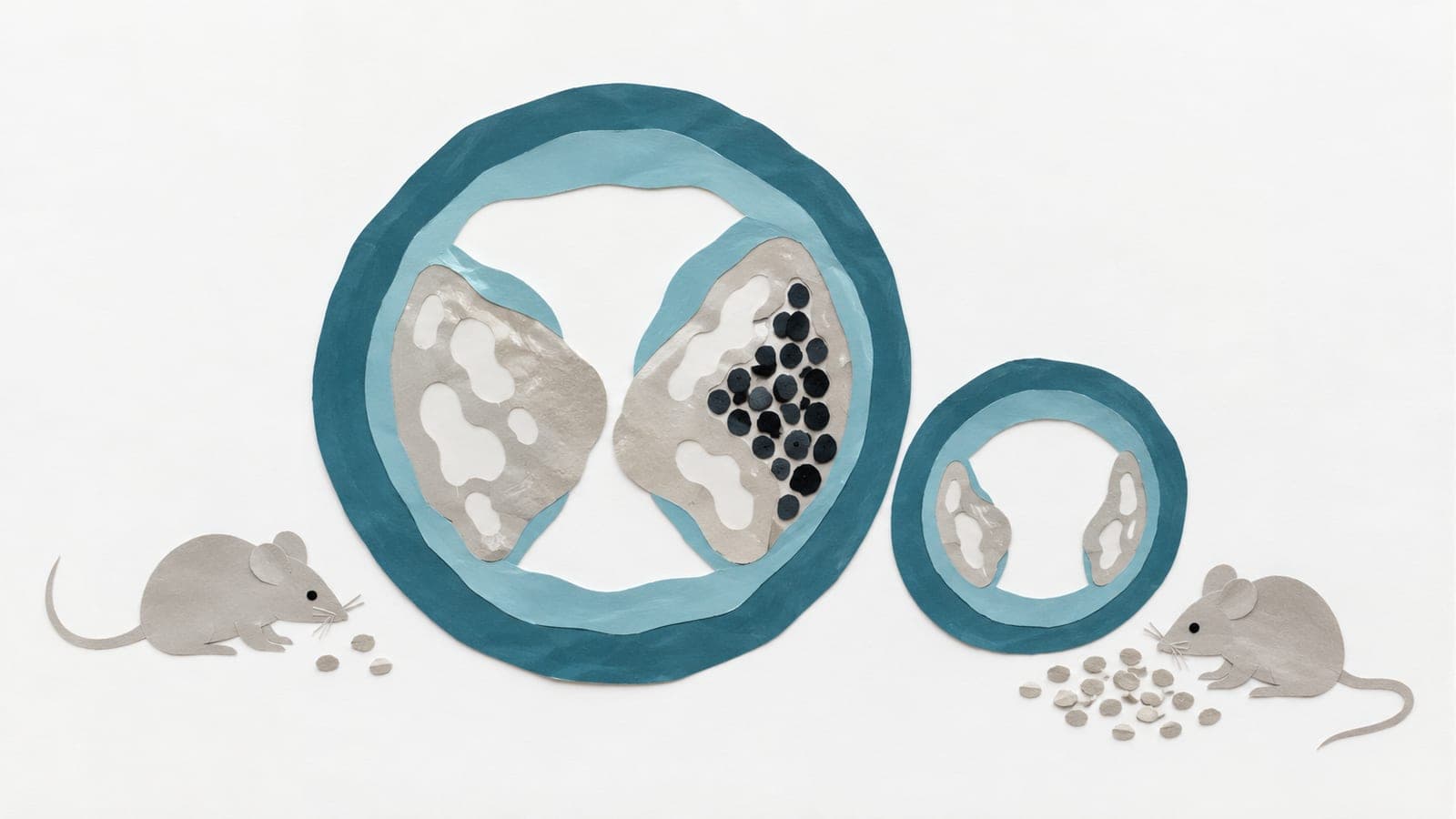
Male and female mice lacking adiponectin showed changes in blood sugar and fat metabolism during four weeks of 30% calorie restriction.
Our read
Mechanisms- Studied:
- Experiments in mice
- In the record:
- One of 243 papers on ADIPOQ on record: 17 with results in people, 19 in animals.
Editor of record: Boris Djordjevic · AgingResearch.News
Male and female mice aged 9–13 weeks underwent a four-week experiment comparing animals genetically engineered to lack adiponectin, a hormone, with controls. Each group either ate freely or received 30% calorie restriction.
During calorie restriction, mice lacking the hormone had lower blood sugar while fasting and after an oral glucose dose. Insulin levels and sensitivity to this blood-sugar-regulating hormone did not change. Blood fatty acids rose more in both sexes. Hormone loss slowed clearance of triglycerides, a type of fat, in males only, on both diets. It did not change calorie restriction’s effects on body weight, body composition or energy use. In both sexes, it increased liver gene activity linked to breaking down amino acids, the building blocks of proteins, during calorie restriction. Amino acid levels in blood and liver did not change.
Why it matters
Nutrient handling is one question in understanding how calorie restriction affects health with age. The authors suggest adiponectin’s roles during calorie restriction differ markedly from its functions in obesity.
Caveats
Removing adiponectin throughout the body did not isolate the liver’s contribution. The experiment involved young mice over four weeks and did not test aging or lifespan.
Caloric restriction is part of Bryan Johnson's Blueprint
The paper
The Queen's Medical Research Institute
PLOS Biology, Jun 18, 2026, Open access
Comments
Be the first to comment.