Amyloid clumps without fibers linked to altered signaling in mice
Experiments in genetically altered mice aged 2 to 24 months linked clumps that do not form fibers to abnormal signaling without detectable inflammation.
Limit: Symptom improvement from removing all forms of amyloid beta was not measured
Stake: An author founded Recuerdo Pharmaceuticals.
Edited by Boris Djordjevic · AgingResearch.News
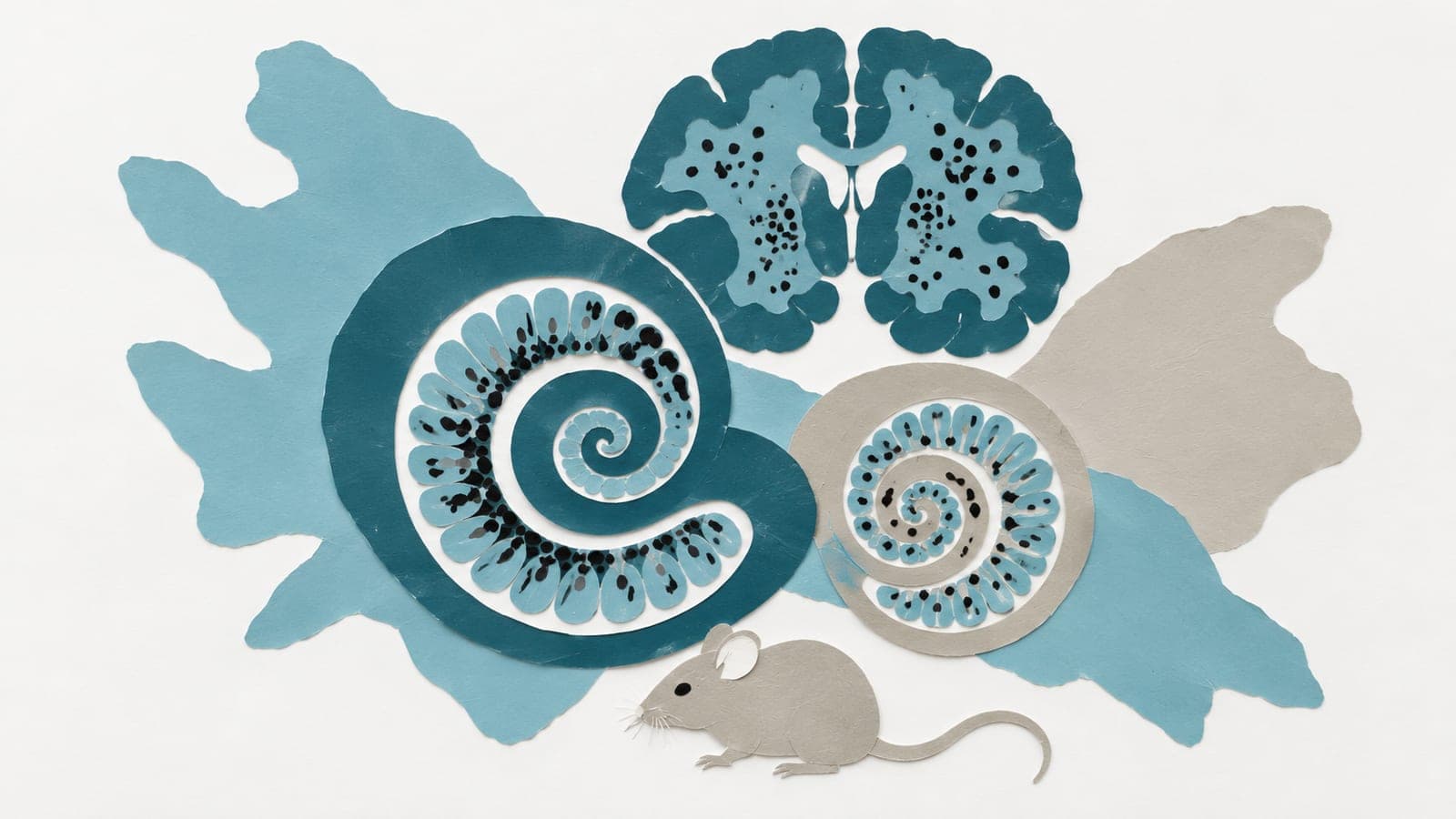
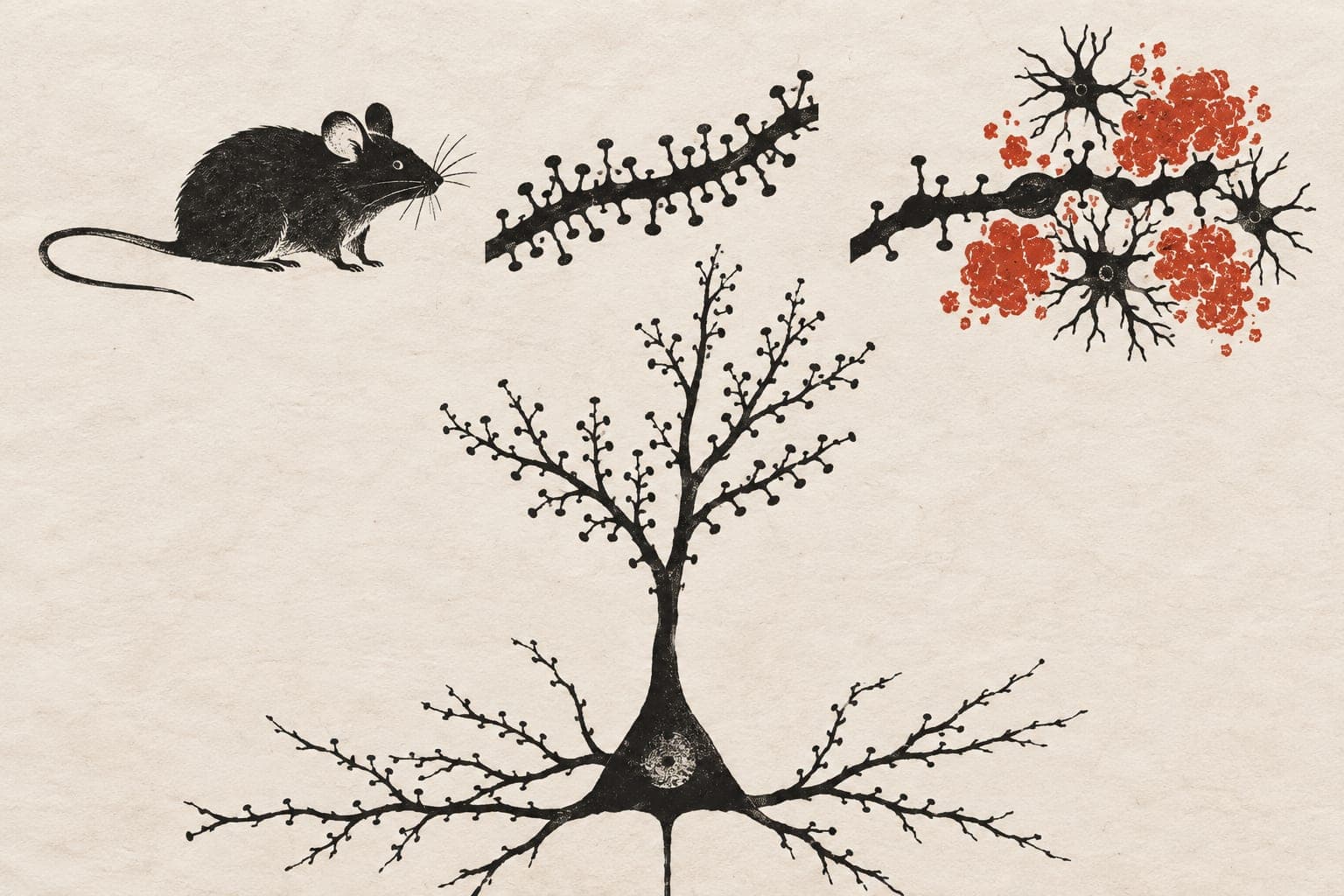
Researchers studied male and female “Dutch” mice aged 2 to 24 months in animal experiments, comparing them with mice without the genetic alteration. Dutch mice carry a mutated human gene and accumulate amyloid beta, a protein fragment, in clumps that do not form fibers as they age.
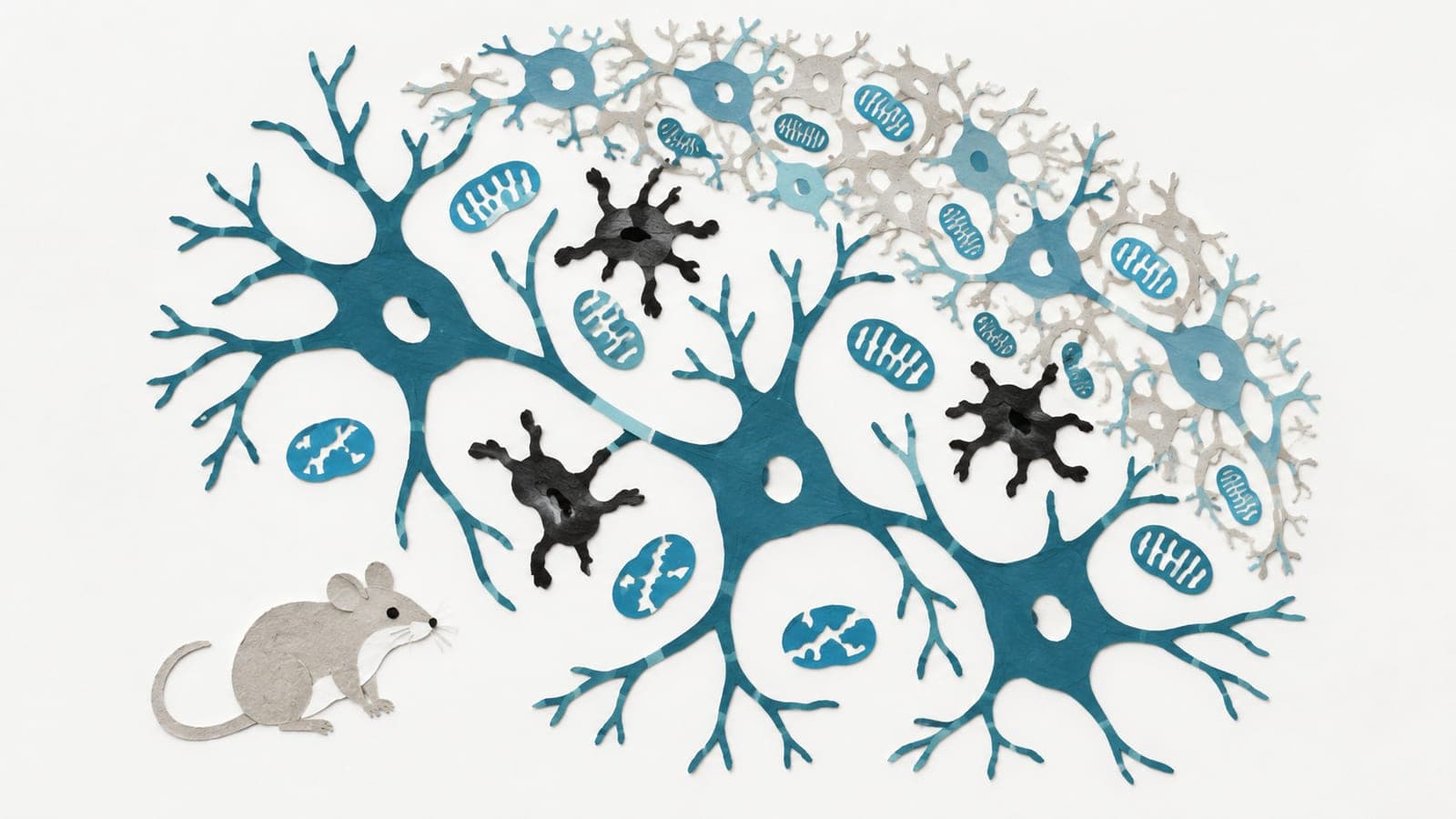
Brain-slice recordings showed abnormalities in short-term signaling and in replenishing the tiny sacs that hold chemical messengers at nerve endings. At 12 months, but not seven months, Dutch mice had lower activity of an enzyme involved in cellular energy production than comparison mice. Researchers also found changes in gene activity related to protein production and energy generation in nerve cells that stimulate other neurons. They detected no activation of inflammation.
Why it matters
Age-related learning deficits in these mice make them a model for investigating which forms of amyloid beta matter for brain function. The authors suggest that removing all forms may be required to eliminate amyloid beta toxicity with anti-amyloid antibodies.
Caveats
Experiments in genetically engineered mice cannot establish whether the same changes occur in people. The findings do not show that removing all forms of amyloid beta would improve symptoms.
The paper
Icahn School of Medicine at Mount Sinai
Alzheimer's & Dementia, Jun 2026, Open access
Comments
Be the first to comment.