Inhibiting cGAS-STING to Preserve Mitochondrial-Nuclear Communication and Stemness in Young Tendon Stem Cells: A Hydrogel Strategy against Age-Related Tendinopathy
Abstract
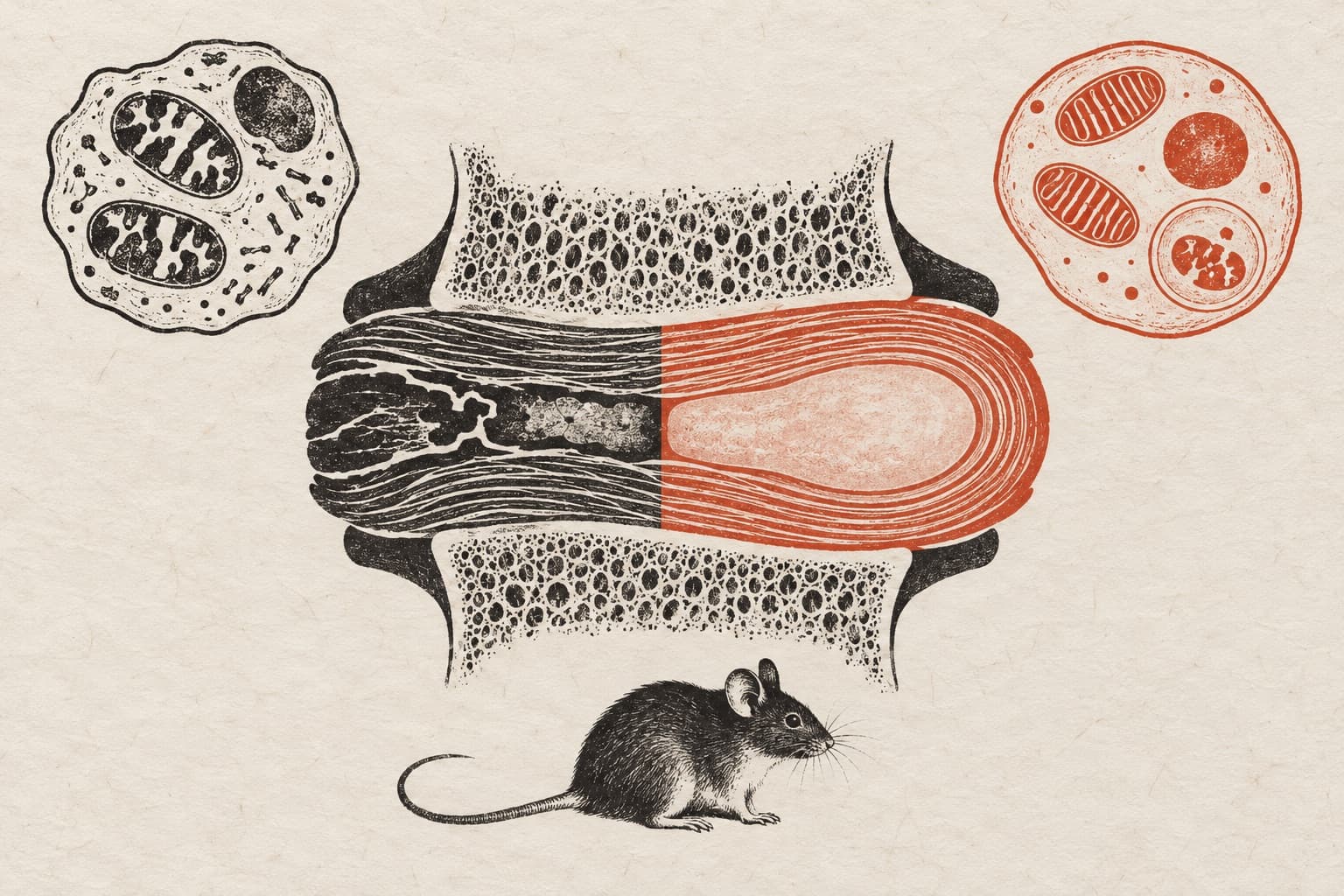
Age-related tendinopathy is common in the elderly. Their refractory nature is linked to low cellular density and poor blood supply of tendons. Key pathological features in aged tendons include the accumulation of senescent tendon-derived stem cells (TDSCs), a decrease in young TDSCs, and an imbalance in the inflammatory microenvironment caused by reactive oxygen species (ROS). Among these, impaired mitochondria-nucleus communication is a central mechanism in disease progression. This study develops a ROS-responsive dual-targeted hydrogel (P/H@Lipo) loaded with selenium nanocatalysts (HPSe) and the STING inhibitor H-151 in liposomes (L-Lipo@H-151). This system releases L-Lipo@H-151 in response to ROS within the inflammatory environment, targeting it to TDSCs to inhibit the cGAS-STING pathway. The simultaneously released HPSe effectively reduces mtDNA leakage and cGAMP production, thereby strengthening the blockade of the cGAS-STING pathway. This process maintains mitochondrial-nuclear communication, which in turn preserves the stemness of young TDSCs by preventing their senescence. Mechanistic studies indicate that HPSe boosts self-renewal and tendinogenic differentiation in young TDSCs by inhibiting the Hippo signaling pathway. In summary, this study develops a novel therapeutic paradigm that targets the mitochondrial-nuclear communication to combat age-related tendinopathy.
The paper
Affiliated Hospital of North Sichuan Medical College
Advanced Science, 2 Mar 2026