Blood cell mutations linked to inflammatory bowel disease in women
In the UK Biobank, women carrying these mutations had a 1.33-fold higher relative risk of inflammatory bowel disease than women without them.
Our read
Mechanisms- Studied:
- Cohort study of 426,609 UK Biobank participants initially without inflammatory bowel disease
- What changed:
- Women carrying blood cell mutations had a 1.33-fold higher risk of inflammatory bowel disease than women without them
- The catch:
- Bowel inflammation can promote mutated blood cell expansion, so the causal direction may run backward
- Why it’s aging research:
- It studies something that builds up in the body with age.
Editor of record: Boris Djordjevic · AgingResearch.News
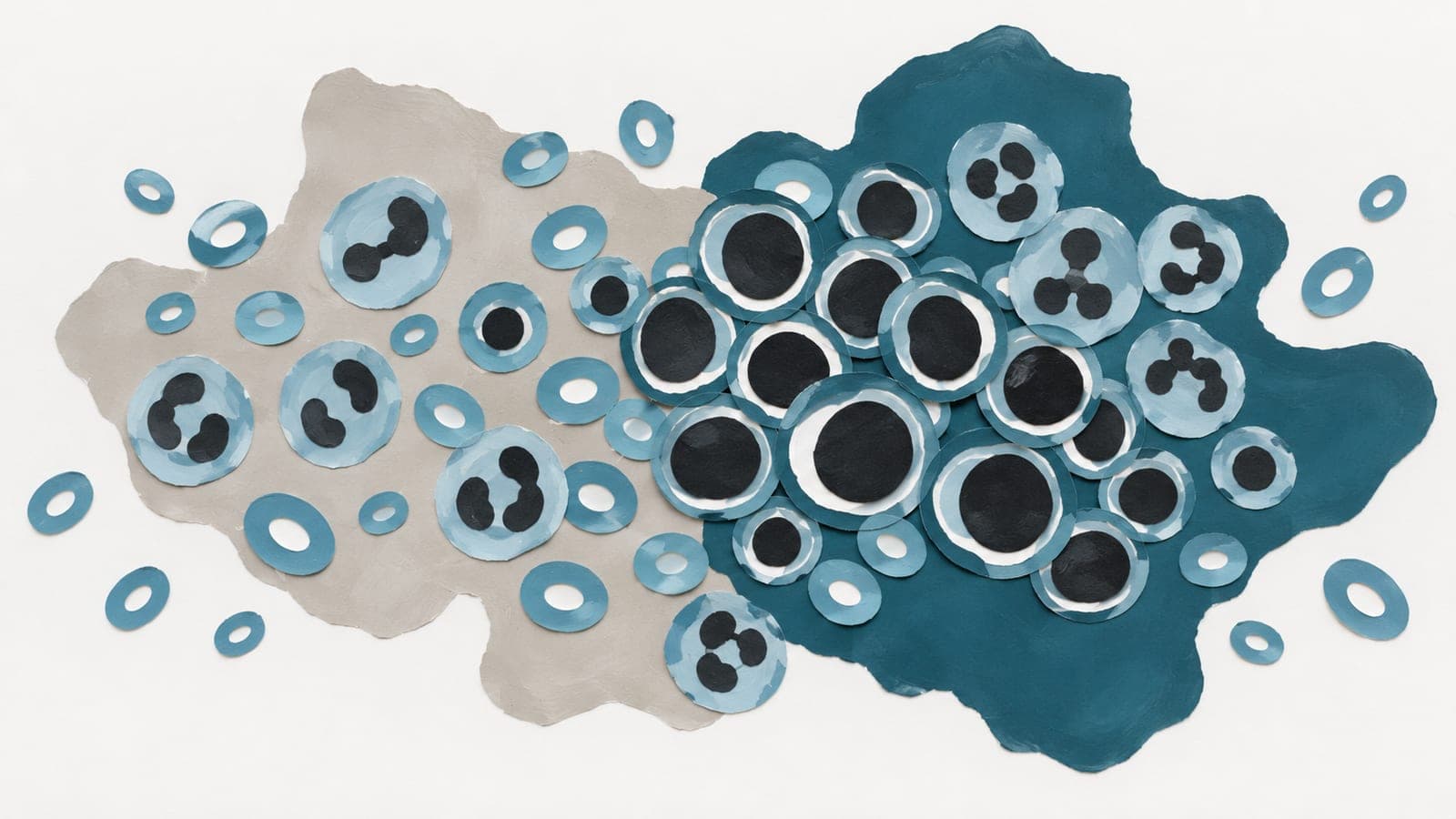
An observational study examined 431,279 UK Biobank participants without blood cancers at enrollment. Their average age was 57, and 54.2% were women. Researchers studied clonal hematopoiesis of indeterminate potential, the expansion of blood cells carrying age-related acquired mutations.
For inflammatory bowel disease, the analysis included 426,609 participants without the disease at enrollment. Across these participants, incidence rates over a median 13.6 years were 61.79 per 100,000 person-years among mutation carriers and 48.36 among noncarriers. The association appeared in women but not men. In separate mouse experiments, mutations in Dnmt3a, a gene that helps control gene activity, worsened experimentally induced bowel inflammation. The authors attributed this partly to higher levels of APE1, a protein involved in DNA repair and cell signaling. The experimental drug APX3330, which inhibits this protein’s signaling, reduced disease severity in these mice.
Why it matters
Age-related mutations in blood-forming cells are linked to some blood cancers and cardiovascular disease. The authors suggest that targeting APE1 signaling may offer a strategy for suppressing bowel disease associated with these mutations.
Caveats
The observational human findings cannot establish cause and effect and do not cover people with blood cancers at enrollment. The drug findings for bowel disease came from mice, not a human trial.
The paper
Indiana University Indianapolis
Blood, Feb 26, 2026, Open access

Comments
Be the first to comment.