Interpretable Prediction of Late-Stage CKM Syndrome Association From Dietary Nutrients in Accelerated Aging Using SHAP and LIME
Abstract
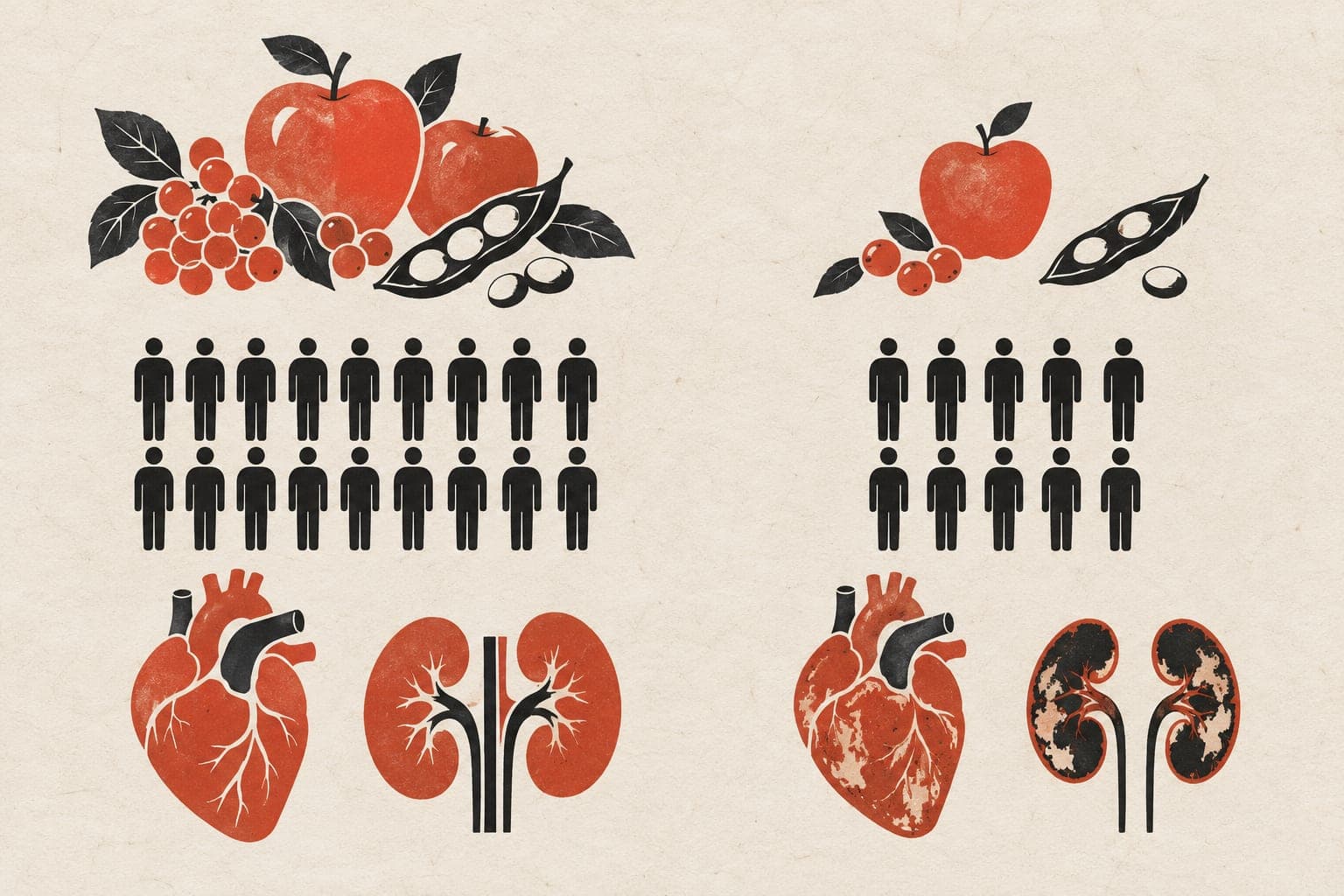
The association between habitual dietary nutrient intake and the risk of late-stage progression of cardiovascular-kidney-metabolic (CKM) syndrome among individuals with accelerated aging remains insufficiently understood. Data were obtained from seven cycles (2005-2018) of the U.S. National Health and Nutrition Examination Survey (NHANES). Six machine learning models were developed to predict late-stage CKM progression. SHapley Additive exPlanations (SHAP) and Local Interpretable Model-Agnostic Explanations (LIME) were applied to quantify the relative contributions of individual dietary nutrients to disease risk. Among the evaluated machine learning models, LightGBM and Random Forest demonstrated the highest predictive performance. Time-series validation further indicated stable model performance across survey cycles. SHAP analysis showed that, when demographic characteristics and dietary intake were jointly incorporated, the strongest negative contributors to late-stage CKM risk were vitamin B12 (0.011), selenium (0.009), sodium (0.008), moisture (0.008), vitamin B6 (0.008), and vitamin E (0.007). When analyses were restricted to dietary nutrients alone, the leading negative contributors were moisture (0.0597), sodium (0.0368), caffeine (0.0251), niacin (0.0192), vitamin D (0.0191), selenium (0.0188), vitamin B12 (0.0177), and lutein + zeaxanthin (0.0166). Dietary nutrient mixtures are inversely associated with the risk of late-stage CKM progression in individuals with accelerated aging. LightGBM and Random Forest models achieved superior predictive accuracy. Selenium, sodium, and moisture emerged as prominent protective contributors.
The paper
First Affiliated Hospital of Wenzhou Medical University
Food Science & Nutrition, 17 Feb 2026