Polyglucosan bodies as age-related intracytoplasmic inclusions in atrial cardiomyocytes of guinea pigs resembling basophilic degeneration
28 animals, case series
Abstract
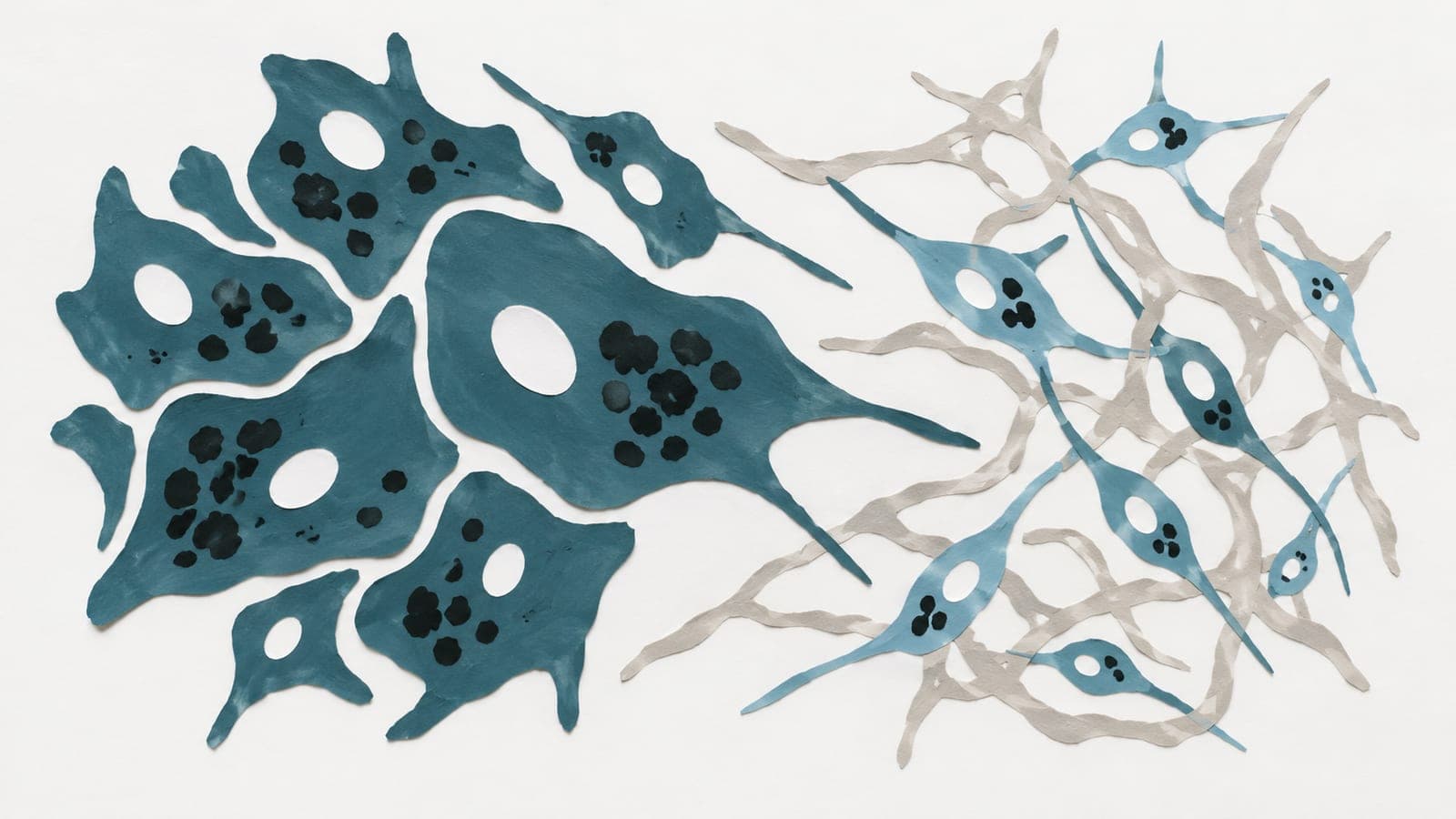
Intracytoplasmic inclusions in atrial cardiomyocytes of guinea pigs were incidentally identified on routine postmortem evaluation. This study was conducted to assess their location, incidence, morphology, staining properties, ultrastructural appearance, epidemiological characteristics, and pathologic significance. Retrospective cases from 2014 to 2022 with right and/or left atria sampled for histologic examination were selected, and hearts of guinea pigs necropsied in 2023 were systematically formalin-fixed and included. Inclusions were identified in 27 of 28 animals (96%). They were significantly more numerous in the right atrium compared with the left atrium (P < .001, Wilcoxon signed-rank test) and preferentially located as clusters in the subendocardial region. None of these inclusions were detected in the ventricular myocardium. These inclusions were intracytoplasmic, ovoid to linear, frequently fragmented, slightly basophilic to amphophilic in hemalum, eosin, and saffron-stained sections and measured from 1 to 130 µm in length. They stained positively with periodic acid-Schiff, Gomori-Grocott's methenamine silver, and Alcian blue pH 2.5; negatively or unstained with Alcian blue pH 1, toluidine blue, von Kossa, Congo red, and Masson's trichrome; and were amylase resistant. Transmission electronic microscopy revealed slightly electron-dense, non-membrane-bound aggregates of filaments interspersed with granular material compatible with polyglucosan bodies. Animals under 1-year-old had significantly fewer inclusions than older animals (P = .002, Mann-Whitney U test). Inclusion density in the right atrium was not associated with sex, body weight, local heart lesions, or cardiac or systemic disease. Those features are similar to a human condition named basophilic degeneration, reported here for the first time in guinea pigs.
The paper
École Nationale Vétérinaire d'Alfort
Veterinary Pathology, 6 Nov 2025