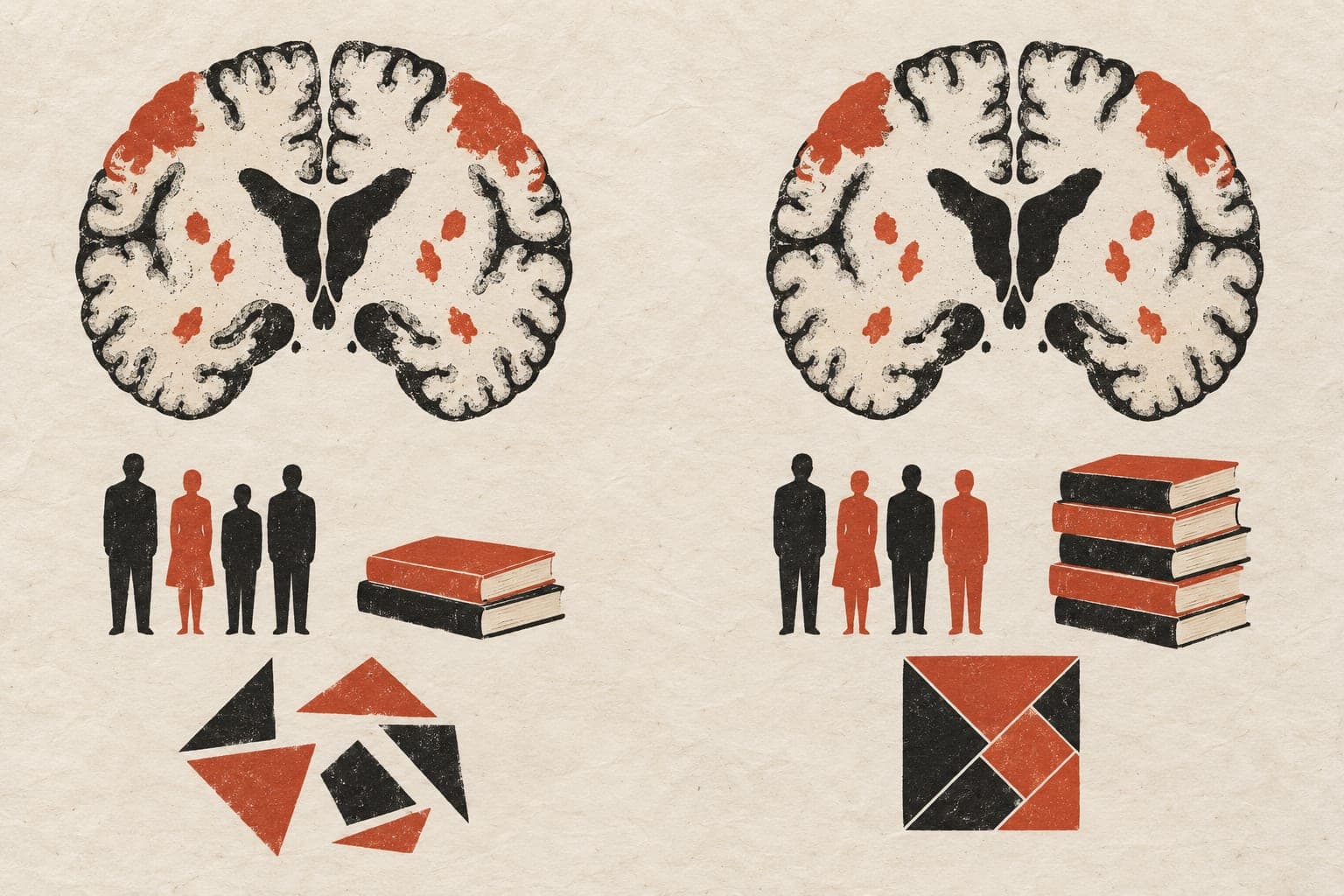
The role of cognitive reserve in white matter hyperintensities: from cognitive aging to Alzheimer's spectrum
Abstract
INTRODUCTION: White matter hyperintensities (WMHs) are characteristic of Alzheimer's disease (AD), and cognitive reserve (CR) protects cognitive function. However, whether WMHs mediate the CR-cognition relationship remains unclear. METHODS: Brain imaging, clinical features, and neuropsychological assessments were performed, and CR was measured using the Cognitive Reserve Index questionnaire. Bootstrap mediation analysis examined CR's role in specific cognitive functions, controlling for covariates. RESULTS: Participants who were cognitively unimpaired (CU; n = 85, mean age = 68.6 ± 5.7) and who had mild cognitive impairment (MCI; n = 43, mean age = 71.8 ± 6.5) or AD (n = 61, mean age = 72.8 ± 6.2) were included. CR was positively associated with global and non-memory cognitive functions in the CU and MCI groups. In the CU group, WMHs served as a mediator between CR and global cognitive ability. DISCUSSION: CR may maintain the optimal cognitive function by mitigating the WMH burden independently of AD-related brain changes. HIGHLIGHTS: Cognitive reserve (CR) positively links to non-memory cognition.Cognitive reserve mitigates white matter hyperintensities to preserve cognition.Cognitive reserve primarily protects cognition in pre-Alzheimer's stages.
The paper
Taipei Veterans General Hospital; National Yang Ming Chiao Tung University
Alzheimer's & Dementia, 22 Aug 2025