ADM ameliorates disc degeneration by inhibiting the MAPK signaling pathway and nucleus pulposus cell senescence
Abstract
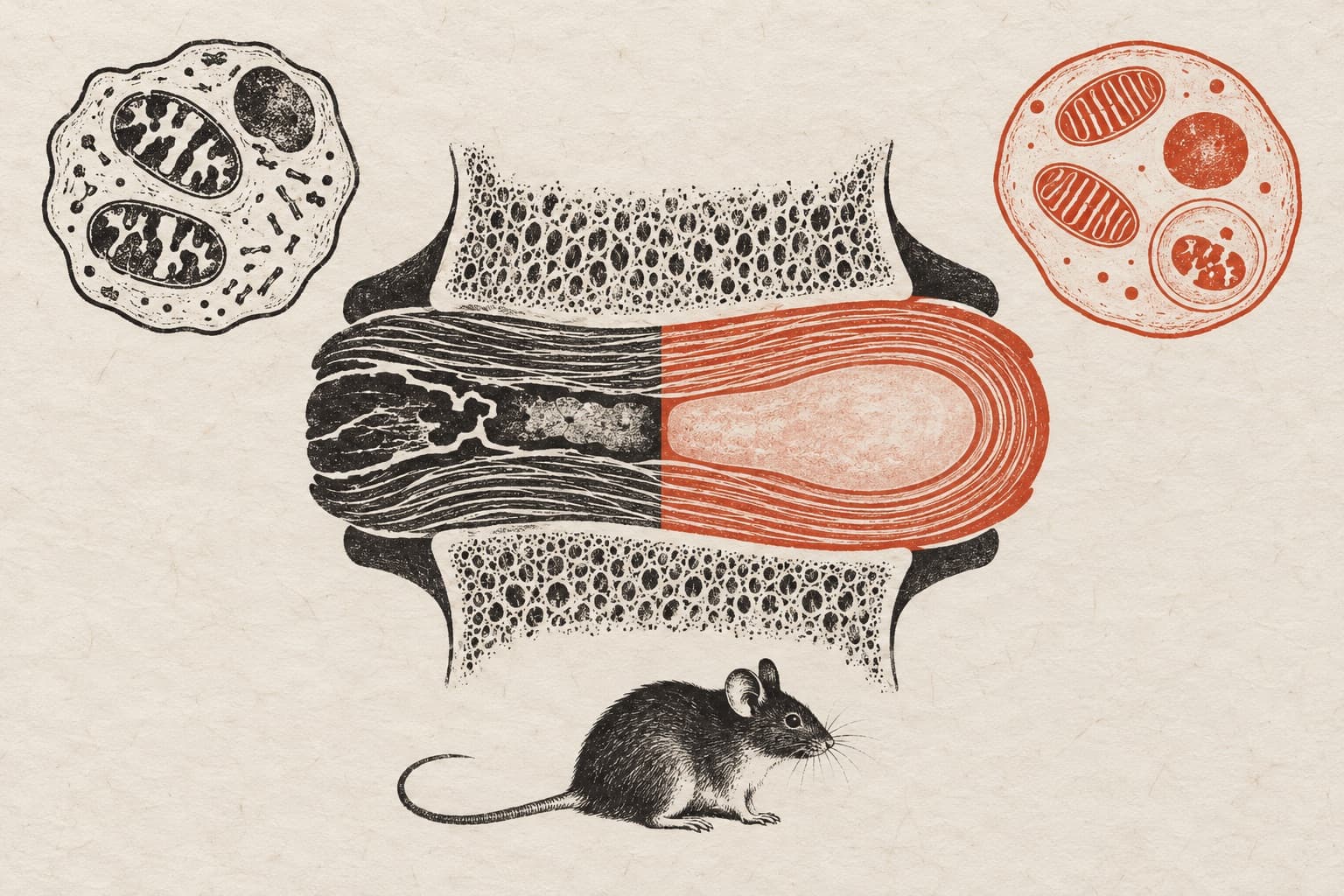
BACKGROUND: Intervertebral disc degeneration (IVDD) is a leading cause of chronic low back pain. Current therapies fail to address the underlying molecular mechanisms of IVDD, necessitating novel targets. METHODS: Bioinformatics analysis identified differentially expressed genes (DEGs) from GSE186542 and GSE167199 datasets. A protein-protein interaction network was performed to find hub genes. Hub genes were validated in vitro using interleukin (IL)-1β-treated nucleus pulposus cells (NPCs). EdU, SA-β-Gal staining, and flow cytometry were applied to assess cell proliferation, senescence and apoptosis, respectively. Moreover, IVDD model rats were established. Hematoxylin-eosin and Masson's trichrome staining were performed to observe intervertebral disc tissues. Protein expressions were evaluated by western blotting. Anisomycin, a p38 MAPK agonist, was applied for feedback experiments. RESULTS: Bioinformatics analysis revealed 43 common DEGs, with adrenomedullin (ADM) as a hub gene. In vitro, ADM overexpression rescued proliferation suppression, reduced apoptosis in IL-1β-induced NPCs, and attenuated senescence. In vivo, ADM restored disc structure and collagen deposition. Furthermore, the MAPK pathway was identified as downstream pathway of ADM in IVDD. Mechanistically, ADM inhibited MAPK pathway activation, and the mitigating effect of ADM on IVDD was reversed by p38 MAPK agonist anisomycin. CONCLUSION: ADM mitigates IVDD progression by suppressing MAPK signaling and nucleus pulposus cell senescence. These findings highlight ADM as a therapeutic candidate for IVDD, offering a pathway-specific strategy to counteract degeneration.
The paper
Qinghai University; Qinghai University Affiliated Hospital
Biochemical and Biophysical Research Communications, 18 Aug 2025