DRP1 downregulation impairs mitophagy, driving mitochondrial ROS and SASP production in rheumatoid arthritis CD4⁺PD-1⁺T cells
Abstract
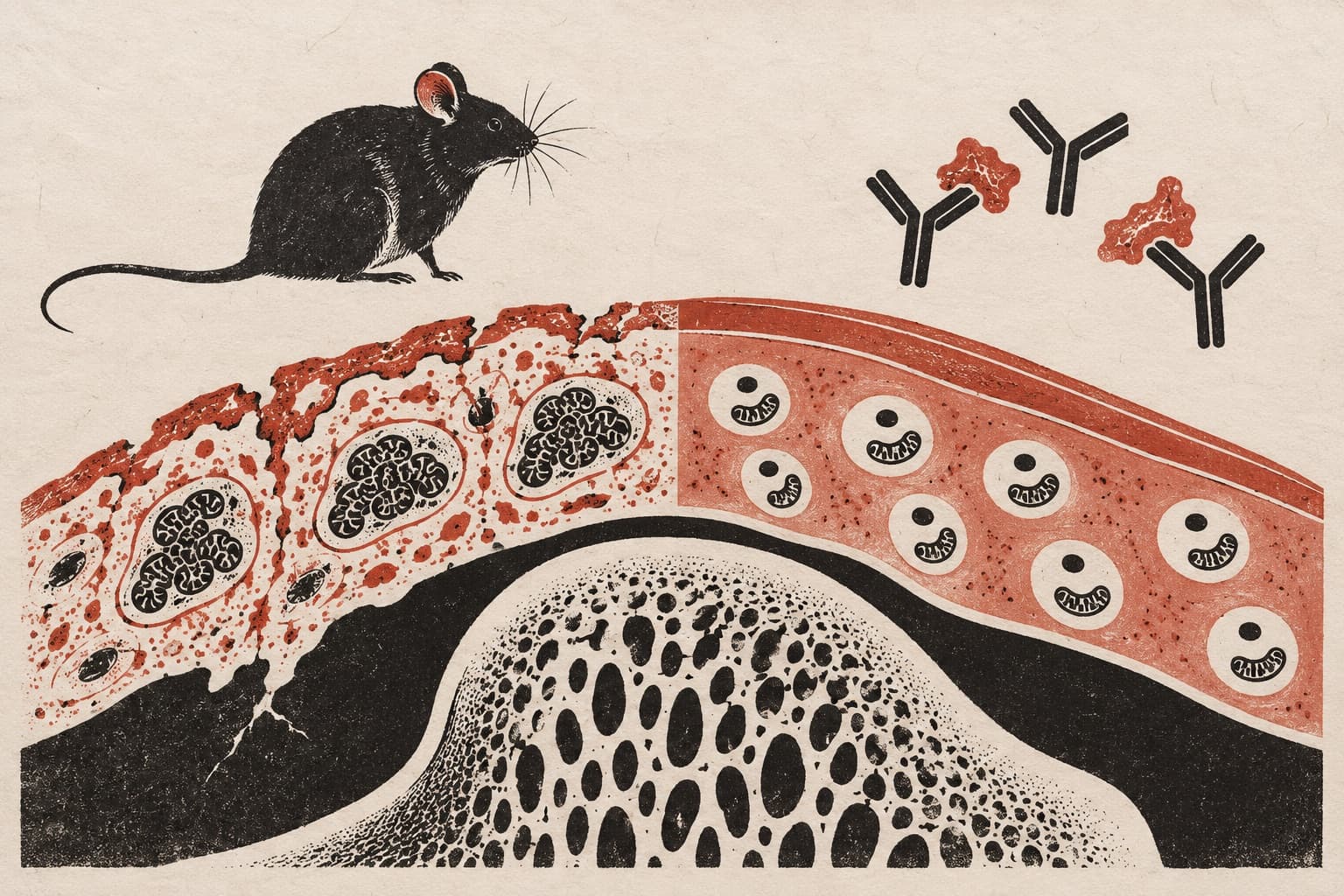
T cell senescence occurs in patients with rheumatoid arthritis (RA), but the specific phenotype and its contribution to tissue-destructive inflammation remain unclear. Here, we aim to investigate whether PD-1 marks pathogenic senescent CD4⁺T cells and to explore the role and mechanism of senescent CD4⁺PD-1⁺T cells in RA pathogenesis. Here, we identified an expanded population of CD4⁺PD-1⁺T cells in RA patients that exhibited hallmark senescence features, including elevated senescence-associated secretory phenotype (SASP) production. Adoptive transfer experiments demonstrated that CD4⁺PD-1⁺T cells significantly accelerated disease progression in collagen-induced arthritis (CIA) models. Mechanistically, we demonstrated that RA CD4⁺PD-1⁺T cells showed decreased expression of dynamin-related protein 1 (DRP1) and impaired mitophagy, leading to mitochondrial reactive oxygen species (MtROS) accumulation and subsequent SASP production. Importantly, PD-1 signaling transcriptionally suppressed DRP1 expression through hypoxia inducible factor 1 alpha subunit (HIF-1α) inhibition. Our findings establish CD4⁺PD-1⁺T cells as a pathogenic senescent subset that drives RA progression through a PD-1-DRP1-mitophagy-SASP axis.
The paper
Dalian Medical University
Redox Biology, 9 Aug 2025