Silicon-Based Agent Attenuates Age-Related Spermatogenesis Disorder
Abstract
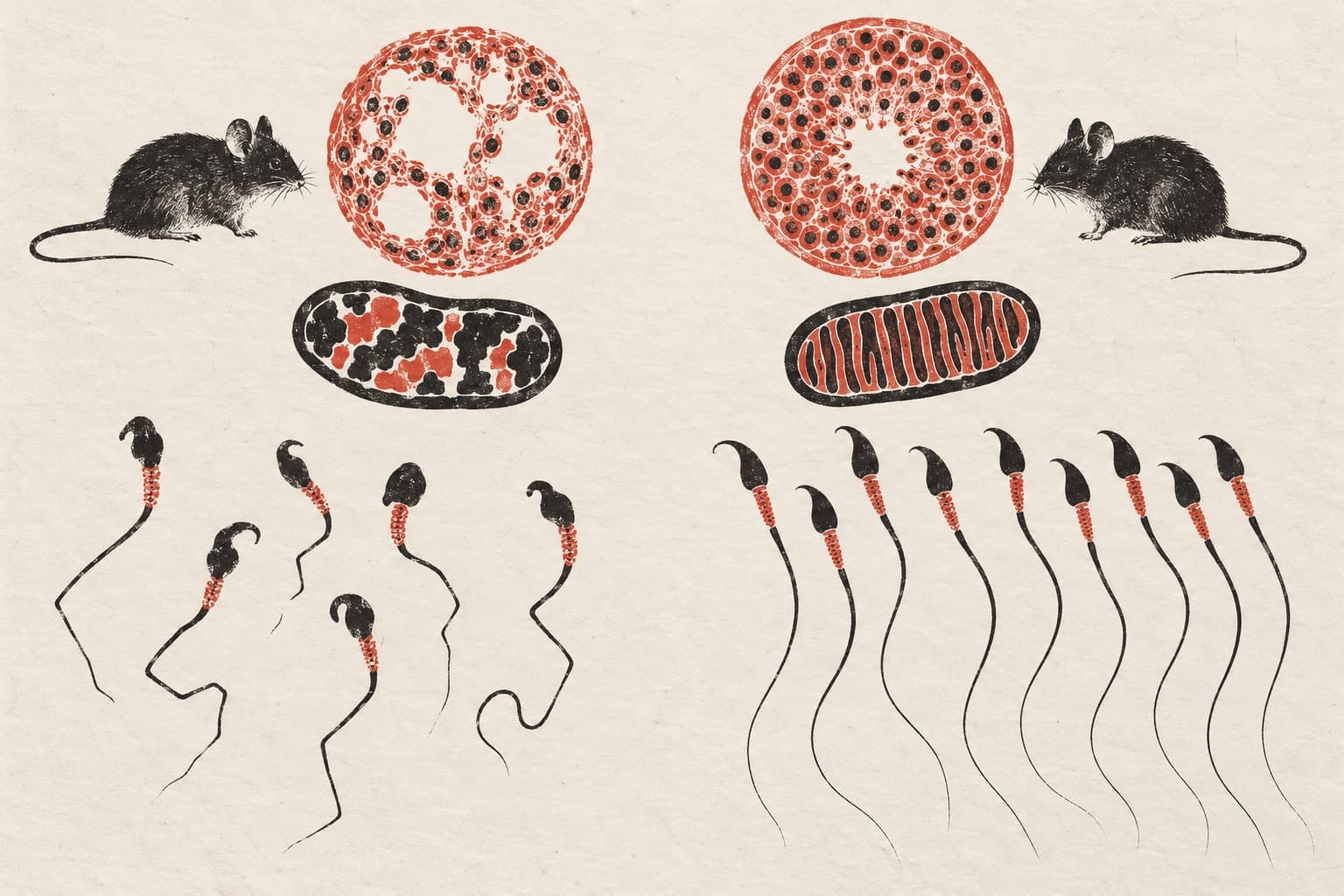
OBJECTIVES: The progressive decline in birth rates due to delayed marriage has become a significant issue in developed countries, with male spermatogenetic capabilities gradually declining with age. This study evaluated the effectiveness of a silicon-based agent (Si-based) that efficiently generates hydrogen in the body to improve spermatogenic function in aged mice. METHODS: Eighty-five-week-old (aged) C57BL/6J mice were administered either a normal diet or a diet supplemented with a Si-based agent. Sperm analysis, histopathology, immunohistochemistry, immunofluorescence, and immunoblotting were performed to assess spermatogenic function, markers of oxidative stress, and activation of the Kelch-like ECH-associated protein 1 (KEAP1)/nuclear factor erythroid 2-related factor 2 (NRF2) pathway. RESULTS: The Si-based agent significantly increased sperm count and velocity (curvilinear and straight-line velocity), reduced the proportion of abnormal seminiferous tubules, and improved testicular histology in aged mice (p < 0.05). Furthermore, the Si-based agent decreased the expression of oxidative stress markers and modulated the KEAP1/NRF2 pathway by reducing the expression of KEAP1 and increasing NRF2 nuclear translocation, leading to the upregulation of the antioxidant genes-heme oxygenase (HMOX)-1 and NAD(P)H quinone oxidoreductase (NQO-1). CONCLUSION: These findings suggest that hydrogen delivered through a Si-based agent could be a promising therapeutic approach for age-related male infertility. This warrants further studies to explore its potential in clinical settings.
The paper
Cleveland Clinic; Osaka University Hospital
International Journal of Urology, 29 Jul 2025