Oncogenic and tumor-suppressive forces converge on a progenitor-orchestrated niche to shape early tumorigenesis
Abstract
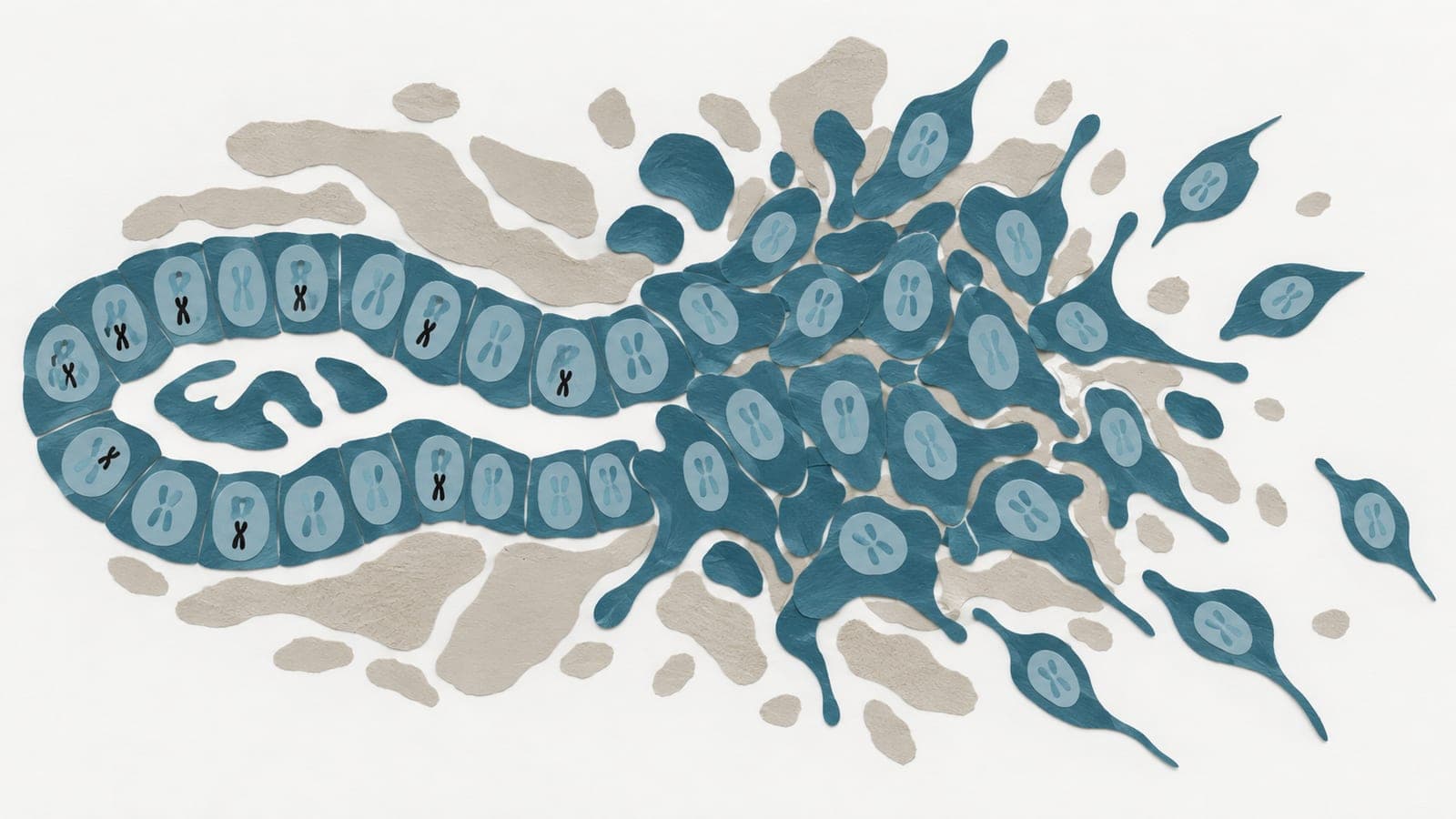
The transition from benign to malignant growth is a pivotal yet poorly understood step in cancer progression that marks the shift from a pathologically inert condition to a clinically lethal disease. Here, we integrate lineage tracing, single-cell and spatial transcriptomics to visualize the molecular, cellular and tissue-level events that promote or restrain malignancy during the tumor initiation in mouse models of pancreatic ductal adenocarcinoma (PDAC). We identify a discrete progenitor-like population of KRAS-mutant cells that co-activates oncogenic and tumor-suppressive programs-including p53, CDKN2A, and SMAD4-engaging senescence-like responses and remodeling their microenvironment, ultimately assembling a niche that mirrors invasive PDAC. KRAS inhibition depletes progenitor-like cells and dismantles their niche. Conversely, p53 suppression enables progenitor cell expansion, epithelial-mesenchymal reprogramming, and immune-privileged niche formation. These findings position the progenitor-like state as the convergence point of cancer-driving mutations, plasticity, and tissue remodeling-revealing a critical window for intercepting malignancy at its origin.
The paper
Memorial Sloan-Kettering Cancer Center
bioRxiv, 12 Jun 2025, Open access, Preprint, not peer-reviewed