Ergothioneine regulates the paracrine of dermal papilla cells through SIRT1/Nrf2 pathway to antagonize oxidative stress and natural hair follicle aging
Abstract
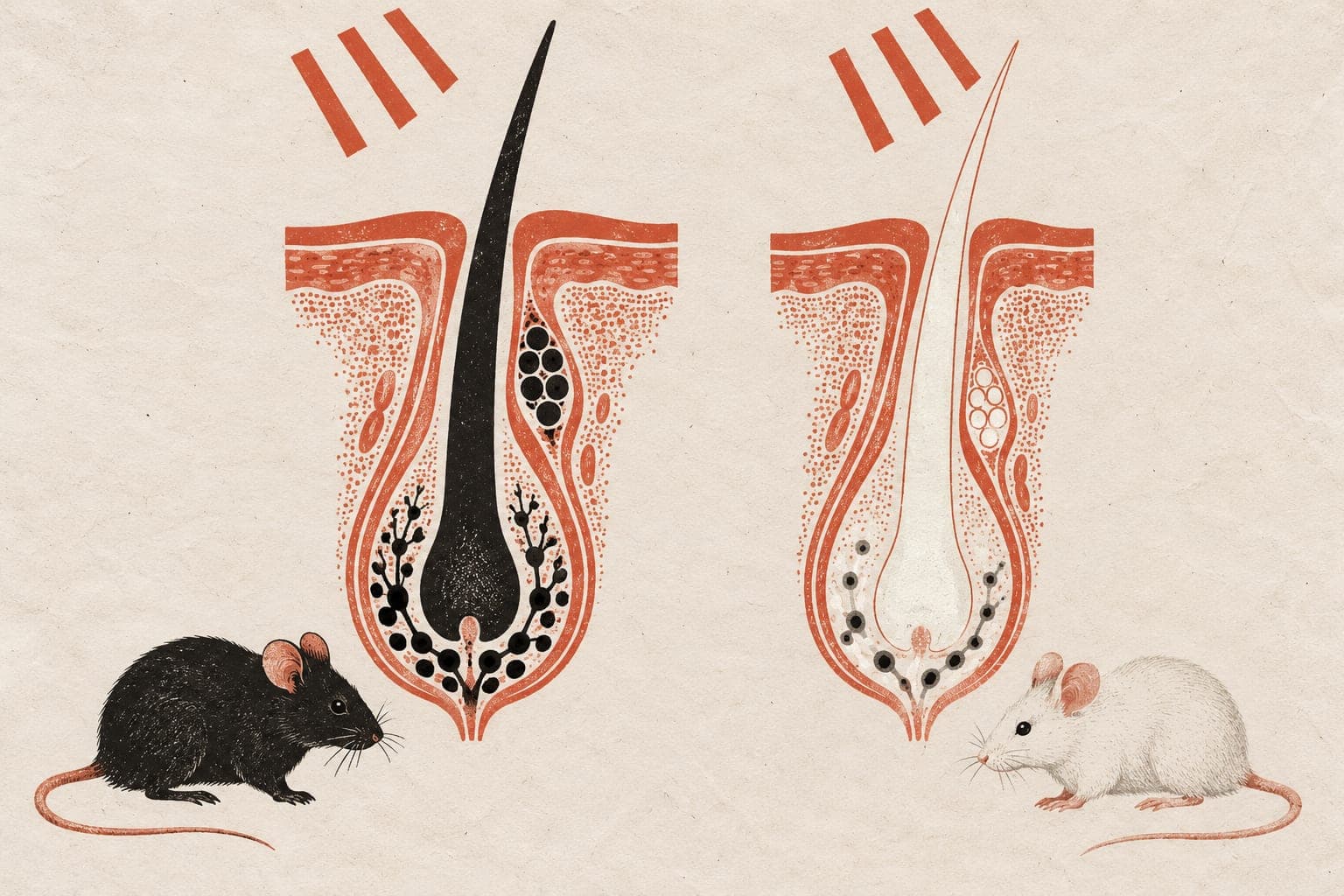
Hair graying and loss are significant indicators of aging, and oxidative stress plays an essential role in this progression. Ergothioneine (EGT), potent antioxidant from edible fungi and certain prokaryotes, regulates the antioxidant defense system. However, its anti-aging effects on hair follicles (HFs) remain obscure. We used dermal papilla cells (DPCs) co-culture system, HFs organ culture system, aged mice and H₂O₂-induced gray hair mice to explore the antioxidative functions and mechanisms of EGT on HFs. Research demonstrated that EGT mitigated H₂O₂-induced DPCs damage, reduced the secretion of inflammatory factors (IL-6, IL-1β, and TNF-α) and enhanced the production of pigmentation promoting factors (SCF and SDF1) through the SIRT1/Nrf2 pathway in DPCs. In vitro experiments of co-culture system indicated that EGT-treated DPCs remarkably alleviated oxidative damages and promoted cell proliferation in A-375 and HaCaT. Furthermore, it increased tyrosinase activity, melanin content and the expression of key melanin synthesis genes in A-375. Meanwhile, it promoted the expression of K19 and K14 in HaCaT. In vivo experiments revealed that EGT exhibited excellent effects on reducing pigmentation disfunction and hair loss in aged mice and H₂O₂-induced gray hair mice. In the HFs organ culture, the EGT promoted hair growth and pigmentation via SIRT1/Nrf2 partly. Our research indicated that EGT had potent antioxidant and anti-aging functions for HFs. This not only provided new applications for EGT but also opened up new therapeutic avenues for hair aging.
The paper
Nanfang Hospital
Free Radical Biology & Medicine, 29 May 2025