The Neural Consequences of Age-Related Hearing Loss
Abstract
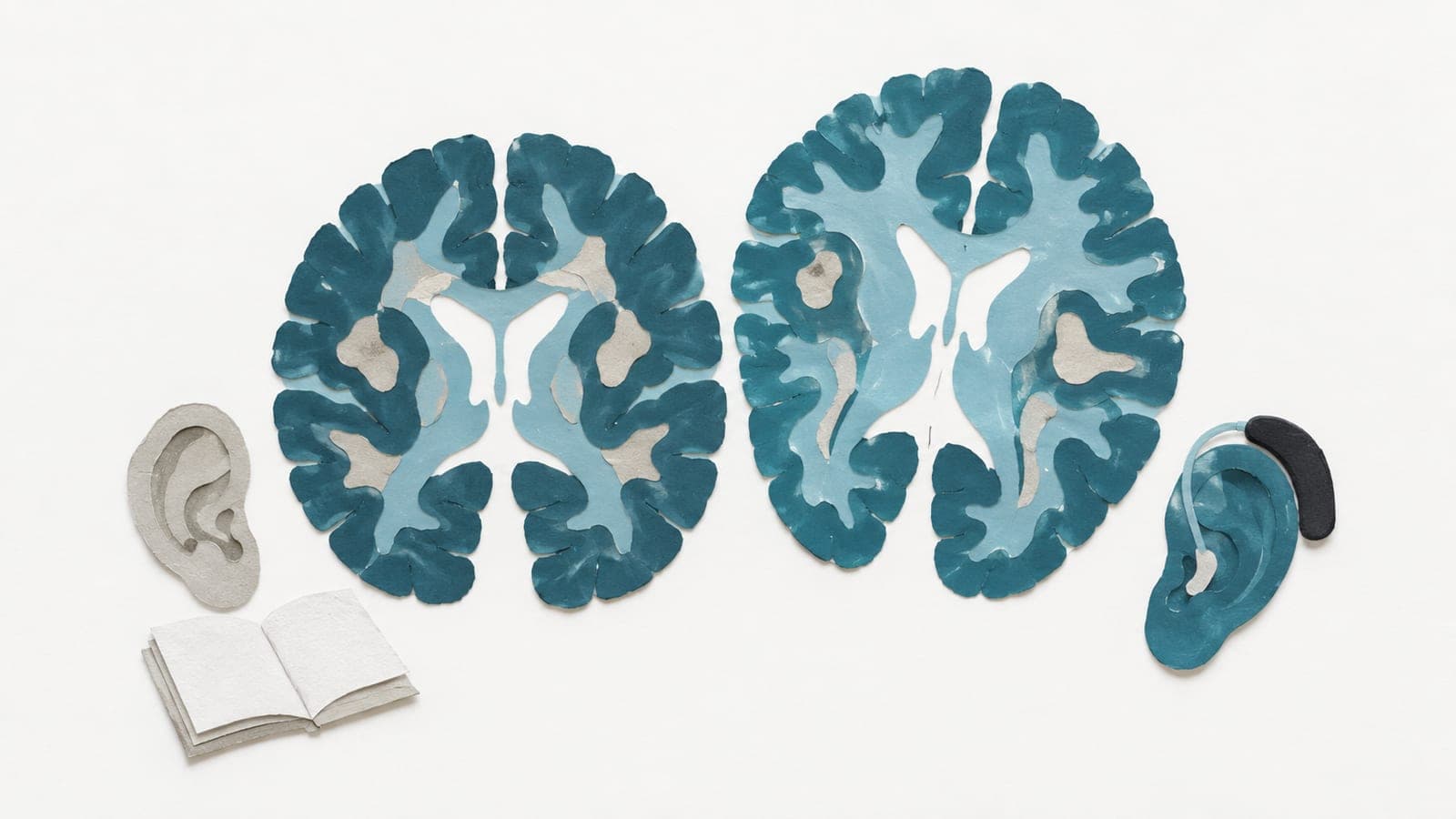
During hearing, acoustic signals travel up the ascending auditory pathway from the cochlea to auditory cortex; efferent connections provide descending feedback. In human listeners, although auditory and cognitive processing have sometimes been viewed as separate domains, a growing body of work suggests they are intimately coupled. Here, we review the effects of hearing loss on neural systems supporting spoken language comprehension, beginning with age-related physiological decline. We suggest that listeners recruit domain general executive systems to maintain successful communication when the auditory signal is degraded, but that this compensatory processing has behavioral consequences: even relatively mild levels of hearing loss can lead to cascading cognitive effects that impact perception, comprehension, and memory, leading to increased listening effort during speech comprehension.
The paper
Washington University in St. Louis; Brandeis University
Trends in Neurosciences, 1 Jun 2016