Partial Biological Separation of Obsessive-Compulsive and Anxiety Liability: A Cross-Trait TWAS Analysis of Mitochondrial, Senescence, and Remodeling Pathways
Abstract
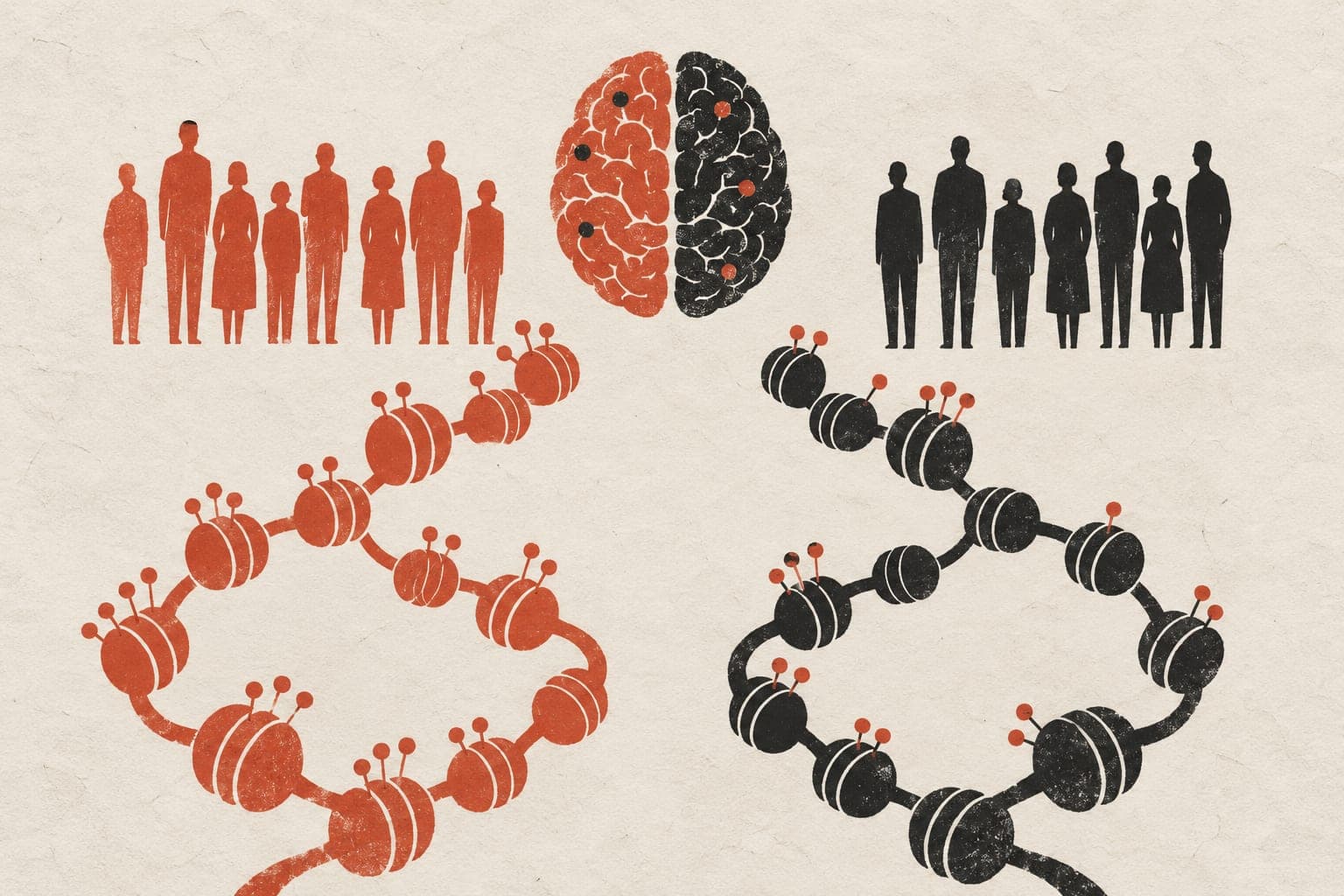
BackgroundObsessive-compulsive disorder (OCD) and generalized anxiety symptoms often occur together and share part of their genetic basis, but it is still unclear how far they diverge at the molecular level in the brain. Transcriptome-wide association studies (TWAS) make it possible to move beyond overall genetic correlation and test whether different biological pathways are implicated in each phenotype.MethodsWe applied S-PrediXcan to summary statistics from two recent large genome-wide association studies in European-ancestry samples: generalized anxiety symptoms from Skelton et al. (2026) and OCD from Strom et al. (2025). Brain expression quantitative trait locus models were examined across six regions. Gene-set enrichment analyses were then carried out for curated sets covering NAD+ metabolism and sirtuin signaling, cellular senescence, synapse pruning and complement pathways, intrinsic apoptosis, adult astrocyte markers, glucose-stimulated insulin secretion, and related mitochondrial and metabolic processes. We used cross-trait pairwise comparisons together with within-disorder Stouffer meta-analyses and permutation testing to identify divergent signals.ResultsAnxiety liability showed stronger positive enrichment for cellular senescence and clear negative enrichment for adult astrocyte markers, along with an inverse association with NAD+-binding genes. OCD liability showed strong positive enrichment for intrinsic apoptosis pathways, a negative association with synapse-pruning genes, and a positive signal for glucose-stimulated insulin secretion. Among the most discordant genes were SIRT3, which was inverse in anxiety, NBN, which was strongly positive in anxiety, and CLTCL1, which was strongly negative in anxiety. The nucleus accumbens and hippocampus were the main tissue-level contributors.ConclusionsTaken together, the findings point to partial biological separation between OCD and anxiety liability, with one profile leaning more toward stress and glial processes and the other more toward circuit remodeling. The results are hypothesis-generating rather than definitive, but they support future work on mechanism-informed patient stratification, peripheral biomarkers, and targeted follow-up studies. Even with clear clinical overlap, OCD and anxiety liabilities appear to recruit partly distinct transcriptomic programs.
The paper
Figshare, 22 Apr 2026, Open access, CC BY, Preprint, not peer-reviewed