Association Between Social Determinants of Health and Health-Related Quality of Life Among Middle-Aged and Older Patients with Cardiovascular-Kidney-Metabolic Syndrome: A Cross-Sectional Study Based on CHARLS 2015
Abstract
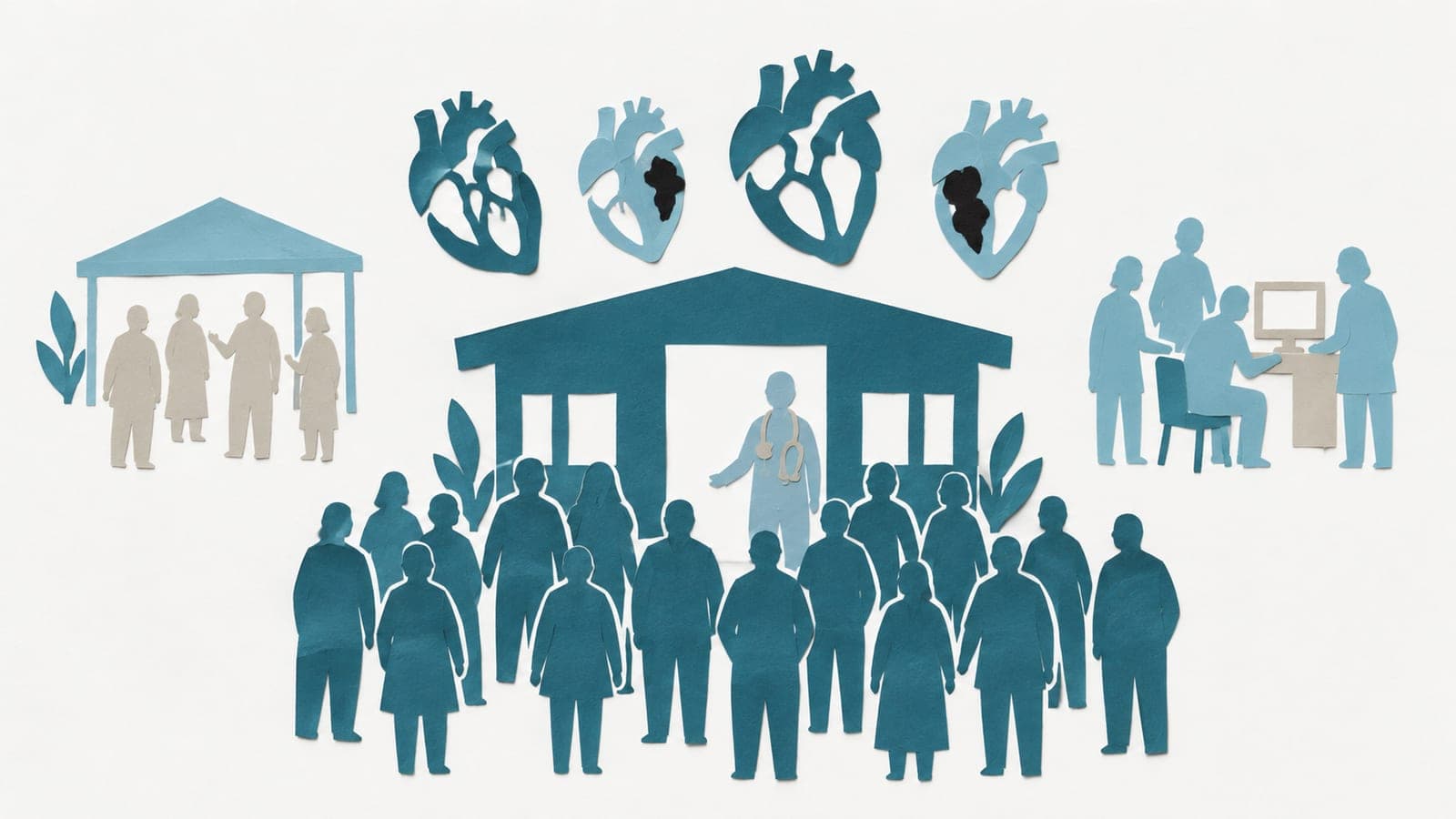
Background Cardiovascular-kidney-metabolic (CKM) syndrome, defined by the American Heart Association in 2023, is a novel multistage multisystem disorder arising from pathophysiological interactions among metabolic risk factors, chronic kidney disease, and the cardiovascular system. Social determinants of health (SDOH)—including education, income, employment, social support, and healthcare access—have been identified as important drivers of CKM progression. However, the relationship between SDOH and health-related quality of life (HRQoL) among Chinese adults with CKM syndrome remains largely unexplored. Objective This study aims to examine the association between cumulative SDOH burden and HRQoL (both physical and mental components) among middle-aged and older Chinese adults with CKM syndrome, and to test whether this association varies across CKM stages. Hypotheses Hypothesis 1: Higher cumulative SDOH burden is associated with lower HRQoL (both PCS and MCS) among middle-aged and older Chinese adults with CKM syndrome. Hypothesis 2: The negative association between SDOH burden and HRQoL is stronger among individuals at more advanced CKM stages (i.e., Stages 3–4) compared to those at less advanced stages. Data Source Data for this study are drawn from the China Health and Retirement Longitudinal Study (CHARLS) 2015 wave(北京大学). CHARLS is a nationally representative longitudinal survey of Chinese adults aged 45 and older, covering 150 counties/districts across 28 provinces. Study Design This is a cross‑sectional secondary data analysis of the CHARLS 2015 wave. Participants All CHARLS 2015 respondents who completed the questionnaire, anthropometric measurements, and blood sample collection are eligible for inclusion. Specific inclusion/exclusion criteria will be applied according to CKM classification guidelines. Variables Exposure: Cumulative SDOH burden — measured as the sum of unfavorable SDOH indicators based on the WHO SDOH framework. The seven indicators include unemployment, lack of pension, low education (<6 years of schooling), rural residence, no spouse, social isolation, and no health insurance. Higher scores indicate greater social disadvantage. Outcome: Health-related quality of life (HRQoL) — measured via the PCS and MCS derived from the adapted SF-36 within CHARLS. Scores range from 0 to 100, with higher scores indicating better HRQoL. Moderator: CKM syndrome stages (Stages 2, 3, and 4) — classified based on AHA 2023 criteria using CHARLS variables: BMI/waist circumference, metabolic risk factors (dysglycemia, hypertension, dyslipidemia), eGFR (CKD-EPI formula), Framingham 10‑year CVD risk, and self‑reported CVD. Covariates: Age (continuous), sex (binary), smoking status (binary). Pain will be examined in sensitivity analyses. Analytical Plan All analyses will be conducted using Stata (version 18.0). Descriptive statistics will summarize baseline characteristics, CKM stage distribution, and SDOH burden scores. Two-tailed tests with p < 0.05 will be considered statistically significant. Primary analysis: Multiple linear regression models, with robust standard errors, estimating the association between SDOH score and PCS/MCS, adjusting for age, sex, and smoking. The model form is: Outcome = β₀ + β₁·SDOH_score + β₂·age + β₃·sex + β₄·smoking + ε Stratified analysis: The primary model will be re‑estimated separately within CKM Stages 2, 3, and 4 to test whether the SDOH–HRQoL association differs across disease severity. Sensitivity analyses: Pain will be added to the primary model to assess the robustness of main findings. Expected Outcomes Quantification of the association between cumulative SDOH burden and HRQoL among Chinese middle-aged and older adults with CKM syndrome. Identification of whether the association between SDOH burden and HRQoL is amplified in more advanced CKM stages. Generation of empirical evidence to inform stage‑tailored nursing interventions that integrate social factor assessment, pain management, and mental health screening into routine CKM care.
The paper
Preprint, 1 Jan 2026, CC0, Preprint, not peer-reviewed