Genetic scores better predict coronary artery disease in China
In training, a statistical performance measure rose approximately 60% versus the best East Asian-specific score and 90% versus the best European-specific score.
72,782 individuals, genetic association study, independent replication
Limit: The improvement measures training-set model fit, a stand-in for prediction in new patients
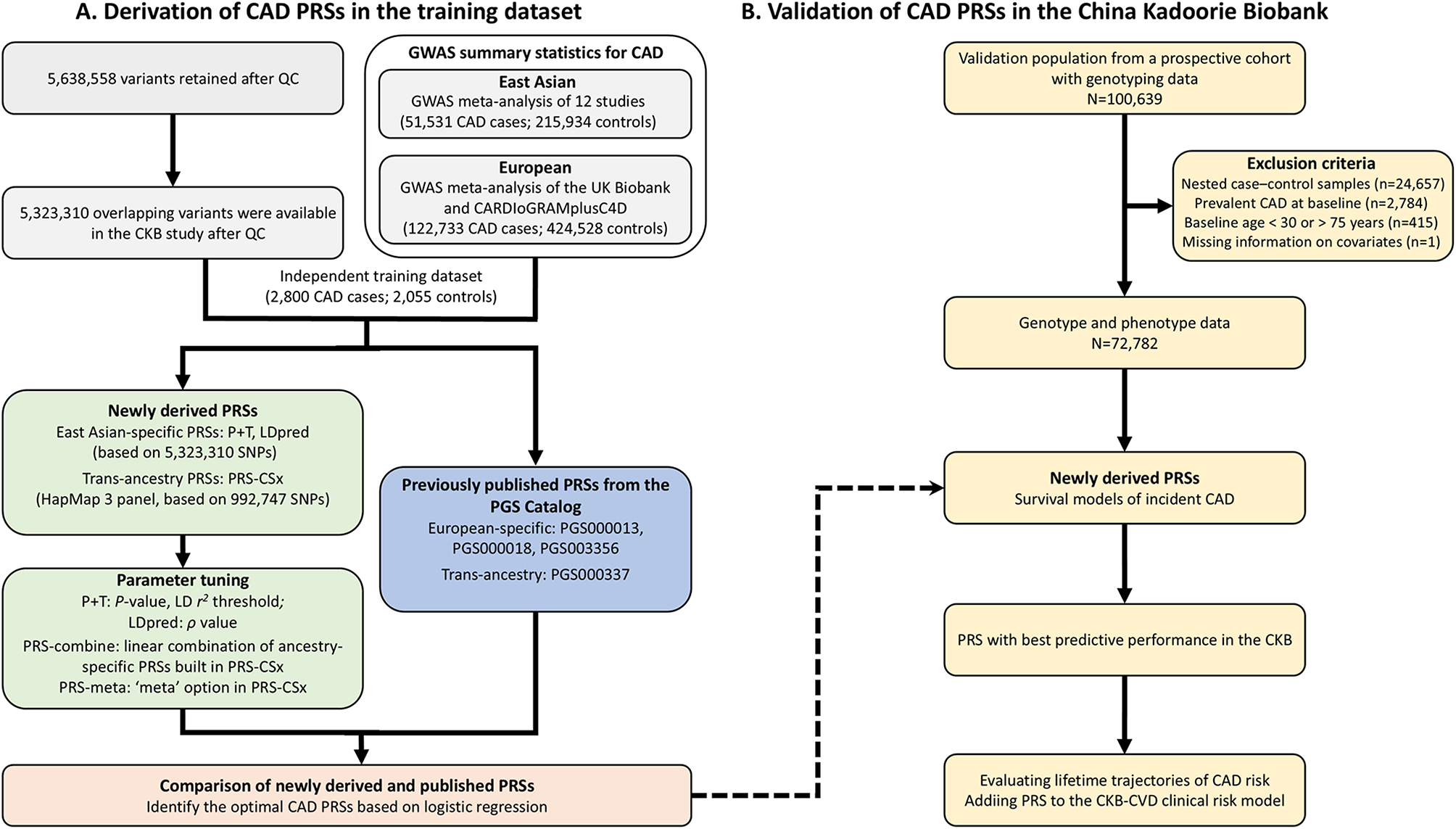
In an observational study, researchers validated genetic risk scores in 72,782 participants from the China Kadoorie Biobank, a population-based cohort in China followed for an average of 12.1 years. These scores combined many genetic variants to estimate risk of coronary artery disease, which affects the arteries supplying the heart.
Researchers built two scores using European and East Asian genetic studies. They compared scores in a Chinese training group of 2,800 people with the disease and 2,055 controls. One score was also optimized in this group. Both outperformed the best single-ancestry scores on pseudo-R-squared, a statistical measure of how well a model fits the data. In the separate cohort, both scores were associated with newly developing coronary artery disease.
Why it matters
Coronary artery disease becomes more common with age. The study addresses how genetic risk prediction might better serve populations underrepresented in genetic research.
Caveats
This observational validation assessed prediction, not whether using the scores improved care or prevented disease. Validation in a Chinese cohort does not establish performance in other populations.
- Human genetics
- Coronary artery disease
- East Asian-specific CAD polygenic risk scores
- European-specific CAD polygenic risk scores
- PRS-combine
- Humans
The paper
Chinese Academy of Medical Sciences & Peking Union Medical College
Genome Medicine, Oct 17, 2026, Open access, CC BY-NC-ND


