Protein-blocking drug eased intestinal inflammation in mice
A selective protein inhibitor reduced disease severity in two experimental models of colitis, a form of intestinal inflammation.
Edited by Boris Djordjevic · AgingResearch.News
In experiments in mice with chemically induced colitis, researchers tested TM5441, a drug that selectively blocks the protein SERPINE1. The drug reduced colitis severity in both models tested.
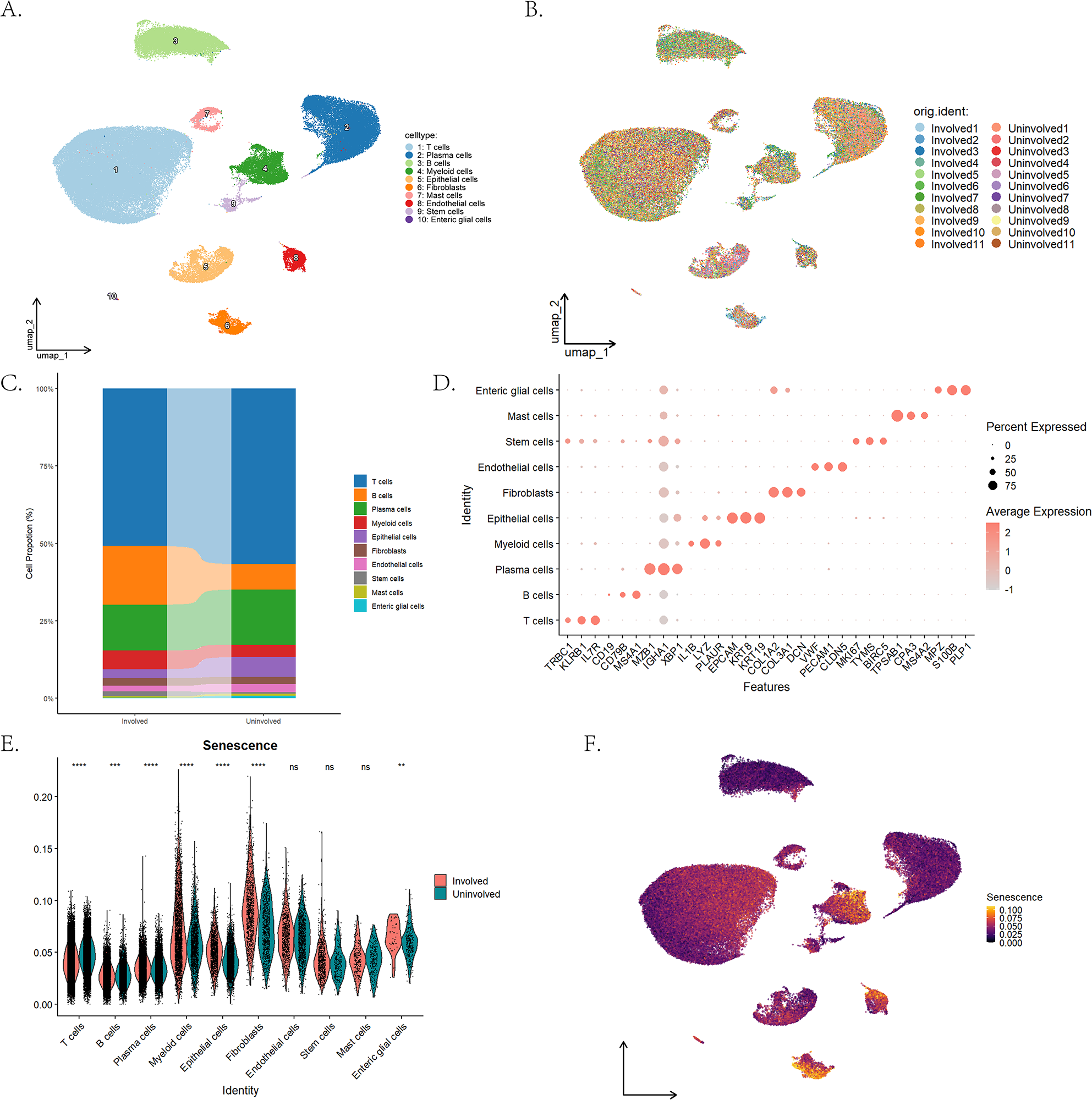
The team also analyzed gene activity data from people with Crohn’s disease. Inflamed tissues contained a localized group of fibroblasts, cells that support tissue structure, with high scores for senescence—a state in which cells stop dividing—and an inflammation-promoting pattern of secretions. Laboratory experiments found that SERPINE1 prompted DNA from mitochondria, the cell’s energy-producing structures, to enter the surrounding cell fluid. This activated an immune signaling pathway that helped sustain senescence. The researchers reported that SERPINE1 activated this pathway at least partly through a receptor, a protein that receives signals.
Why it matters
Cell senescence is a process implicated in aging and chronic inflammation. The authors propose targeting SERPINE1 as a strategy for managing intestinal inflammation in Crohn’s disease.
Caveats
The drug findings came from experimental colitis models, not a trial in people with Crohn’s disease. The abstract does not report animal numbers, drug doses or treatment duration.
Where the evidence stands
TM5441
- 3 independent labs in 2 countries
- Funders: American Heart Association and others
Inflammation
- 1,010 independent labs in 74 countries
- 193 findings against
- Funders: National Institutes of Health and others
- 363 of 4,342 findings with company ties
Comments
Be the first to comment.