Combined blood marker linked to cardiovascular disease risk
An observational study followed 5,474 Chinese participants from 2011 to 2020 and linked higher marker values to progression to clinical cardiovascular disease.
Dose-response, independent replication
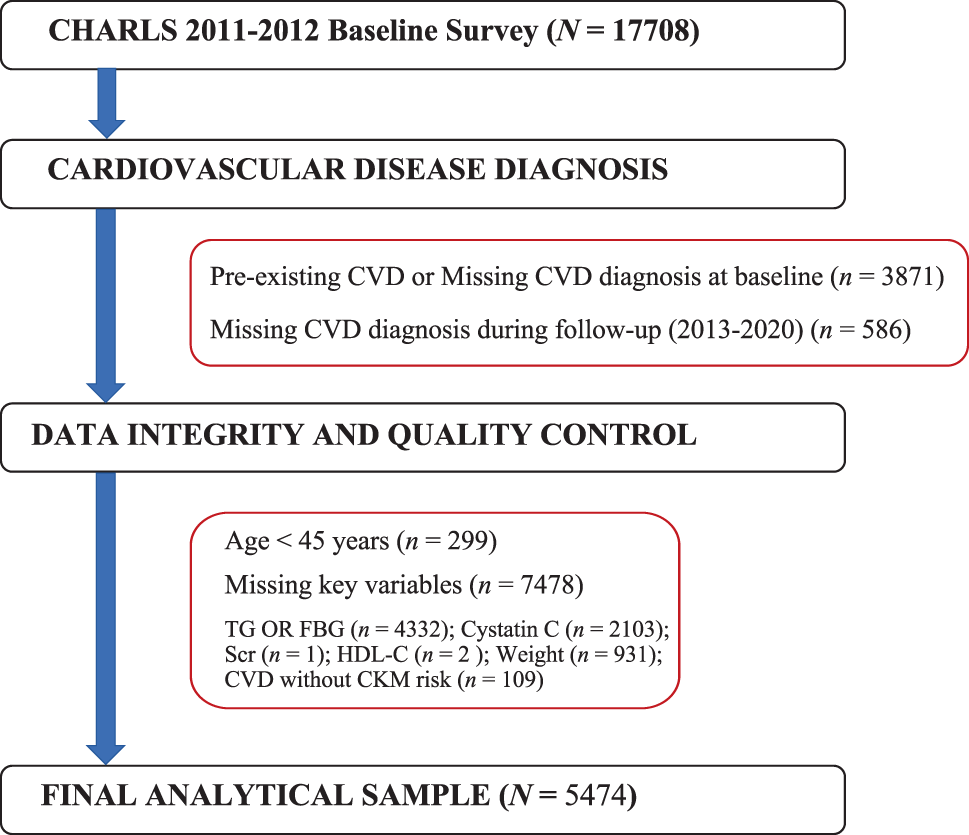
In an observational study of 5,474 participants in the China Health and Retirement Longitudinal Study, researchers analysed follow-up data spanning 2011 to 2020. Participants began in stages 0–3 of cardiovascular-kidney-metabolic syndrome, a framework for classifying linked heart, kidney and metabolic risks.
The marker combined blood fat and sugar measurements with a ratio of two other blood substances. Higher values were associated with progression to stage 4, meaning clinical cardiovascular disease. For each increase of one standard deviation—a measure of how widely values varied—the adjusted hazard ratio, a comparison of risk over time, was 1.20. Researchers reported similar findings in UK Biobank. The combined marker also outperformed two simpler blood-based markers at distinguishing participants who progressed from those who did not.
Why it matters
Cardiovascular disease becomes more common with age. This research addresses whether combined blood measures could help identify people at risk before clinical disease develops.
Caveats
Observational data cannot show that the marker causes disease or that using it improves care. The authors called for interventional studies to test its clinical usefulness.
- Modelling and theory
- Cardiovascular disease
- Cardiovascular-kidney-metabolic syndrome
- Progression to CKM stage 4
- NCCR
- Humans
The paper
Tianjin University of Traditional Chinese Medicine
Cardiovascular Diabetology, 9 Oct 2026, CC BY-NC-ND
