Urine marker linked to muscle loss in middle-aged and older US adults
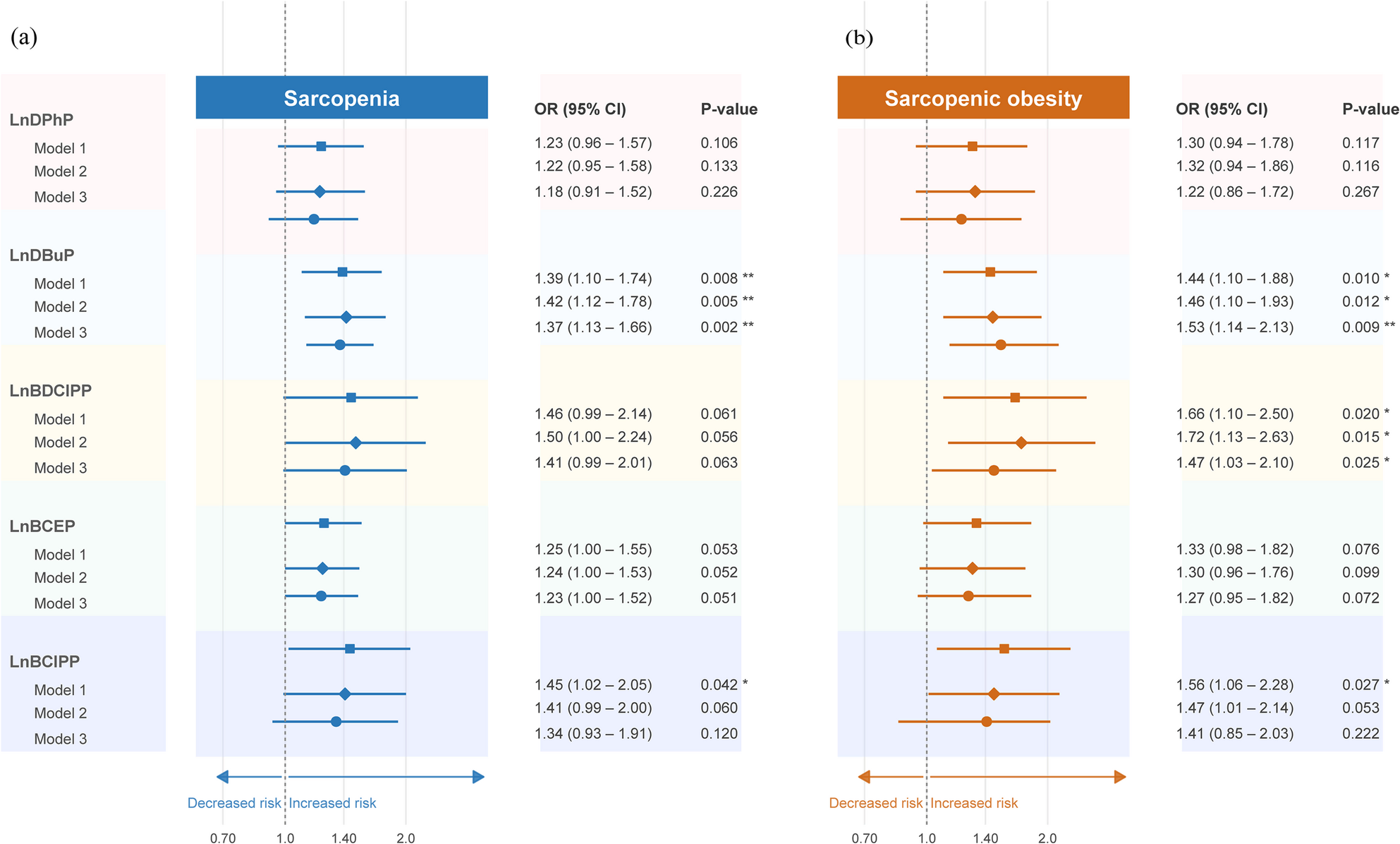
An observational analysis of US survey data from 2011–2018 found links to sarcopenia and sarcopenia with obesity, with stronger associations in older adults.
Dose-response
Limit: Sarcopenia status, rather than muscle loss over time, was the outcome
Edited by Boris Djordjevic · AgingResearch.News
An observational study of middle-aged and older US adults linked dibutyl phosphate, a urine marker of organophosphate flame retardant exposure, to sarcopenia, a condition involving low muscle mass and strength. It was also linked to sarcopenic obesity, which combines sarcopenia and obesity.
The researchers analyzed National Health and Nutrition Examination Survey data from 2011–2018. They examined five flame retardant breakdown products in urine. Combined exposure was associated with both conditions, with dibutyl phosphate the main contributor. The associations were stronger in older adults. A statistical analysis indicated that albumin, a blood protein, partly accounted for the link between dibutyl phosphate and sarcopenia. A biological pathway analysis suggested that inflammation and oxidative stress, an imbalance involving potentially cell-damaging molecules, may underlie the associations.
Why it matters
Sarcopenia becomes more common after middle age. Identifying environmental factors associated with it may help researchers understand differences in age-related muscle health.
Caveats
The observational design cannot establish cause and effect, and the pathway analysis suggested rather than established mechanisms. The findings do not establish whether the same links occur in younger people or populations outside the US.
Where the evidence stands
Dibutyl phosphate
- 5 independent labs in 1 country
- Funders: National Natural Science Foundation of China and 5 more
Inflammation
- 990 independent labs in 74 countries
- 188 findings against
- Funders: National Institutes of Health and others
- 361 of 4,287 findings with company ties
The paper
Wuhan University of Science and Technology
BMC Public Health, Oct 30, 2026, Open access, CC BY-NC-ND


Comments
Be the first to comment.