Effects of resistance training intensity and a dietary protein intervention on psychosocial outcomes, executive function, and quality of life in frail community-dwelling older adults
12 weeks
Abstract
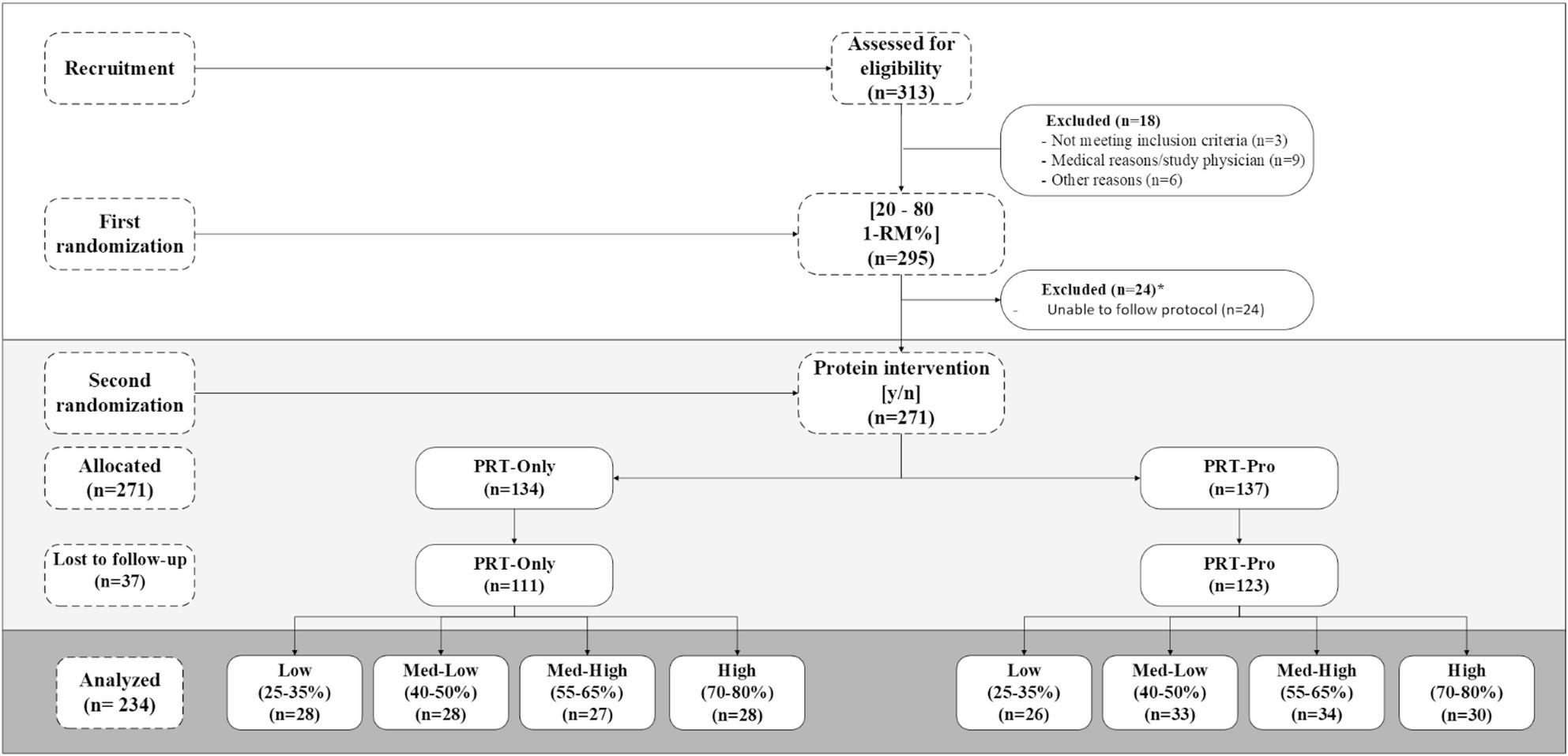
Psychosocial functioning, executive function, and quality of life contribute to resilience and daily functioning in frail older adults. Resistance training may improve these outcomes, but it remains unclear whether training intensity, with or without a dietary protein intervention, modifies these effects. We examined changes in these outcomes after 12 weeks of supervised resistance training to volitional muscular failure in frail community-dwelling older adults. This secondary analysis of the TEAMS randomized controlled trial included 295 older adults (mean age 74.0 ± 6.0; 69% female) who participated in twice-weekly resistance training. Participants were randomized to training only or training plus a dietary protein intervention. Training intensity ranged from 20% to 80% of one-repetition maximum (1-RM). Psychosocial outcomes included depressive symptoms, anxiety, pain, fatigue, fear of falling, and sleep quality. Executive function was assessed using the Trail Making Test, Stroop Color–Word Test, and Letter Fluency. Quality of life was measured with the 12-item Short Form Health Survey. Linear mixed models were applied ( P < 0.05). After twelve weeks, participants showed reduced depressive symptoms (β = −0.167, 95% CI − 0.27 to − 0.06), improvement in executive function (TMT-A β = −4.71 s; TMT-B β = −12.11 s; SCWT log β = −0.091; LF β = +2.46 words), and improvement in quality of life (β = +1.26, 95% CI 0.62–1.91), with no consistent differences across training intensities. The protein intervention led to a greater reduction in fear of falling compared with training only (log β = −0.257, 95% CI − 0.491 to − 0.023), but showed no consistent additional effects on other outcomes. In frail, community-dwelling older adults, improvements in depressive symptoms, executive function, and quality of life were observed following twelve weeks of supervised resistance training to volitional muscular failure. Training intensity did not consistently influence these changes, and the protein intervention provided no consistent additional benefits. Given the exploratory nature of these secondary analyses, findings should be interpreted cautiously. The results suggest that a range of training intensities may be feasible for further investigation when tailoring programs to individual needs. NL-OMON54919 (at ICTRP Search Portal), date of registration: 09-02-2021.
The paper
Amsterdam University of Applied Sciences; Deakin University
BMC Geriatrics, Oct 16, 2026, Open access, CC BY-NC-ND