Differences in disability-free life expectancy among Chinese older adults by combined body mass index and waist circumference categories
Abstract
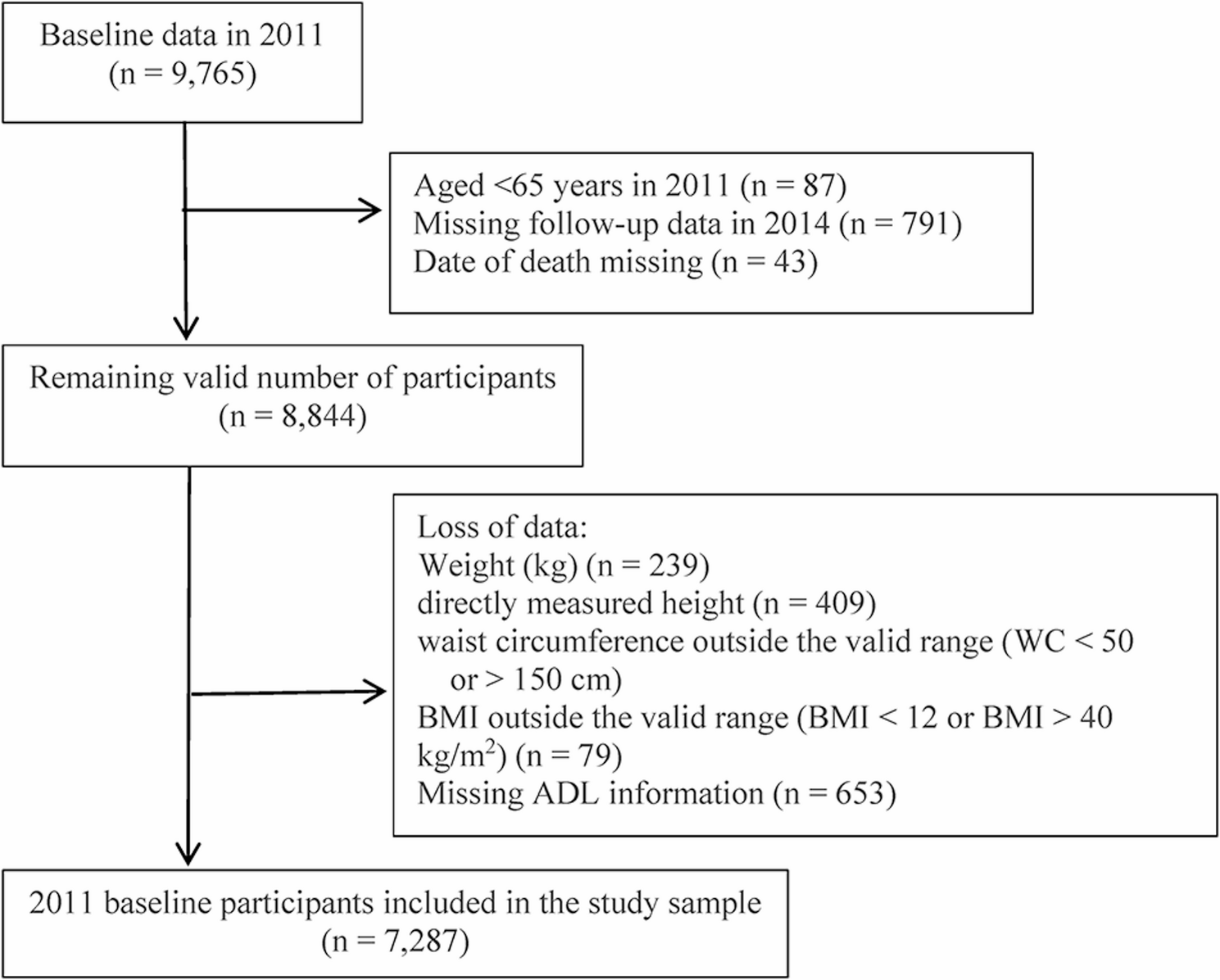
Weight management is an important component of strategies to promote healthy aging. However, the associations of body shapes and fat distribution with disability-free life expectancy (DFLE) among older adults have not been adequately evaluated. Data were obtained from the 2011–2018 waves of the Chinese Longitudinal Healthy Longevity Survey (CLHLS). Participants were categorized according to a combined classification of body mass index (BMI) and waist circumference (WC). Microsimulation was used to estimate life expectancy (LE) and DFLE across the different BMI–WC categories. Subgroup analyses were further conducted by sex and, within each sex, by urban-rural residence. Z tests were used to assess whether differences in DFLE between groups were statistically significant ( P < 0.05). At baseline, the mean age of the participants was 85.49 ± 10.98 years. At age 65, DFLE was 14.25 years (95% confidence interval (CI): 13.38–15.05) in the low BMI group, 15.47 years (95% CI: 14.72–16.37) in the appropriate BMI with central obesity group, and 15.82 years (95% CI: 14.27–17.20) in the high BMI group; all were lower than that in the appropriate BMI with normal WC group (16.02 years, 95% CI: 15.32–16.74). Among participants aged 73–95 years in the appropriate BMI with central obesity group, men had significantly shorter DFLE than women ( P < 0.05). Among women aged 76–95 years in the low BMI group, those living in urban areas had significantly shorter DFLE than their rural counterparts ( P < 0.05). Older adults with low BMI or appropriate BMI with central obesity had shorter DFLE, suggesting that weight management in later life should consider both BMI and fat distribution. Although older women had longer LE, they spent a smaller proportion of their remaining life disability-free. In particular, urban older women with low BMI may experience a greater burden of disability.
The paper
Weifang Medical University; Shandong Second Medical University
BMC Geriatrics, 13 Oct 2026, Open access, CC BY-NC-ND