Heart markers linked to cardiovascular risk in type 2 diabetes
A post-hoc analysis of 3,775 trial participants linked two heart markers to cardiovascular events, whether or not participants had chronic kidney disease.
Our read
Interventions- Studied:
- Cohort study of 3,775 adults with type 2 diabetes
- What changed:
- Higher starting heart-marker levels were linked to higher cardiovascular event risk, regardless of kidney disease status
- The catch:
- The abstract gives no effect size for the cardiovascular-risk association
- In the record:
- The 43rd paper on intensive lifestyle intervention with results in people; 58 on record in all.
- Why it’s aging research:
- It bears on staying healthy in midlife and later life.
Editor of record: Boris Djordjevic · AgingResearch.News
Among 3,775 adults with type 2 diabetes, a post-hoc analysis of a lifestyle intervention trial examined blood markers and cardiovascular and kidney outcomes. Women made up 59.4% of participants, and 19.6% had chronic kidney disease. The trial compared an intensive lifestyle program targeting weight loss with diabetes support and education.
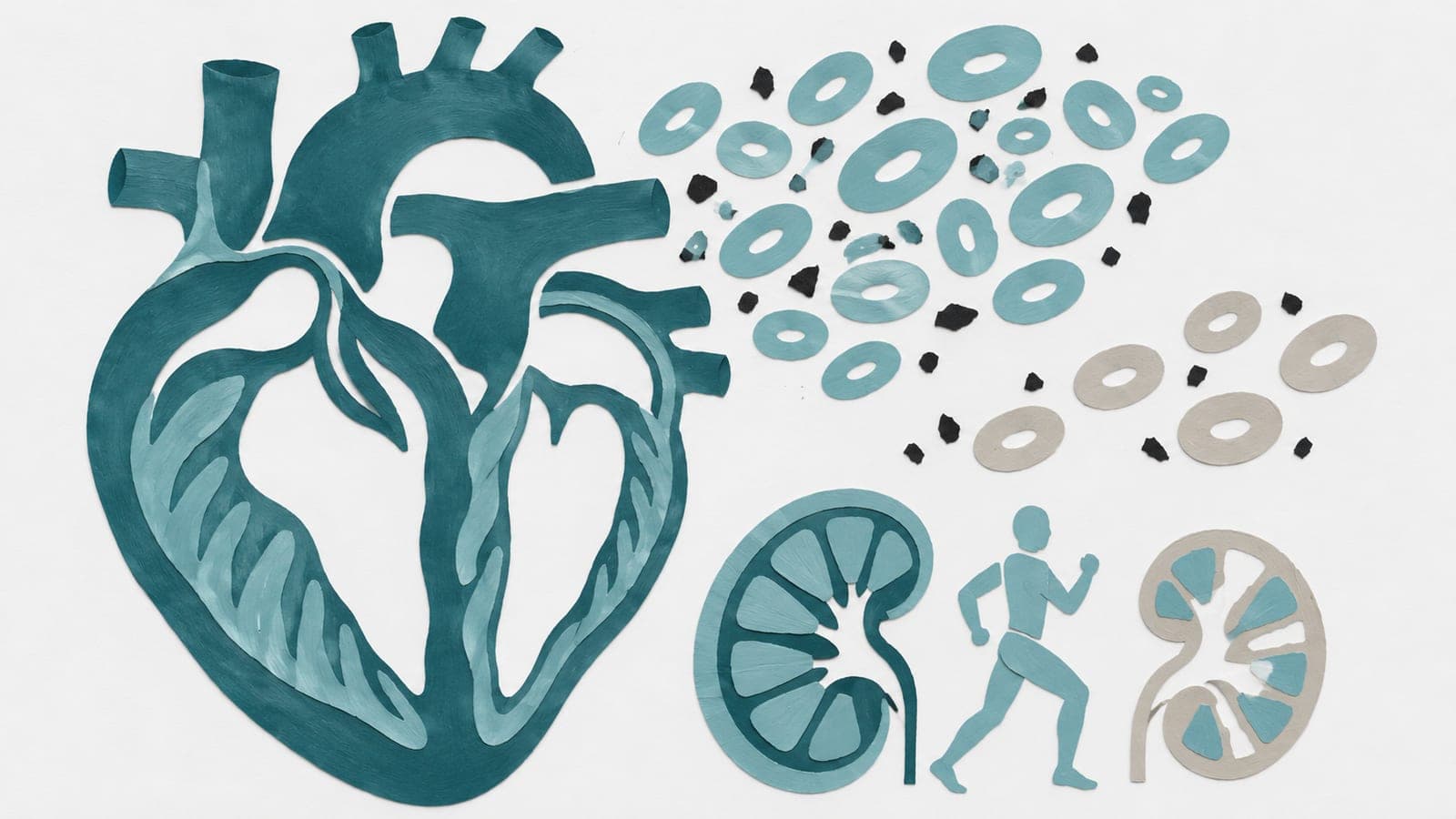
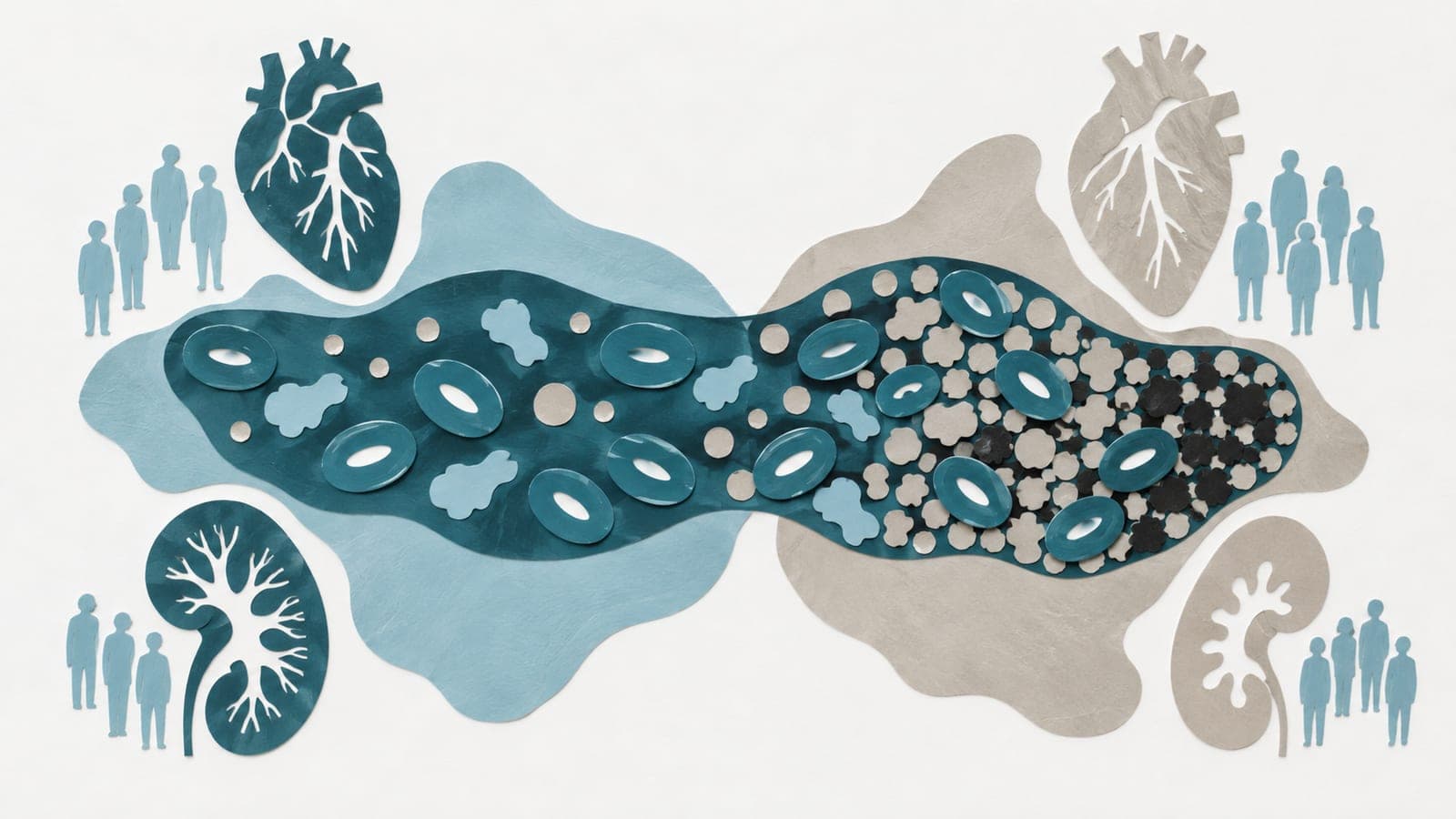
Higher starting levels of two markers—one reflecting heart strain and another heart muscle injury—were associated with higher cardiovascular event risk, regardless of kidney disease status. Participants with elevated levels of the heart-strain marker had a lower relative risk of reaching a very-high-risk chronic kidney disease category with the lifestyle program than with support and education (hazard ratio 0.43). Those with lower levels had no clear kidney benefit (hazard ratio 0.90; the range of likely values included no difference).
Why it matters
Managing diabetes complications is an important part of care as people age. The findings suggest that a heart-strain marker may help identify who gains kidney benefits from intensive lifestyle intervention.
Caveats
The kidney-benefit finding came from a post-hoc subgroup analysis. The conference abstract does not provide absolute kidney event rates or define the very-high-risk kidney disease category.
- Intensive lifestyle intervention
- Type 2 diabetes
- Chronic kidney disease
- Very-high-risk chronic kidney disease
- Cardiovascular disease
- Humans
The paper
University of Michigan
AHA Scientific Sessions 2026 Abstract, Nov 2, 2026
Presented at AHA Scientific Sessions 2026, abstract 10761
Comments
Be the first to comment.