Bacterial compound promotes gut stem cell renewal in mice
In mouse experiments, supplementation with a compound made by certain gut bacteria promoted intestinal stem cell regeneration and repair of the gut lining.
Our read
Interventions- Studied:
- Experiments in mice with chemically induced colitis, 2-week time course, against PBS-treated mice
- What changed:
- N-MNA-treated mice had 8 times more labeled gut stem cell lineages than PBS-treated mice
- The catch:
- Follow-up covered only a 2-week time course, leaving long-term renewal unmeasured
Editor of record: Boris Djordjevic · AgingResearch.News
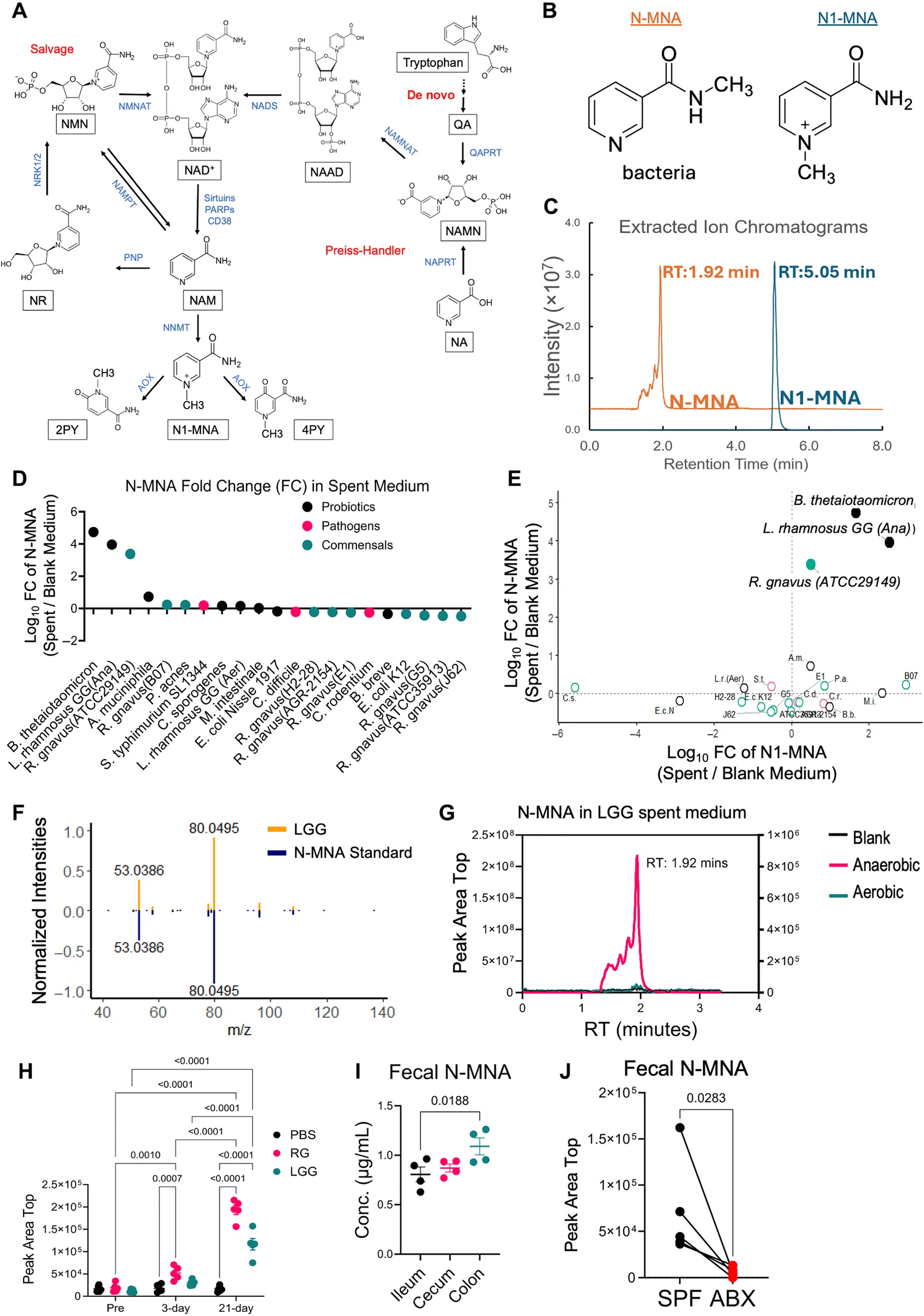
Fruit flies and mice were studied in experiments with (amide-)N-methylnicotinamide, a compound made by certain gut bacteria, including some probiotic species. Supplementation promoted regeneration of intestinal stem cells, which replenish the gut lining, and repair of that lining. The researchers altered an enzyme that uses nicotinamide adenine dinucleotide (NAD), a molecule needed for cellular chemical reactions, in specific fly cell types. They also tracked descendants of intestinal stem cells in mice.
Experiments with labeled molecules found that cells from fruit flies, mice and humans rapidly took up the compound and incorporated it into reactions involving NAD. Genetic and drug experiments suggested that the compound became NAD through one production pathway without relying on a separate recycling pathway.
Why it matters
Declining NAD levels are associated with chronic and inflammatory diseases. The findings offer a way to investigate whether bacterial compounds used to make NAD might support healthy lifespan.
Caveats
The repair findings came from animal experiments. The human-cell experiments measured uptake and use of the compound, not gut repair in people.
From the paper
- Animals
Adult C57BL/6 J germ-free mice were randomized and grouped, and orally gavaged with 200 μL sterile PBS, 200 μL L. rhamnosus, or 200 μL R. gnavus.
Methods, Mono-colonization of gnotobiotic mice with R. gnavus and L. rhamnosus GG
- Events by group
The EC-specific Sirt1 knockdown (KD) flies, in response to DSS treatment, exhibited a reduced survival at 21.09% compared to 43.03% in the genetic control group (fig. S5C).
Results, N-MNA protects against gut damage and lethality via gut stem cell SIRT1
- Limitation
First, stool or serum N-MNA may be used as a biomarker for metabolic intervention for specific patients.
Quoted word for word from the full text on PubMed Central.
The paper
Rutgers, The State University of New Jersey
Science Advances, Nov 6, 2026, Open access
Comments
Be the first to comment.