Nitrate reduced chewing muscle degeneration in aging mice
Older male mice, six per group, received nitrate or standard drinking water for three months; nitrate reduced signs of degeneration in a chewing muscle.
Our read
Interventions- Studied:
- Experiments in aged male mice, 3 months, against age-matched mice receiving standard drinking water
- What changed:
- Nitrate-treated aged mice had fewer signs of chewing muscle degeneration than age-matched controls
- The catch:
- Only 6 mice per group in the natural-aging experiment
- In the record:
- One of 130 papers on nitrate on record: 43 with results in people, 6 in animals.
Editor of record: Boris Djordjevic · AgingResearch.News
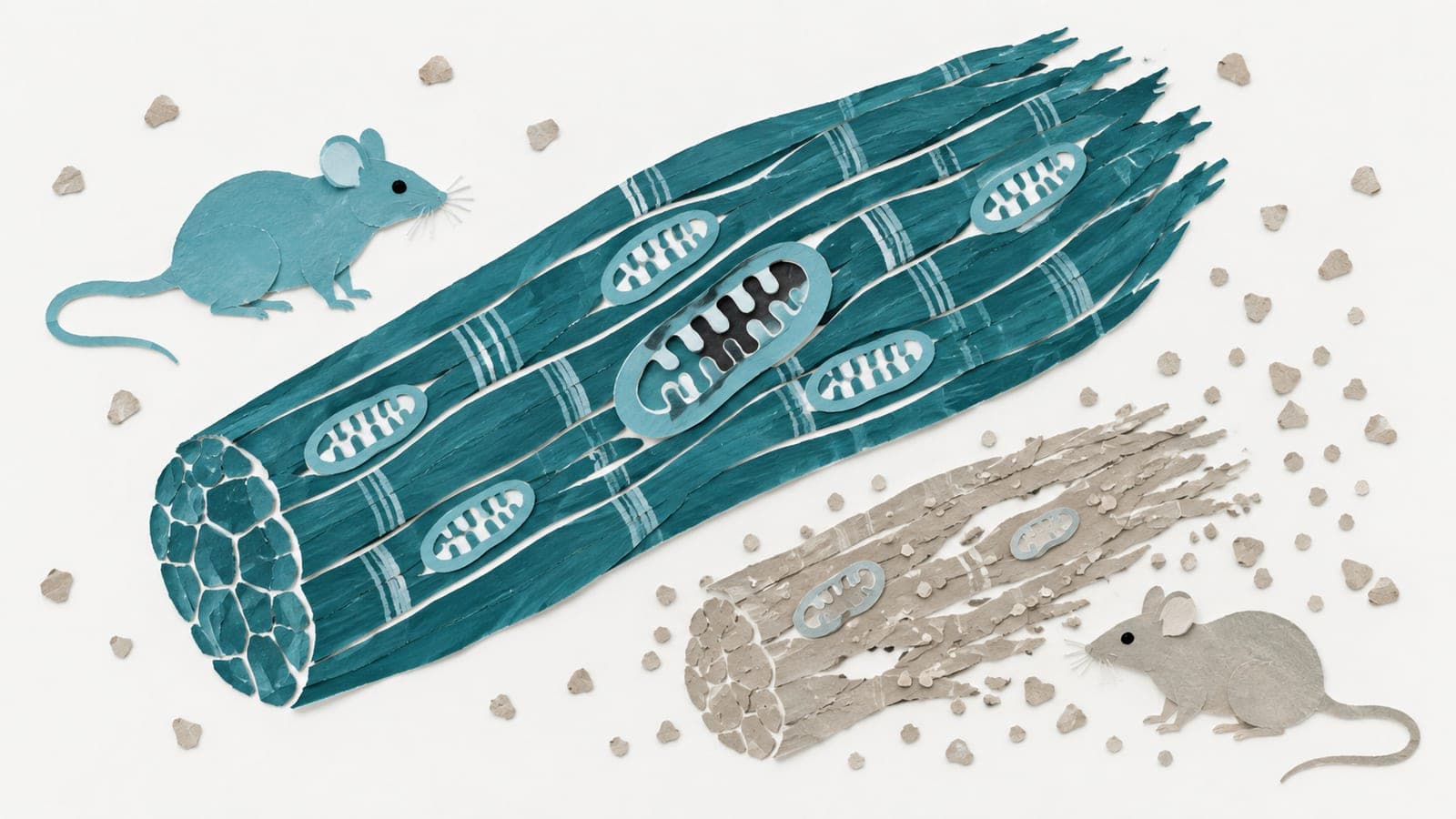
Male C57BL/6J mice aged 15 months received nitrate or standard drinking water for three months in a randomized animal experiment. Each group contained six mice. The nitrate concentration was 4 millimoles per liter. At 18 months, supplemented mice had fewer signs of degeneration in the masseter, a major chewing muscle. They also had lower levels of proteins associated with muscle wasting and senescence, a state in which cells stop dividing.
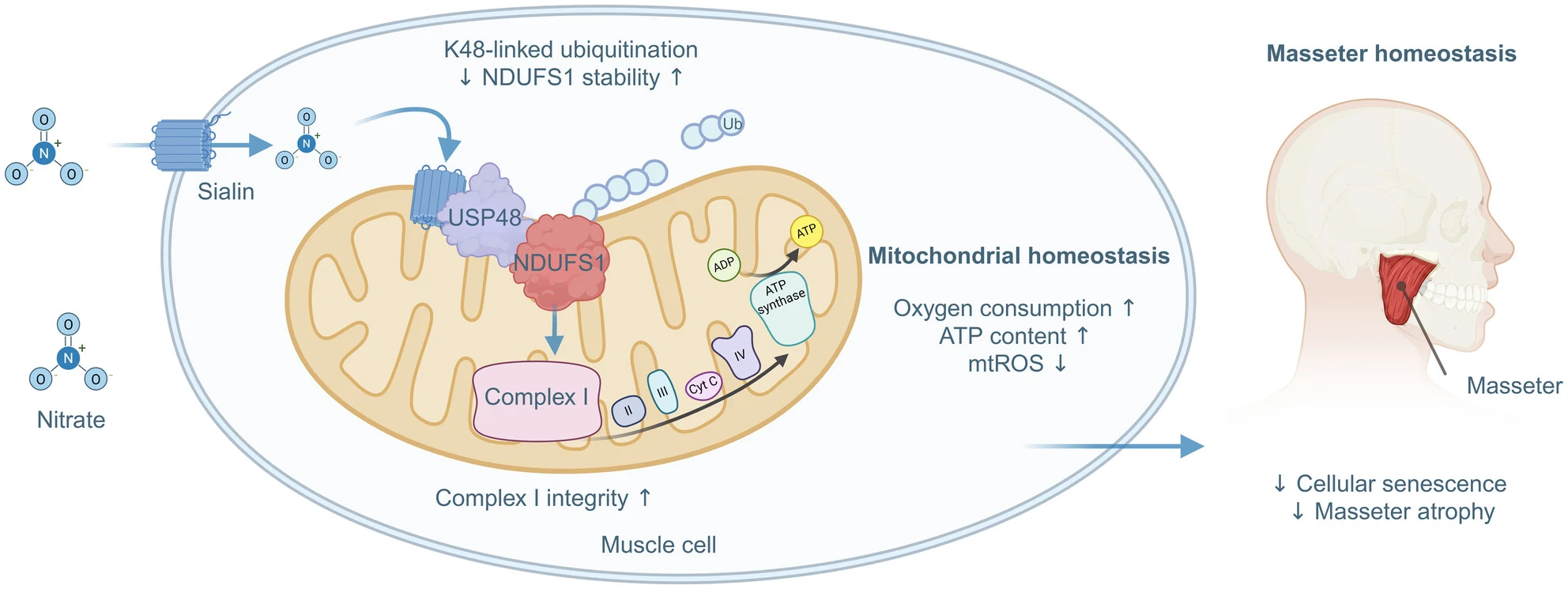
In separate experiments, mouse and human muscle cells grown in the lab responded less to nitrate when researchers depleted Sialin, a nitrate-transporting protein. Deleting the gene for Sialin in mice caused chewing muscle abnormalities that nitrate did not significantly improve. The authors identified the stability of a protein in mitochondria, the cell’s energy-producing structures, as a candidate mechanism for this Sialin-dependent response.
Why it matters
Age-related chewing muscle degeneration contributes to declining oral function. The work points to mitochondrial maintenance as a possible target for limiting this degeneration.
Caveats
The authors note that their Sialin gene deletion could not distinguish effects on development from effects on adult muscle maintenance. The experiments involved mice and lab-grown cells, not people.
From the paper
- Limitation
The experiments do not distinguish nitrate itself from nitrate-derived species as the immediate signal, and the association of Sialin with USP48 and NDUFS1 does not establish the complete causal sequence of NDUFS1 deubiquitination.
Quoted word for word from the full text on onlinelibrary.wiley.com.
The paper
School of Stomatology and Beijing Laboratory of Oral Health Capital Medical University Beijing China
Aging Cell, Nov 16, 2026, Open access, CC BY
Comments
Be the first to comment.