Depleting gut microbes reduced frailty in older male mice
An experiment in groups of 7–10 male mice found frailty scores closer to young-mouse values after four weeks of antibiotics or lifelong germ-free rearing.

Our read
Mechanisms- Studied:
- Experiments in aged male C57Bl6/J mice, 4 weeks, against aged mice with conventional microbiomes
- What changed:
- Antibiotic-treated aged mice had lower frailty scores than aged mice with conventional gut microbes
- The catch:
- Frailty was scored without blinding by the same researcher
- In the record:
- One of 3 papers on microbiome depletion on record: none yet with results in people, 3 in animals.
Editor of record: Boris Djordjevic · AgingResearch.News
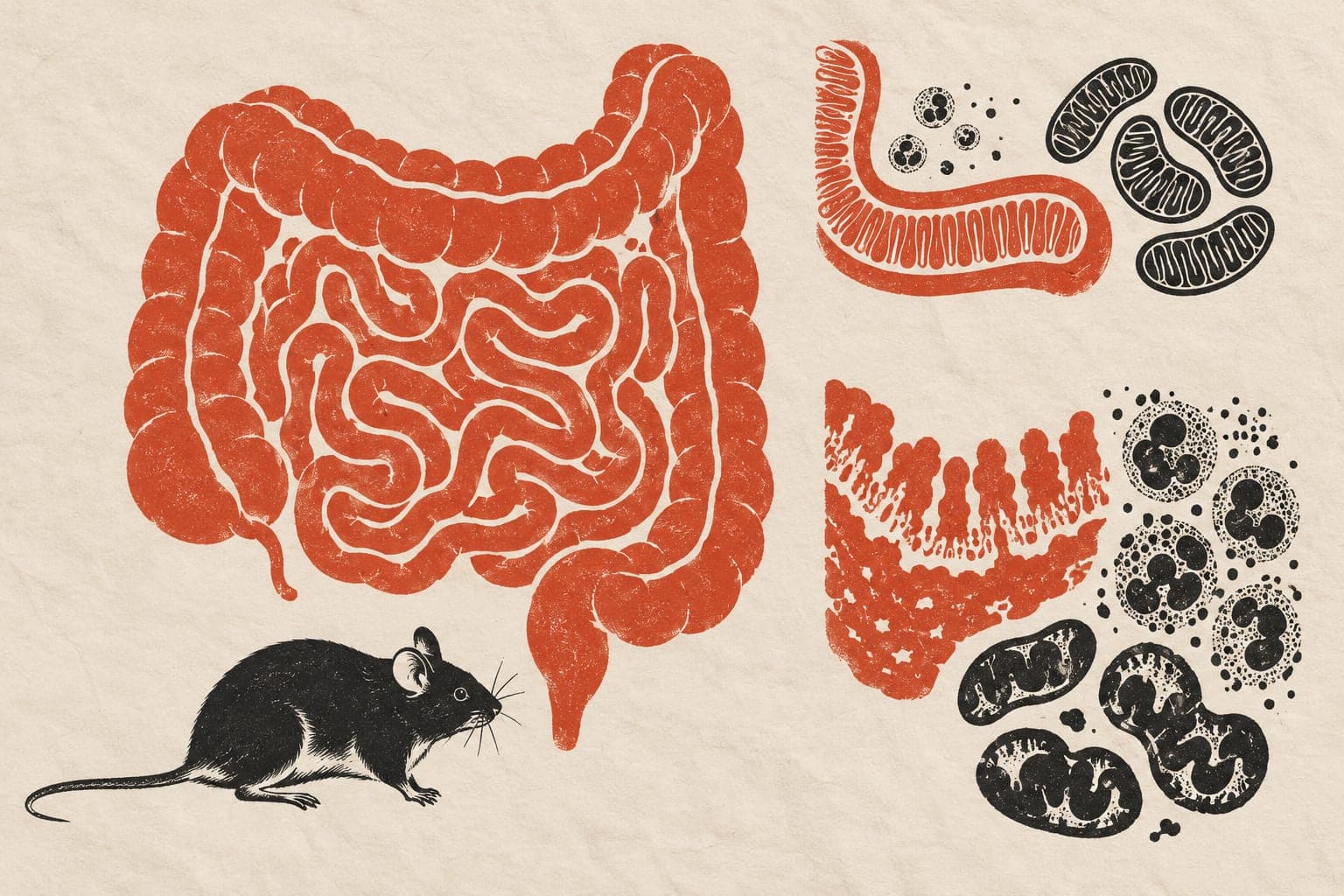
Male C57Bl6/J mice received four antibiotics for four weeks in an experiment testing whether gut microbes contribute to aging-related frailty. Treatment began at 68 weeks of age, with each antibiotic supplied in drinking water at 0.5 grams per liter. Researchers compared these mice with untreated 72-week-old mice, 10-week-old mice and 72-week-old mice raised without microbes from birth.
Frailty assessments included 7–10 mice per group and scored 19 signs of decline, including coat deterioration, abnormal gait and cataracts. Both methods of depleting gut microbes shifted frailty scores toward young-mouse values. Motor coordination and recognition memory did not improve. Lower frailty coincided with reduced inflammation-related patterns of gene activity in the liver and altered fat and bile acid metabolism.
Why it matters
Frailty reflects age-related decline beyond chronological age. The work raises questions about how interactions between gut microbes and the liver’s immune and metabolic functions contribute to that decline.
Caveats
The authors note that their experiment could not distinguish whether removing gut microbes prevented frailty or reversed it. Their conclusions are restricted to male mice.
From the paper
- Limitation
Our study leverages two independent microbiome deficiency models to establish a causal relationship between the microbiome and aging-induced frailty.
Quoted word for word from the full text on tandfonline.com.
The paper
Late-life depletion of the gut microbiome attenuates aging-induced frailty in male mice
University of California
Gut Microbes Reports, Nov 16, 2026, Open access, CC BY

Comments
Be the first to comment.