Myelin cells rank among the most conserved in primates and mice
An observational comparison of about one million gene-activity profiles found stronger conservation in precursor cells than in mature cells.
Limit: The analysis measured gene activity, not effects on myelin production or brain function
Edited by Boris Djordjevic · AgingResearch.News
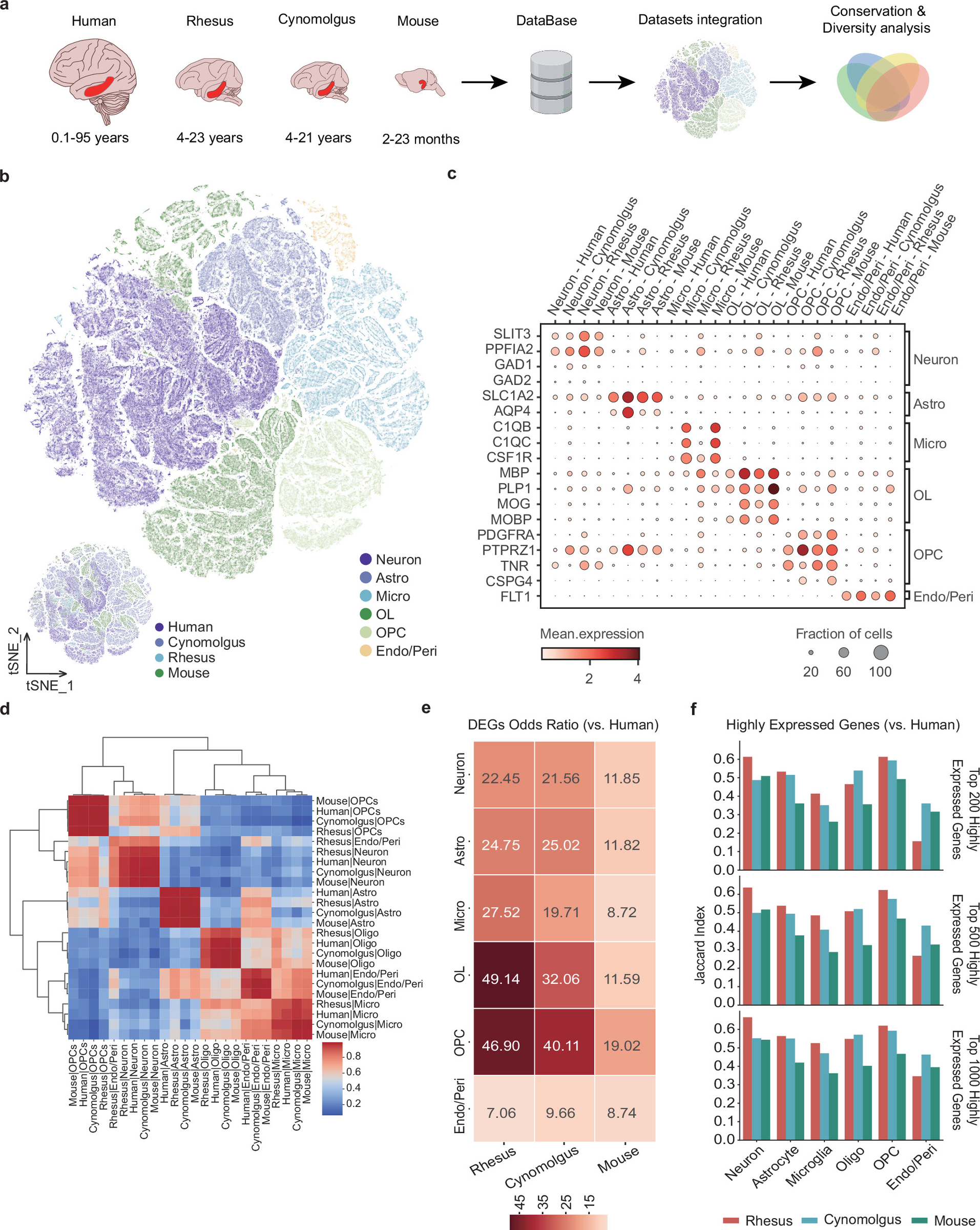
An observational analysis compared gene activity in humans, rhesus macaques, cynomolgus macaques and mice. Researchers integrated about one million profiles from individual cells or cell nuclei in the hippocampus, a brain region involved in memory. They focused on oligodendrocyte lineage cells: cells that make myelin, the insulating coating around nerve fibers, and their precursors.
These cells ranked among the most evolutionarily conserved neural cell populations. Precursor cells had highly conserved gene-activity patterns, while mature cells showed more species-specific differences. The aging comparison found shared gene-activity programs involved in regulating DNA packaging, alongside aging-related patterns that differed between species.
Why it matters
The comparison offers a framework for investigating which aspects of myelin biology and brain aging are shared across mammals and which require species-specific study.
Caveats
The analysis measured gene activity, not effects on myelin production or brain function. The abstract did not report donor numbers or ages.
The paper
Kunming University of Science and Technology
Communications Biology, Oct 25, 2026, Open access, CC BY-NC-ND