Older mice had more scar-forming cells in spinal cord lesions
An experiment found greater exclusion of cells that can develop into nerve-insulating cells from areas where scar-forming cells accumulated in older mice.
Limit: Reported results lack repair outcomes after reducing fibroblast buildup
Edited by Boris Djordjevic · AgingResearch.News
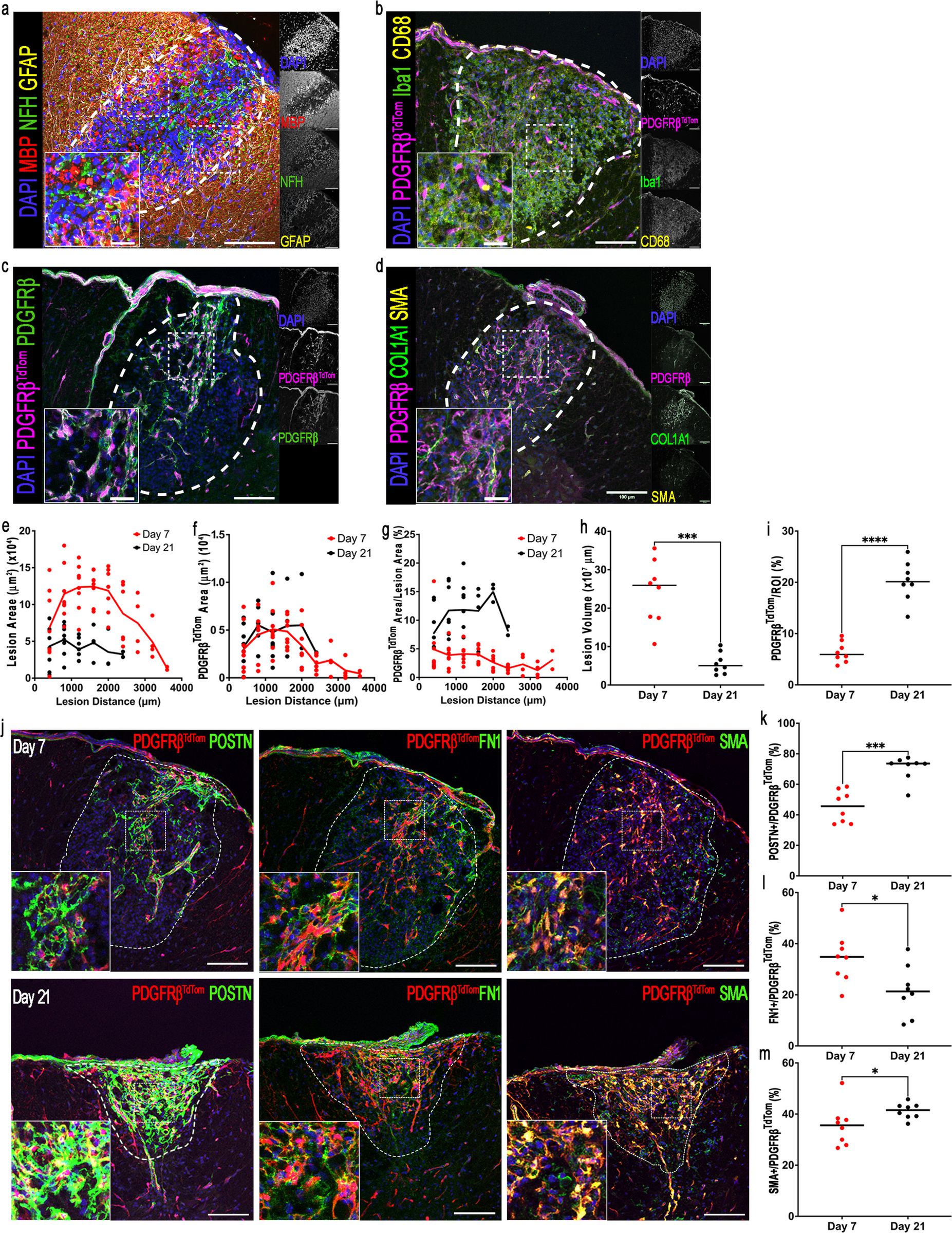
An experiment in mice aged 6–10 weeks and 48–52 weeks examined spinal cord damage caused by a chemical that removes myelin, the insulating layer around nerve fibers. Researchers found that fibroblasts, connective-tissue cells involved in scarring, accumulated in damaged areas. Older mice had more of this buildup.
Areas containing fibroblasts lacked oligodendrocyte precursor cells, which can develop into cells that make myelin. The exclusion of these precursors from fibroblast-rich areas was greater in older mice. In experiments with cells grown in the lab, the precursors also stayed outside areas occupied by fibroblasts.
Why it matters
The capacity to replace myelin declines with age. The findings point to fibroblasts as a possible target for efforts to improve repair in the brain and spinal cord.
Caveats
The age comparison used chemically induced damage in mice, so it does not establish the same age-related effect in people. The reported results do not show whether reducing fibroblast buildup would improve repair.
- Multiple sclerosis
- Alpha-smooth muscle actin
- Collagen type I alpha 1
- Demyelination
- Fibroblast accumulation
- Mice
The paper
Aging-enhanced accumulation of fibroblasts excludes oligodendrocytes in demyelinated lesions
University of Calgary
Journal of Neuroinflammation, Jul 25, 2026, Open access