Age-linked gene activity varies in a human memory region
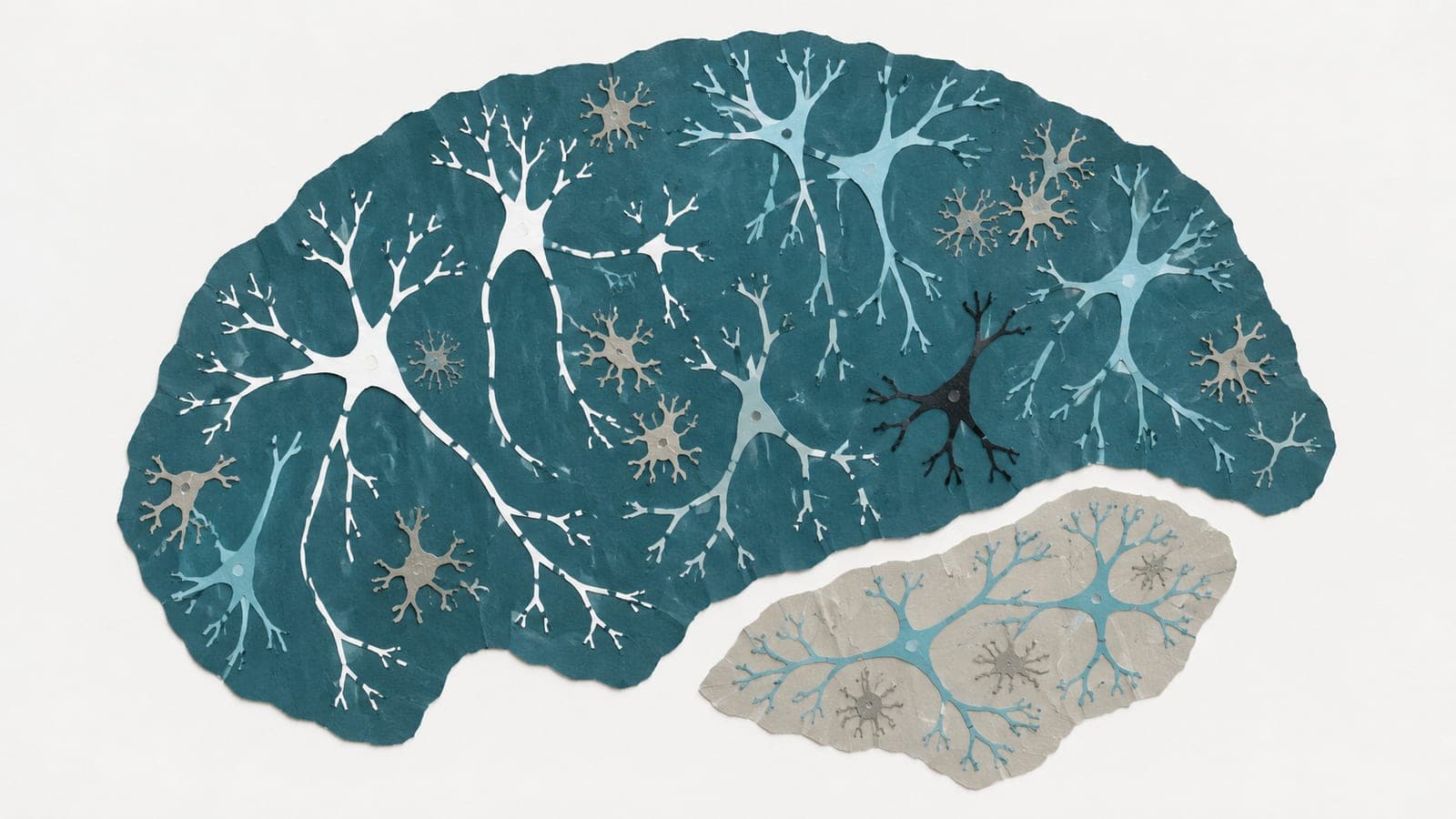
An observational study of human hippocampi collected after death found age-related gene activity patterns that differed by cell type, location and sex.
Limit: Senescence markers identified possible rather than confirmed senescent states
Edited by Boris Djordjevic · AgingResearch.News
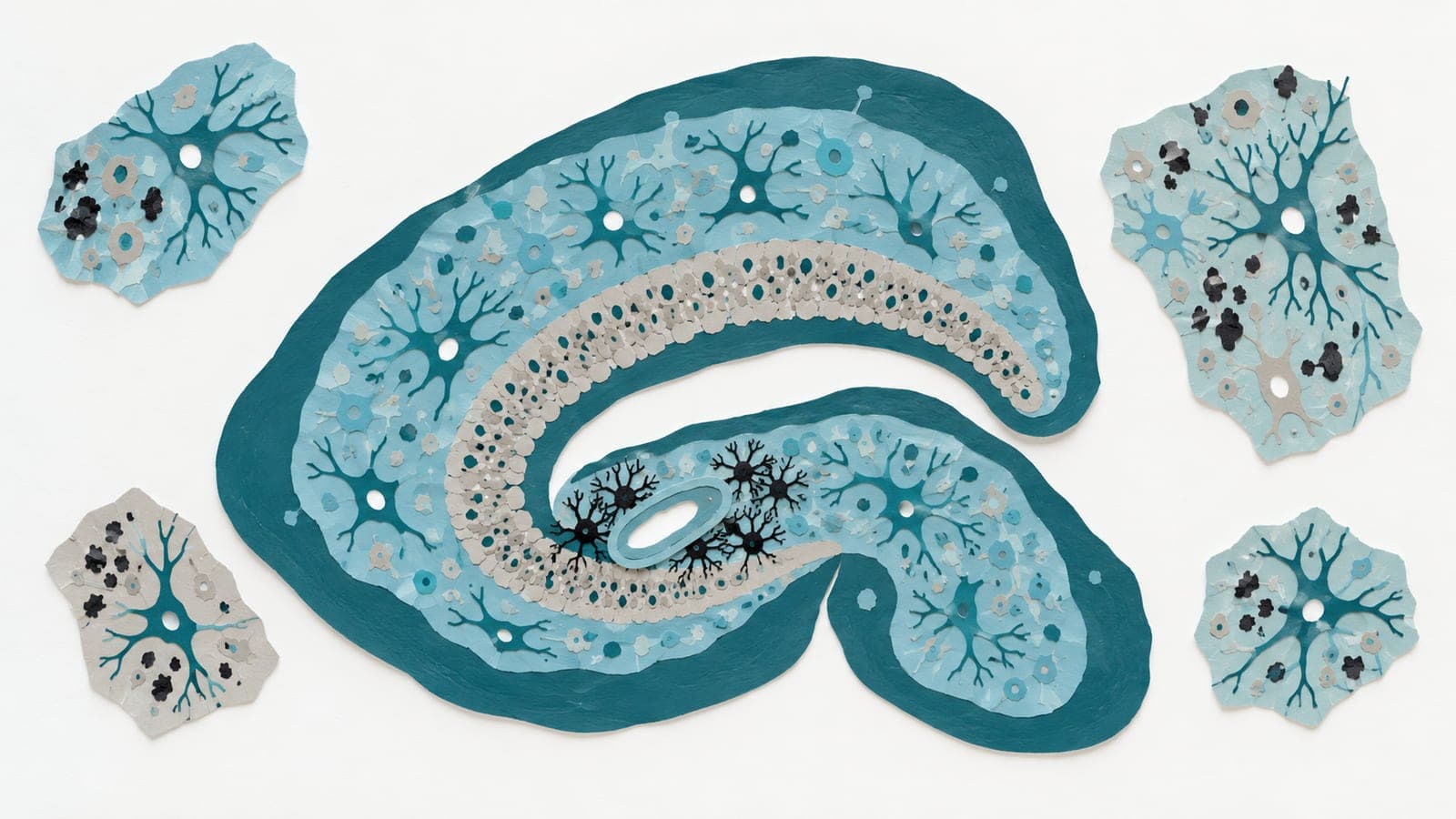
Researchers conducted an observational study of human hippocampi, brain regions involved in learning and memory, collected after death from people across adulthood. They mapped gene activity across cell types and locations and used imaging to examine proteins in the tissue.
Many genes followed different age-related patterns depending on cell type and anatomical layer. Some changes also differed by sex. One gene program, highly active in females and involving brain immune cells and the blood-vessel system, contained many genes associated with senescence, a state in which cells stop dividing. Imaging revealed further differences between possible senescent cell states defined by two different markers. The findings highlighted the importance of location, cell type and sex when examining aging-related patterns in the hippocampus.
Why it matters
Senescence may contribute to aging, but how it appears in the human hippocampus remains unclear. Identifying its signatures bears on understanding this process in a region important for learning and memory.
Caveats
This post-mortem observational study cannot establish cause and effect, and the senescence markers identified possible rather than confirmed senescent states. The paper is a preprint and has not been peer-reviewed.
The paper
Dissecting cellular and molecular networks of aging and senescence in the human hippocampus
New York Genome Center
bioRxiv, Oct 23, 2026, Open access, CC BY, Preprint, not peer-reviewed