Polygenic scores for longevity in relation to brain MRI measures in a cohort of 70-year-olds
Abstract
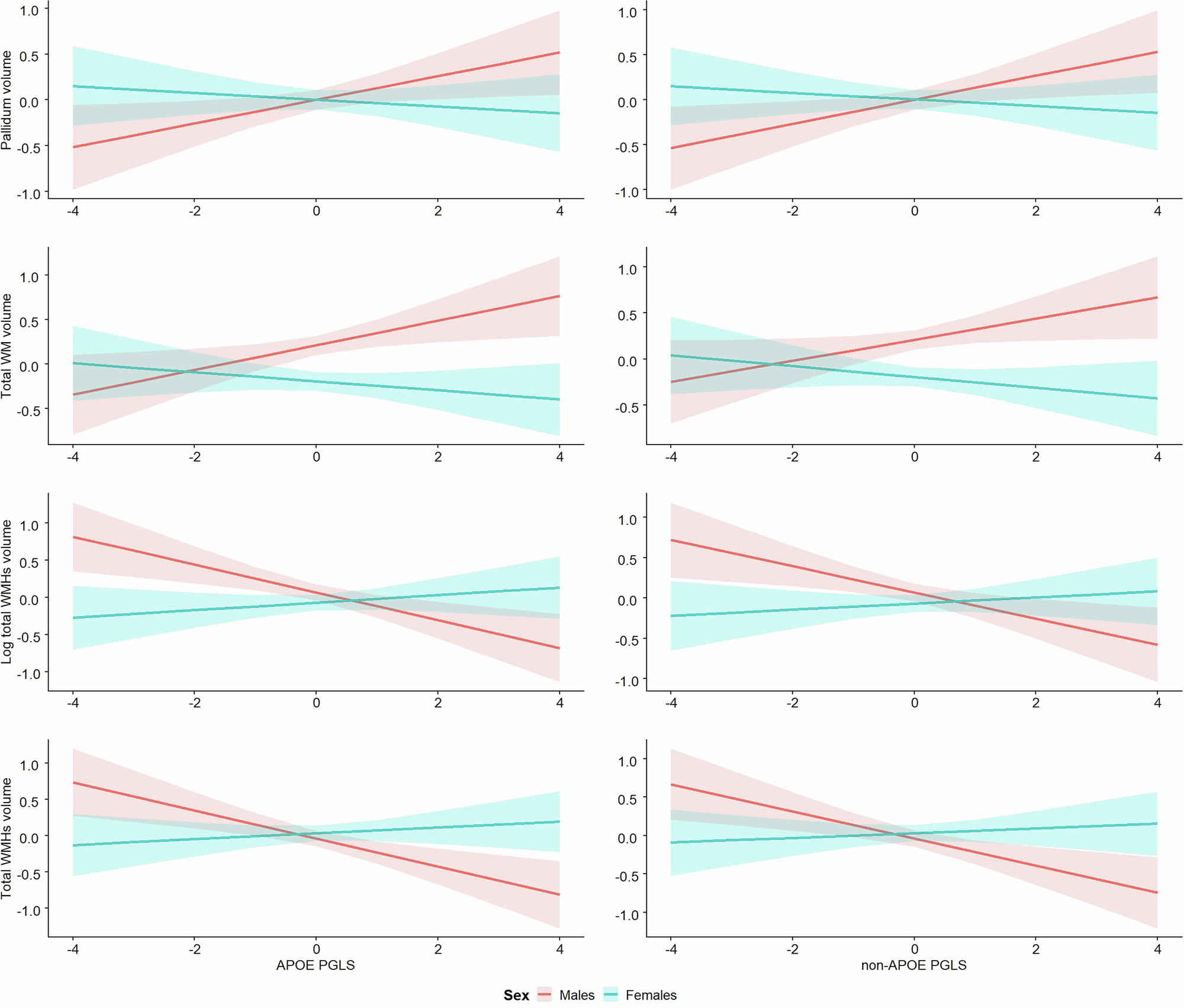
Population-based studies on the relation between polygenic longevity scores (PGLSs) and specific brain regions on magnetic resonance imaging (MRI) are few. We aimed to investigate this relationship in a population of 70-year-olds from Gothenburg, Sweden ( N = 675). We constructed two PGLSs (one with and one without the APOE locus) using longevity GWAS summary statistics. MRI outcomes included total grey matter, white matter (WM), WM hyperintensities (WMHs), subcortical volumes, small vessel disease (SVD) score, cortical thicknesses, and fractional anisotropy (FA) fibre tracts. We adjusted for sex, age, principal components, and sex interactions, and corrected for multiple comparisons. We found no associations in the total sample. In males, both PGLSs were associated with smaller WMHs volume and lower SVD burden, and a thicker cortex of pars triangularis, pars opercularis, and insula. Our findings suggest a possible link between genetic propensity for longevity and lower cerebrovascular burden and certain cortical grey matter areas in males.
From the paper
- Participants
We excluded 116 individuals: 42 failed MRI quality control (QC), 34 lacked genetic data, 28 due to stroke or large infarction, five due to neurological disorders, six due to dementia and one due to missing data on dementia, leaving 675 participants.
Quoted word for word from the full text on nature.com.