Tooth loss ranked third in Japanese dementia risk analysis
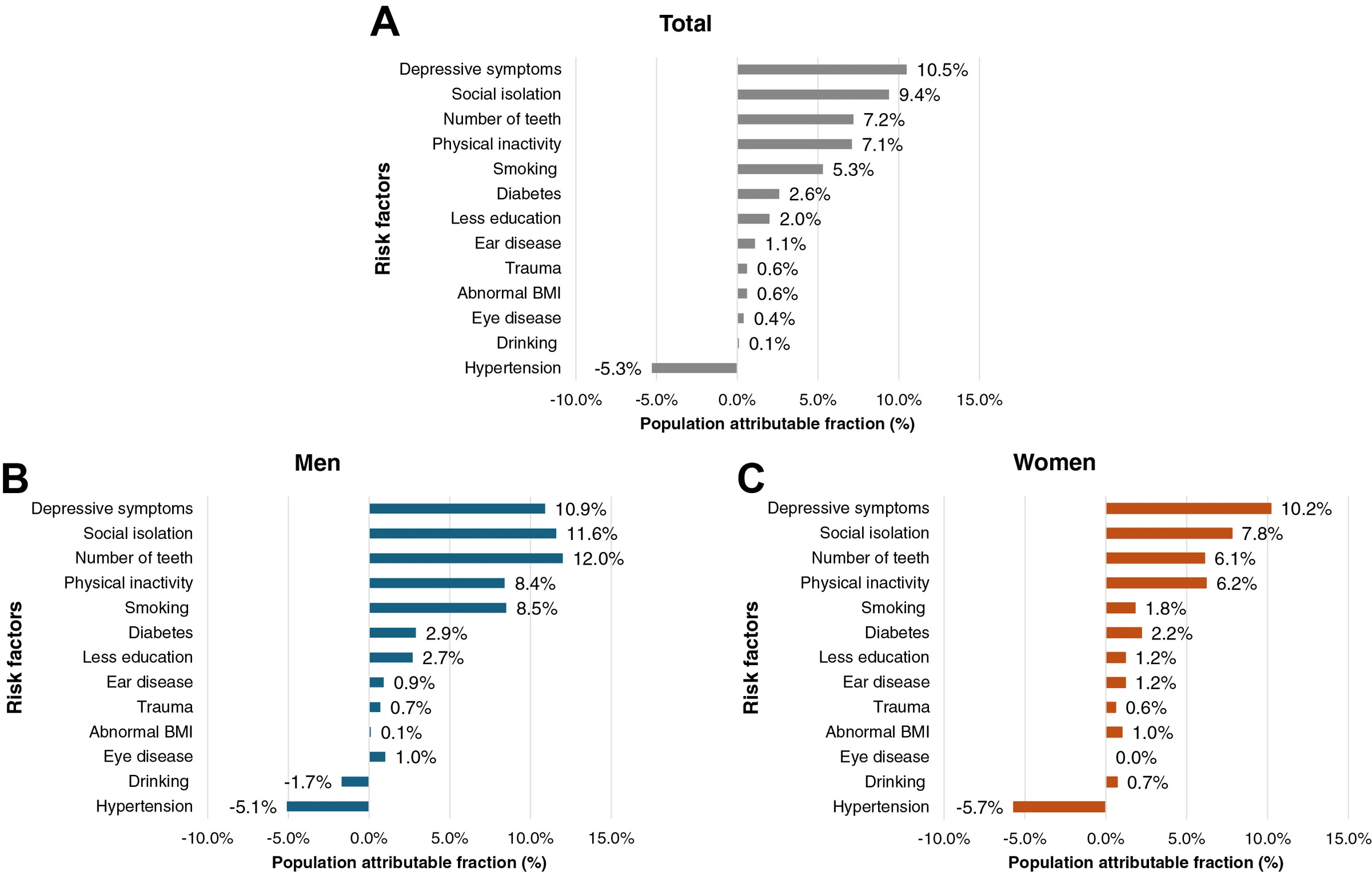
The estimated share of dementia cases attributable to tooth loss was 7.2%, compared with 10.5% for depressive symptoms and 9.4% for social isolation.
Limit: The study did not measure whether preventing tooth loss reduces dementia
Edited by Boris Djordjevic · AgingResearch.News
An observational study followed 47,293 functionally independent adults aged 65 or older in 22 Japanese municipalities who had no dementia at enrollment. Their average age was 73.5 years, and 46.7% were men. Over a median follow-up of 9.0 years, 17.4% developed dementia. Researchers compared tooth loss with 12 other modifiable dementia risk factors, adjusting their analyses for age, sex and income.
Having fewer teeth was associated with a higher rate of dementia compared with having at least 20 teeth. Researchers estimated the share of dementia cases attributable to each factor, using its association with dementia and how common it was. Tooth loss ranked third among the 13 factors overall. In men, it ranked first, with an estimated attributable share of 12.0%.
Why it matters
The authors suggested including oral health in dementia prevention strategies alongside other modifiable risk factors.
Caveats
This observational study could not establish that tooth loss caused dementia or that preventing tooth loss would prevent dementia. Its findings concern functionally independent older adults in Japan, not younger people or people already living with dementia.
The paper
Journal of the American Medical Directors Association, Nov 2, 2026, CC BY


Comments
Be the first to comment.