Eating difficulty linked to broader vulnerability in adults
Newly reported eating difficulty was linked to 91.5 more dementia-indicator outcomes per 1,000 over six years than in matched comparison groups.
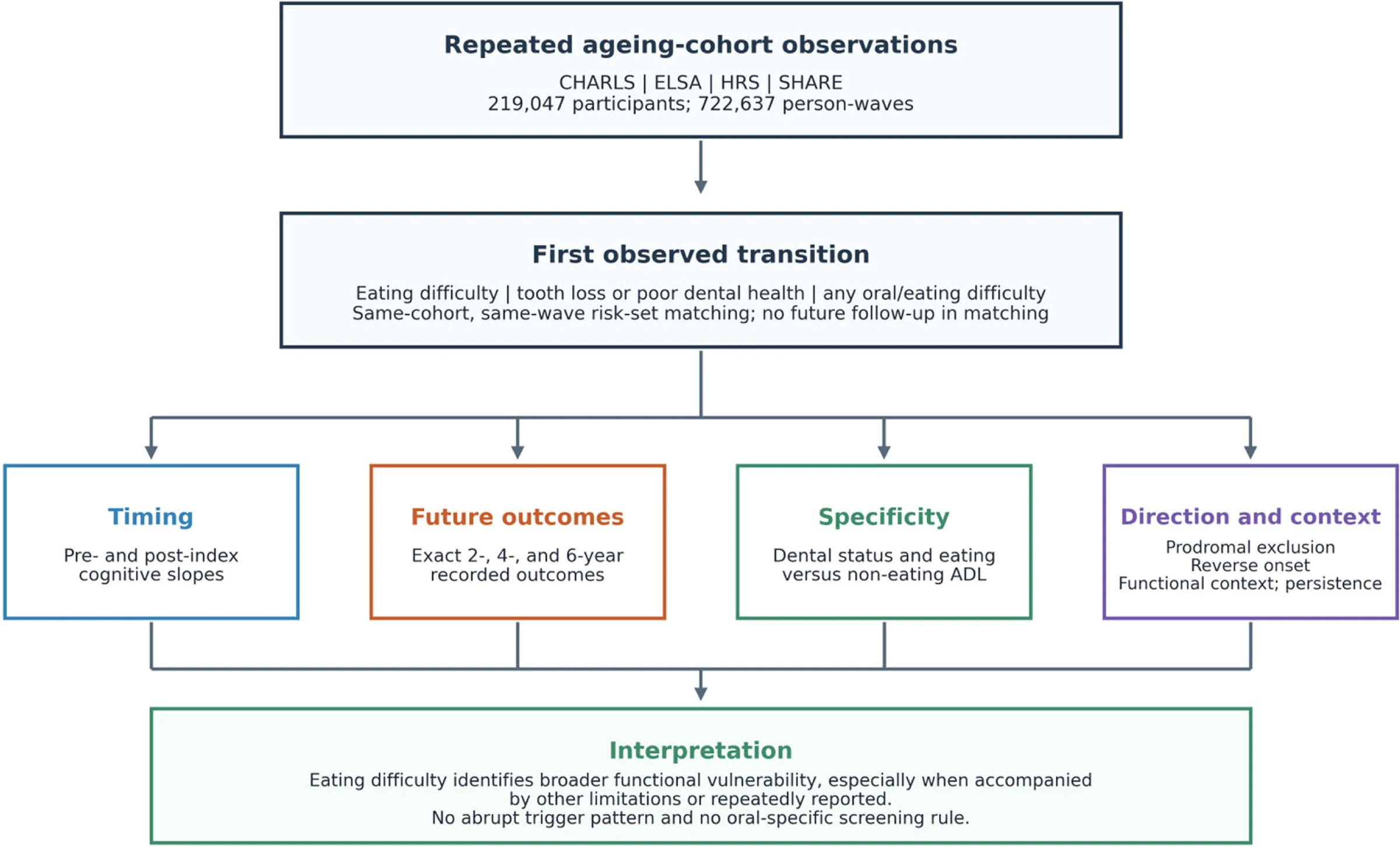
Limit: Low cognition predicted later eating difficulty, so cognitive problems could precede eating problems
Edited by Boris Djordjevic · AgingResearch.News
In an observational study of 219,047 participants across four aging cohorts, researchers examined whether newly reported eating or dental problems preceded cognitive decline. They matched newly reported problems within each cohort and assessment wave, then examined cognitive changes and dementia indicators—measures used to flag dementia.
The six-year risk difference linked to eating difficulty remained 88.4 per 1,000 after adjustment. Tooth loss or poor dental health had approximately no adjusted association. Links were larger when eating difficulty accompanied another functional limitation or was reported at consecutive assessments. Cognitive decline did not abruptly accelerate, and lower cognition predicted later eating difficulty. The researchers concluded that eating difficulty marked broader vulnerability in everyday functioning, rather than an oral-specific trigger for cognitive decline.
Why it matters
Dental and primary-care visits may offer opportunities to assess both everyday functioning and cognition as people age.
Caveats
The observational design cannot establish cause and effect, and the reported dementia risks concerned indicators rather than necessarily clinical diagnoses. The findings do not support using eating difficulty as an oral-specific dementia screening test.