Exercise left lasting growth suppression in mouse tumor cells
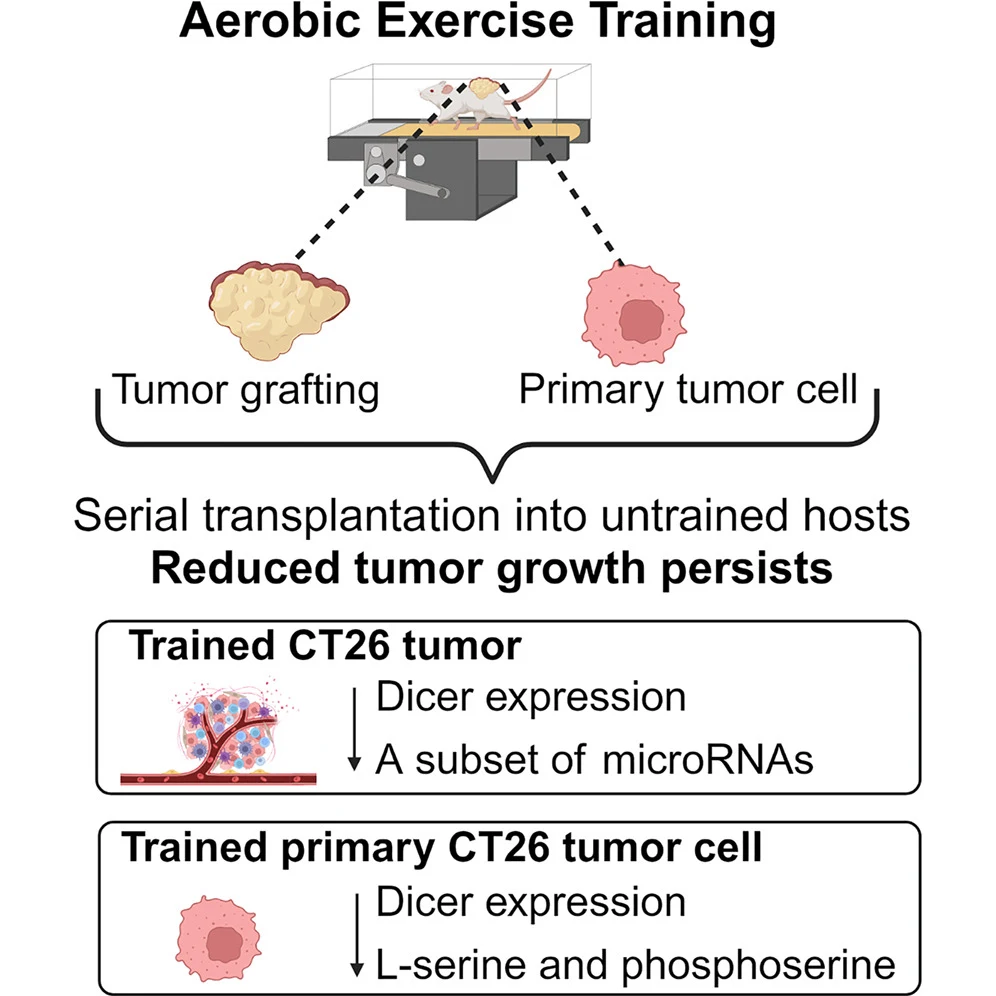
In mouse experiments, colorectal cancer cells from exercised animals retained slower growth after repeated transplantation into untrained mice.
Our read
Interventions- Studied:
- Experiments in mice with colorectal cancer
- What changed:
- Tumor cells from exercised mice kept growing more slowly after repeated transplantation into untrained mice
- The catch:
- The abstract omits the exercise regimen, leaving the training dose behind lasting suppression unspecified
- In the record:
- One of 1,653 papers on aerobic exercise on record: 623 with results in people, 195 in animals.
- Why it’s aging research:
- It studies an intervention with evidence of extending healthy life.
Editor of record: Boris Djordjevic · AgingResearch.News
Mice with colorectal cancer underwent aerobic exercise training in animal experiments testing whether exercise could leave lasting changes in tumor cells. Exercise suppressed primary tumor growth, cancer spread to the lungs and cachexia, a condition involving severe weight and muscle loss. Tumor cells from exercised mice retained reduced growth after repeated transplantation into untrained mice. The growth-suppressing state also persisted outside the animals.
Tumors from exercised mice had lower levels of some microRNAs, small RNA molecules that regulate gene activity, and of machinery that produces them. They also had less serine, an amino acid, inside their cells. The authors concluded that exercise could impose lasting constraints on tumor cells’ regulation and metabolism.
Why it matters
For colorectal cancer, an age-related disease, the work addresses whether physical activity can change tumor cells themselves rather than acting only through the surrounding body.
Caveats
The lasting growth-suppressing state was tested in mouse colorectal cancer, not human tumors. The abstract does not give group sizes or the exercise regimen.
Comments
Be the first to comment.