Brain-wave analysis identifies two Alzheimer’s subtypes
In 160 people with Alzheimer’s disease, two brain-wave subtypes differed in network organization, cognitive profiles and clinical outcomes.
Our read
Biomarkers- Studied:
- Study of 160 people with Alzheimer’s disease
- What changed:
- Brain-wave analysis classified people with Alzheimer’s disease into two subtypes with different network patterns and cognitive profiles
- The catch:
- Brain-wave subtypes lacked corresponding differences in standard MRI brain measures
Editor of record: Boris Djordjevic · AgingResearch.News
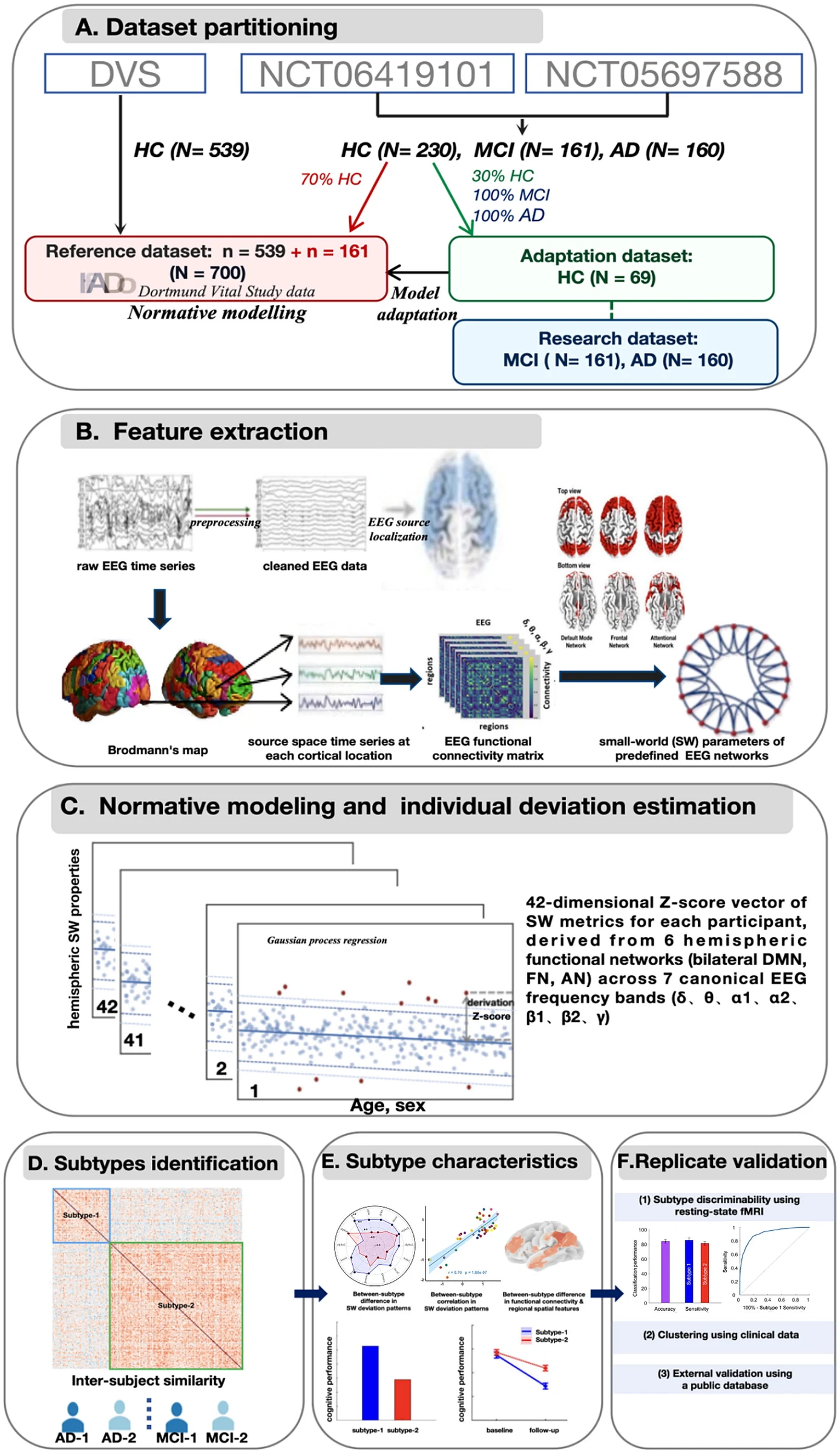
Brain-wave recordings from 160 people with Alzheimer’s disease, 161 with mild cognitive impairment and 769 healthy controls were examined in an observational analysis across multiple datasets. Mild cognitive impairment involves problems with memory or thinking. Researchers modeled age-related patterns in brain-network organization separately for each sex.
They grouped people by how their networks differed from these reference patterns. Both conditions had two subtypes with different cognitive profiles. One had relatively preserved network organization and distinctive patterns of cognitive recovery. The other had widespread network disruption and poorer clinical outcomes. Standard brain measures from magnetic resonance imaging did not differ between subtypes. Corresponding subtypes shared brain-wave patterns across the two conditions. The authors concluded that their approach identified a high-risk mild cognitive impairment subtype before detectable brain shrinkage.
Why it matters
Brain networks change with age. The authors suggest that accounting for these changes could help classify Alzheimer’s disease by its underlying biology and assess people’s likely clinical course.
Caveats
The analysis linked brain-wave patterns with clinical outcomes but could not rule out other differences between the groups contributing to those outcomes.

Comments
Be the first to comment.