Immune signal helps coordinate heart repair in zebrafish
Experiments in zebrafish linked interferon-gamma signaling in immune cells to scar remodeling and heart muscle renewal after injury.

Our read
Mechanisms- Studied:
- Experiments in zebrafish
- What changed:
- Scar resolution was delayed in zebrafish lacking ifng1
- The catch:
- Scar resolution and cell proliferation do not directly measure heart pumping function
Editor of record: Boris Djordjevic · AgingResearch.News
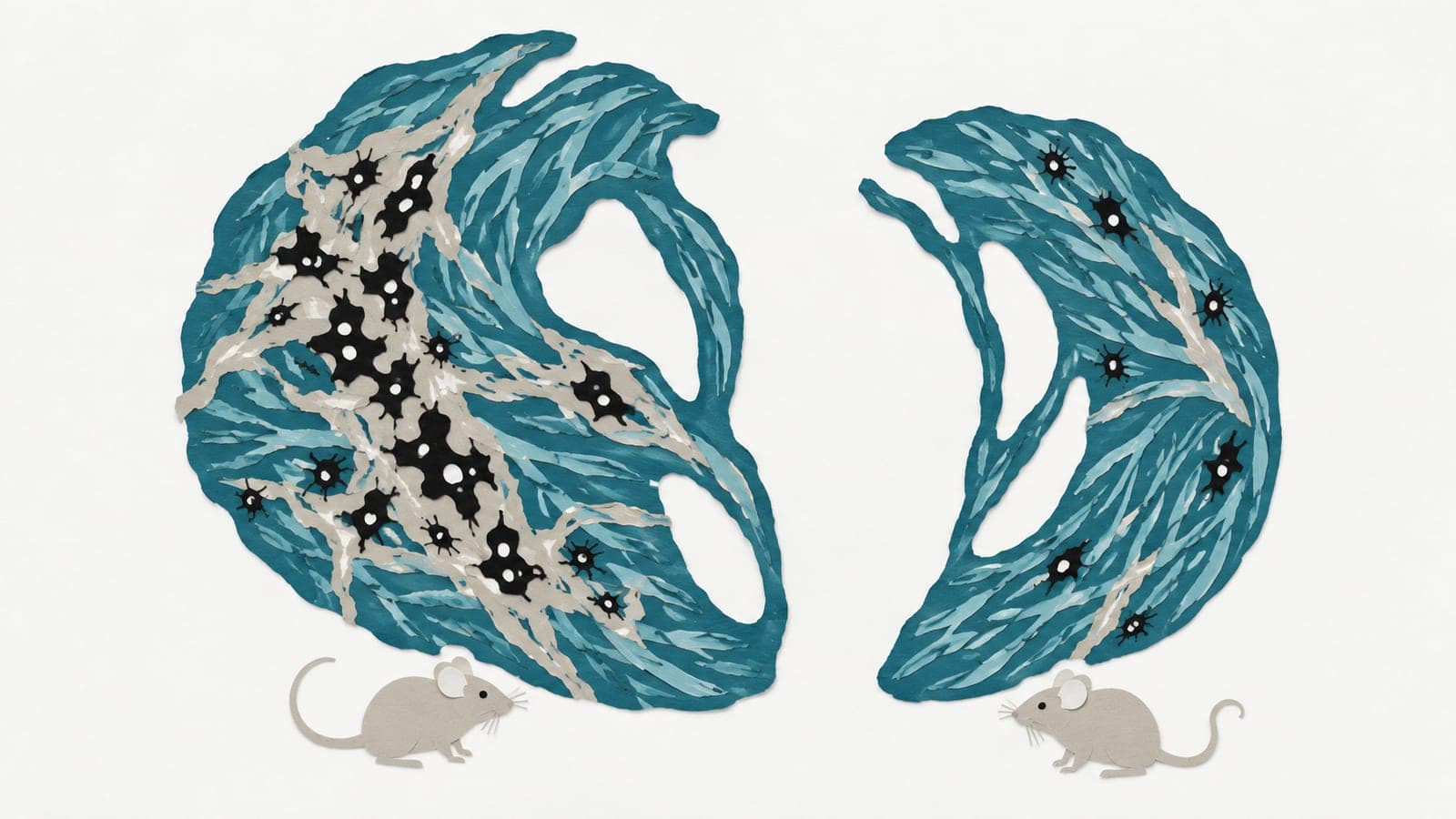
Zebrafish lacking ifng1, a gene for the immune signal interferon-gamma, showed impaired heart repair after injury in animal experiments. They cleared debris and remodeled collagen less effectively. Their heart muscle cells showed reduced outward extension and division, and scars took longer to resolve. Blocking interferon-gamma signaling specifically in macrophages, a type of immune cell, reproduced key repair defects.
The researchers also used nanoparticles to reduce production of Timp4.3, a protein that inhibits tissue-remodeling enzymes, in injured adult mutant fish. This improved collagen remodeling and the outward extension of heart muscle cells. It also partly restored heart muscle cell division and scar resolution. The authors identified Timp4.3 as a functional regulator downstream of interferon-gamma signaling.
Why it matters
Heart regeneration offers a way to study how immune responses support tissue repair, a question relevant to preserving organ function with age.
Caveats
The experiments tested injury repair in zebrafish; they do not show whether manipulating this pathway would help repair human hearts.
Comments
Be the first to comment.