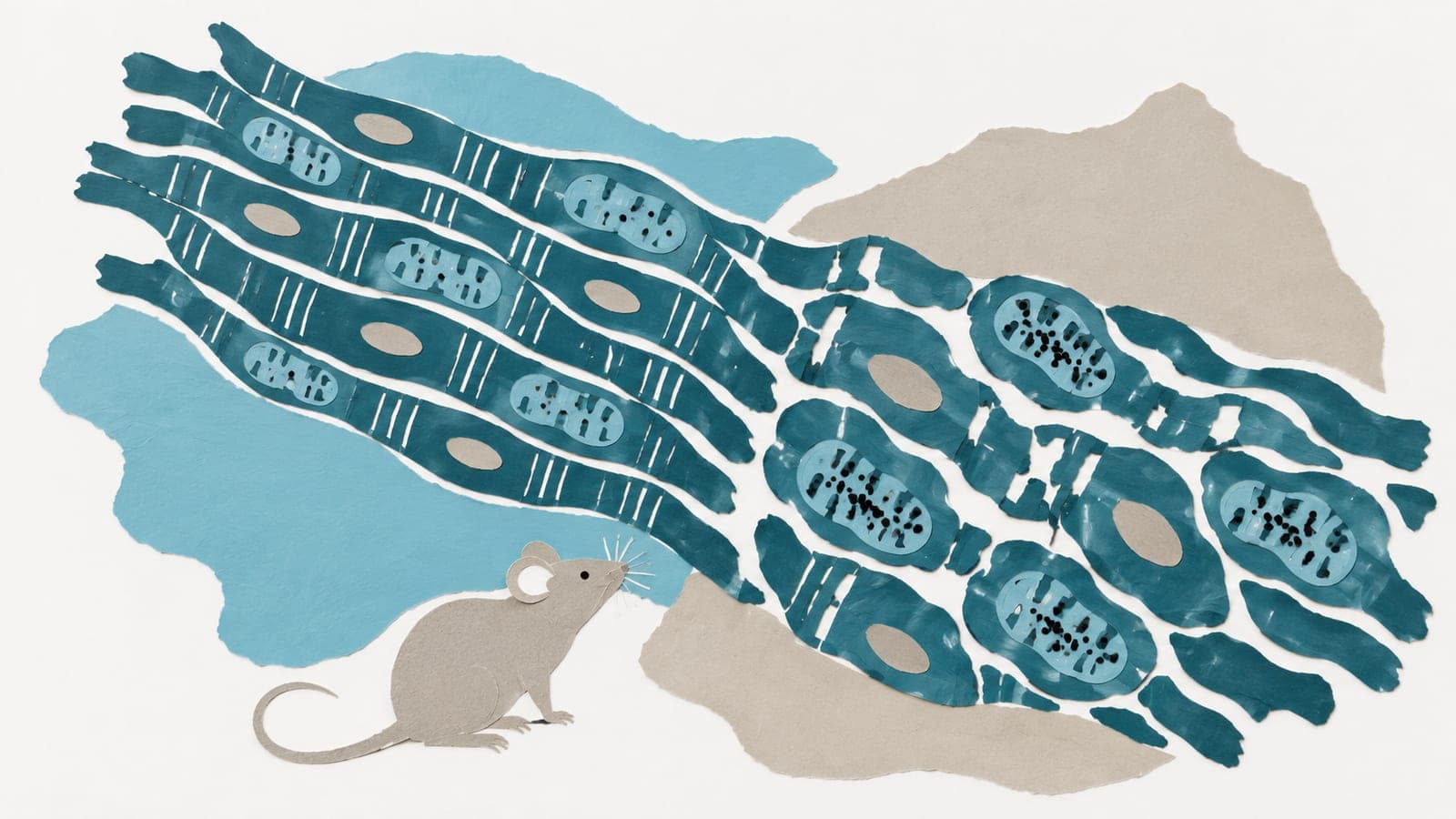
Protein loss made irregular rhythms harder to trigger in mice
Aging mice lacking the protein in heart muscle cells had reduced structural changes in the heart’s upper chambers and lower susceptibility to an experimentally triggered irregular heartbeat.

Limit: Spontaneous atrial fibrillation was not measured; rhythms were triggered by programmed intracardiac stimulation
Edited by Boris Djordjevic · AgingResearch.News
In experiments involving naturally aged rats and mice given D-galactose to model aging, researchers investigated atrial fibrillation, an irregular heartbeat affecting the heart’s upper chambers. Both models showed greater susceptibility to this rhythm and higher levels of Reg3γ, a protein, in atrial tissue. Heart muscle cells were its main source. Aging mice engineered to lack Reg3γ in heart muscle cells had reduced structural changes in their atria and lower susceptibility to experimentally triggered atrial fibrillation.
In lab experiments, Reg3γ recruited and activated macrophages, a type of immune cell, by binding to another protein and activating a signaling pathway. Separately, observational UK Biobank data linked higher blood levels of Reg3γ to a greater risk of developing atrial fibrillation.
Why it matters
Advanced age is a major risk factor for atrial fibrillation. The findings point to Reg3γ as a candidate target for research on preventing age-associated atrial fibrillation.
Caveats
The animal and lab experiments did not test whether targeting Reg3γ prevents atrial fibrillation in people. The findings were reported in a conference abstract, and the human association cannot establish cause and effect.
The paper
2nd Hospital of Tianjin Medical University
ESC Congress 2026 Abstract, Oct 26, 2026
Presented at ESC Congress 2026