A population representative XAI framework for transparent dysglycemia screening in Indonesia
Abstract
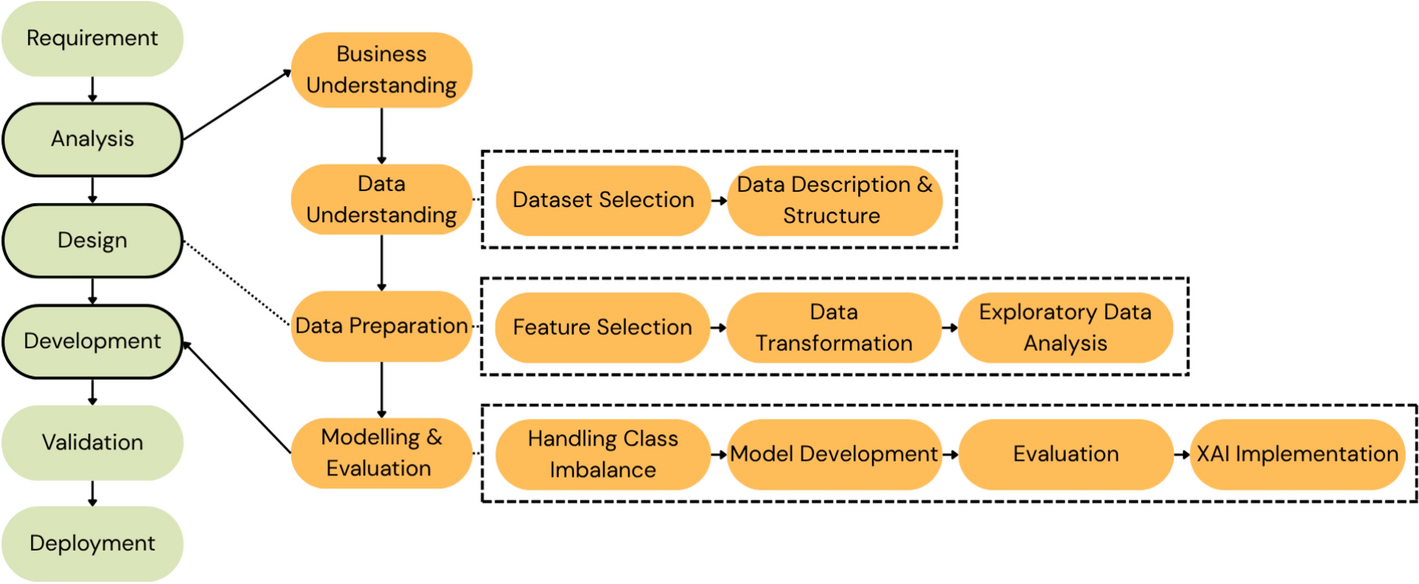
Deploying trustworthy AI requires more than predictive accuracy; it demands population-representative data, transparent explainability, and user-centered design. Despite rapid mobile penetration across Southeast Asia, existing AI-based health tools remain predominantly trained on non-representative datasets and function as opaque black-box systems, limiting clinical trust. This study addresses these gaps through a deployable Explainable AI (XAI) framework for dysglycemia screening in Indonesia. Features were extracted from the Indonesia Family Life Survey 5 (IFLS5), a nationally representative longitudinal survey ( $$\sim $$ 83% of the Indonesian population), using its measured HbA1c-based labels for dysglycemia screening. Feature selection employed a four-stage XAI-in-the-loop pipeline combining literature review, statistical filtering, domain expert consultation, and SHAP-based evaluation. Among models trained, XGBoost achieved the highest performance (ROC-AUC = 0.72), with SHAP used both for post-hoc interpretation and feature selection. SHAP analysis indicated clinical alignment, with age, BMI, and hypertension as dominant risk factors, including a non-linear risk increase after age 45. The model was deployed as an Android application combining visual SHAP explanations with LLM-generated narratives. A pilot evaluation (n = 12) returned a mean comprehension score of 4.31/5. The framework illustrates an approach for developing transparent, population-representative mHealth AI that is meaningful and accessible to its intended users.
- Explainable ai dysglycemia screening application
- Machine learning
- Dysglycemia
- BMI
- Comprehension score
- Humans
The paper
Kanazawa University
Discover Artificial Intelligence, 18 Sep 2026, Open access, CC BY-NC-ND