Blood protein patterns linked to delirium after surgery
A 12-protein pattern was linked to delirium, which affected 26 of 88 older adults undergoing elective surgery.
Our read
Biomarkers- Studied:
- Cohort study of 88 older adults undergoing elective surgery, 30 days
- What changed:
- A 12-protein pattern over time was linked to delirium after surgery
- The catch:
- Delirium could cause the protein changes rather than result from them
Editor of record: Boris Djordjevic · AgingResearch.News
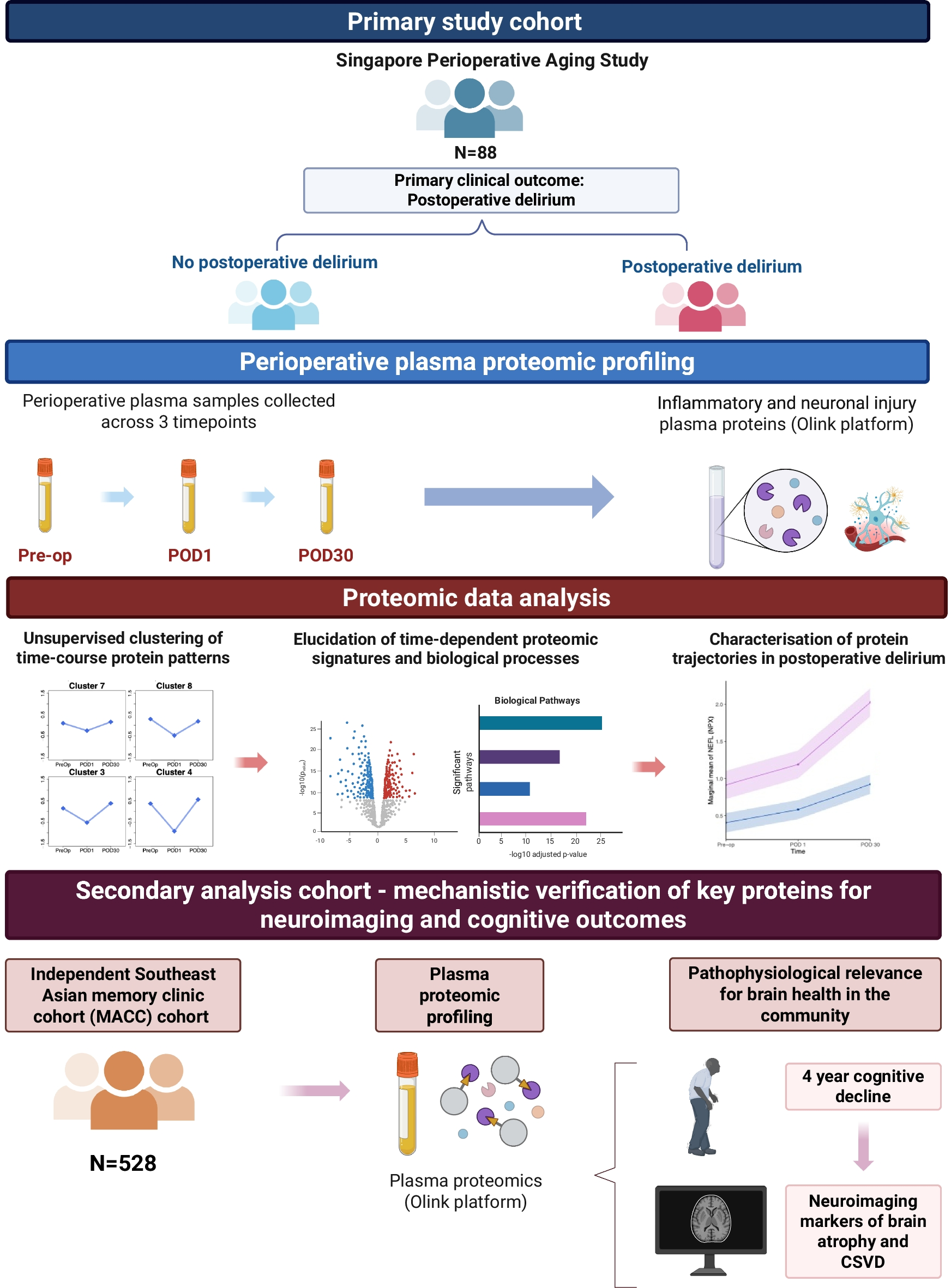
Blood samples from 88 older adults undergoing elective surgery in a Southeast-Asian cohort were analyzed in a longitudinal study. Researchers measured 447 proteins related to inflammation and nerve-cell injury before surgery, one day afterward and 30 days afterward. The most altered profiles related to body-wide inflammation on day one and a broader pattern reflecting nerve-cell injury on day 30. A 12-protein pattern over time was linked to delirium, a sudden state of confusion, in 26 participants (30%).
In a separate longitudinal cohort of 528 Southeast-Asian memory-clinic participants, six of those proteins were also linked to brain shrinkage, disease of the brain’s small blood vessels and cognitive decline over four years.
Why it matters
Inflammation and nerve-cell injury are processes these protein measurements may help characterize in older adults. The authors suggest the proteins may be targets for improving cognitive health.
Caveats
The protein links leave open whether the changes contributed to delirium or reflected it. The findings may not extend beyond these Southeast-Asian surgical and memory-clinic populations.
Where the evidence stands
Surgery
- 130 independent labs in 34 countries
- 28 findings against
- Funders: National Institute on Aging and others
- 22 of 227 findings with company ties
Inflammation
- 1,047 independent labs in 77 countries
- 205 findings against
- Funders: National Institutes of Health and others
- 382 of 4,612 findings with company ties

Comments
Be the first to comment.