Gene deletion eased osteoarthritis but hindered bone growth in mice
Cartilage-specific gene deletion reduced obesity-associated disease in male and female mice but disrupted bone growth when done early after birth.
Our read
Mechanisms- Studied:
- Preprint: experiments in male and female mice
- What changed:
- Cartilage-specific gene deletion reduced cartilage damage and pain-related sensitivity in mice with obesity-associated osteoarthritis
- The catch:
- Pain benefit rests on pain-related sensitivity, a proxy for experienced pain
Editor of record: Boris Djordjevic · AgingResearch.News
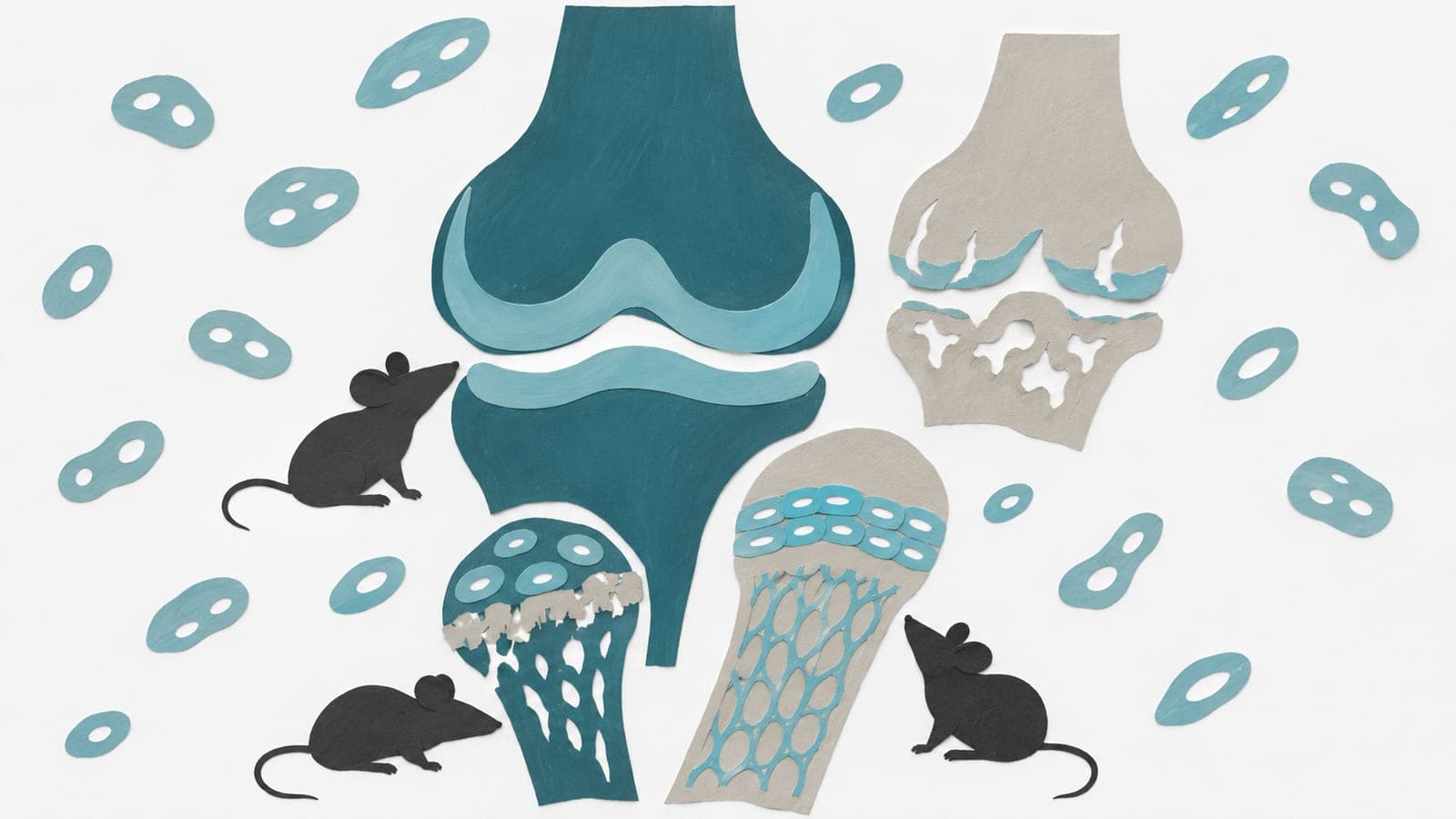
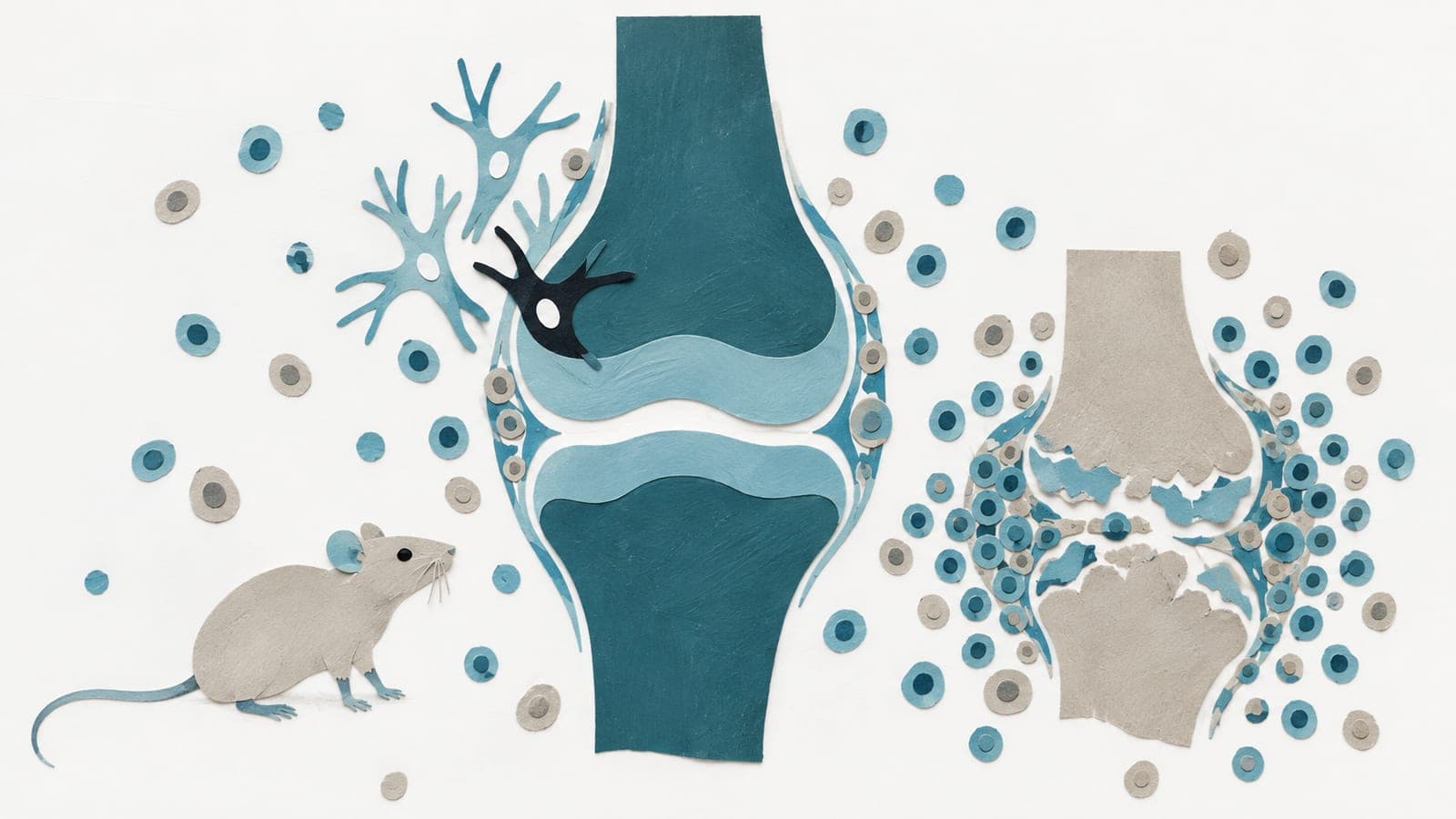
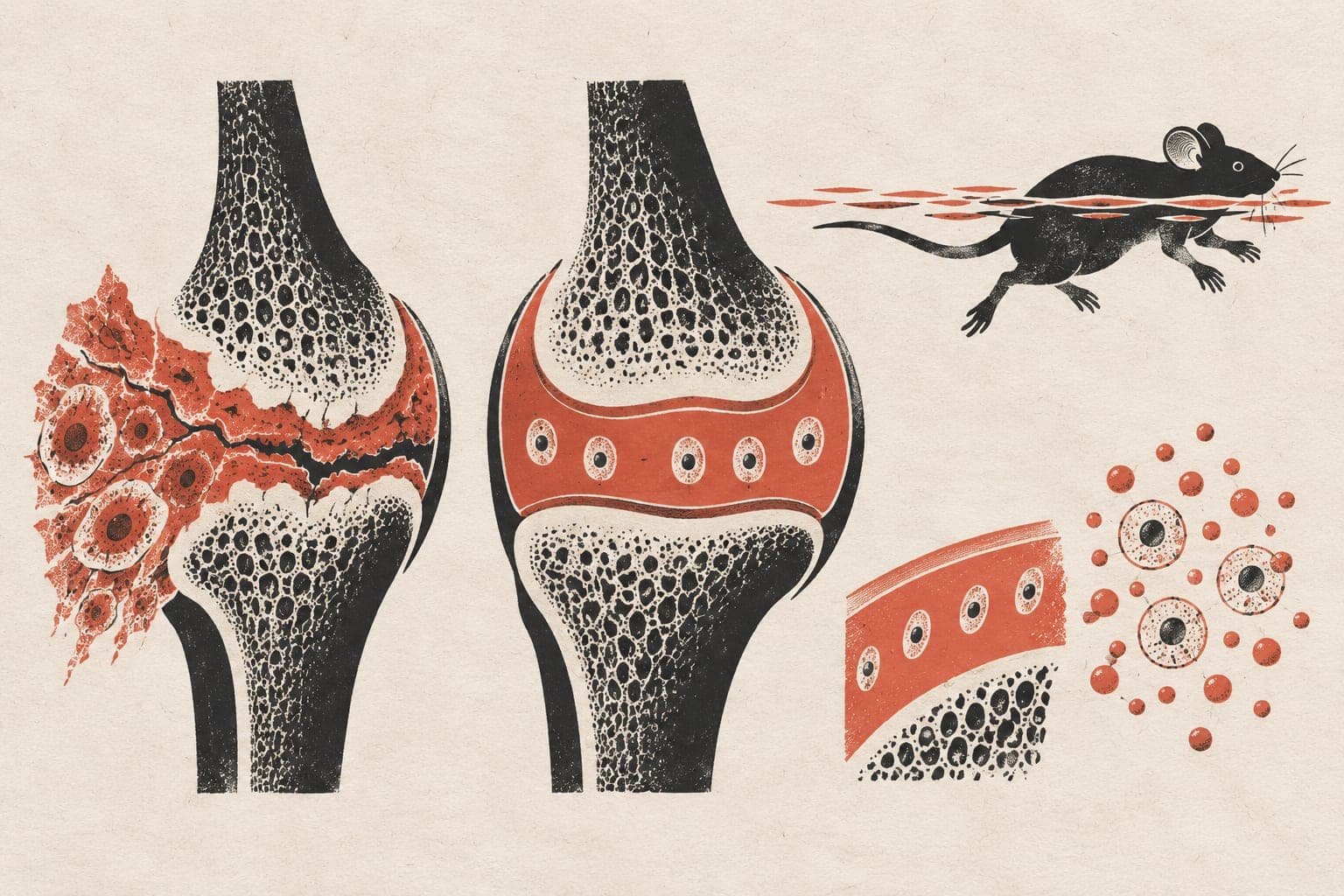
Male and female mice developed less obesity-associated osteoarthritis in animal experiments that deleted the gene for acetyl-CoA carboxylase 1, a fat-making enzyme, specifically in cartilage. The deletion reduced cartilage damage and pain-related sensitivity without substantially changing the body’s metabolic responses to a high-fat diet.
After a knee ligament rupture, deletion also reduced pain-related responses, with significant structural protection predominantly in females. Drug-based inhibition of acetyl-CoA carboxylase activity also reduced obesity-worsened osteoarthritis after injury. However, deleting the gene early after birth severely disrupted growth plates, the regions where long bones grow. It impaired the maturation of cartilage cells and reduced bone lengthening, followed by impaired structure in the spongy bone.
Why it matters
Osteoarthritis lacks effective treatments that alter its course. The authors highlight this enzyme as a potential target in adults while emphasizing its essential contribution to normal skeletal growth.
Caveats
Mouse experiments leave open whether targeting this enzyme would reduce joint damage and pain-related symptoms in people. The work is a preprint and has not been peer-reviewed.
Where the evidence stands
Acc inhibitors
- 1 lab in 1 country
- Funder: National Institutes of Health
ACACA
- 7 independent labs in 6 countries
- 2 trials
- Funders: National Institutes of Health and 8 more
- 2 of 2 trials sponsored by developers of drugs aimed at it
The paper
Ohio University
bioRxiv, Nov 17, 2026, Open access, CC BY-NC-ND, Preprint, not yet peer-reviewed

Comments
Be the first to comment.