Aging was most strongly linked to brain protein changes in mice
A laboratory analysis across the mouse lifespan linked aging to broader brain protein changes than amyloid-beta pathology, which modified selected age-related processes.
Our read
Mechanisms- Studied:
- Preprint: experiments in wild-type and 5xFAD mice
- What changed:
- Aging was linked to broader brain protein changes than amyloid-beta pathology
- The catch:
- The analysis reports protein patterns, not changes in memory or brain function
- Why it’s aging research:
- It looks at how biology varies with age or lifespan.
Editor of record: Boris Djordjevic · AgingResearch.News
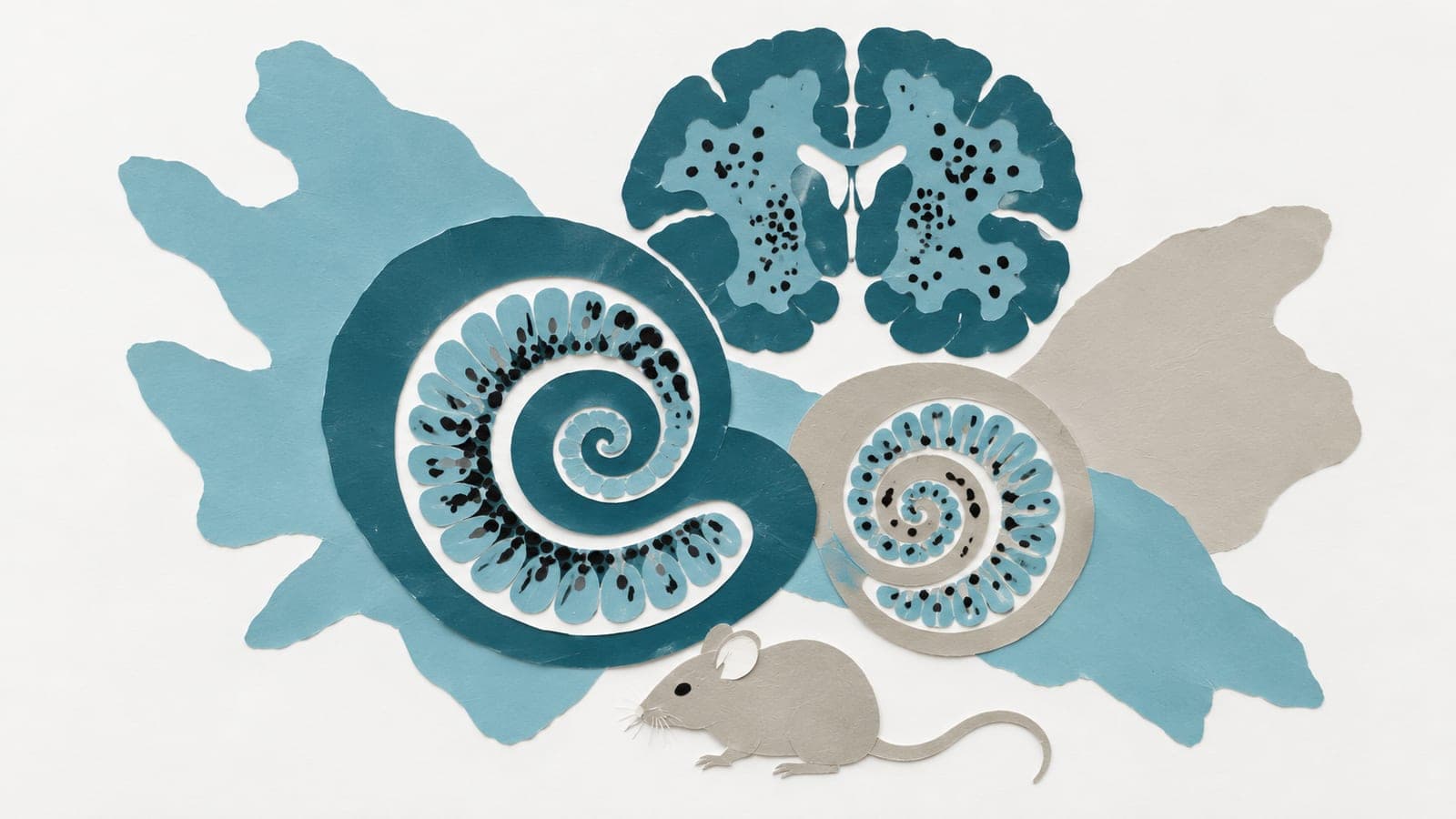
Wild-type mice, without the modeled disease, and 5xFAD mice, which model Alzheimer’s-related changes involving the protein amyloid-beta, were compared across the lifespan in a laboratory study. Researchers measured 8,535 brain proteins and identified 51 groups of proteins with related patterns.
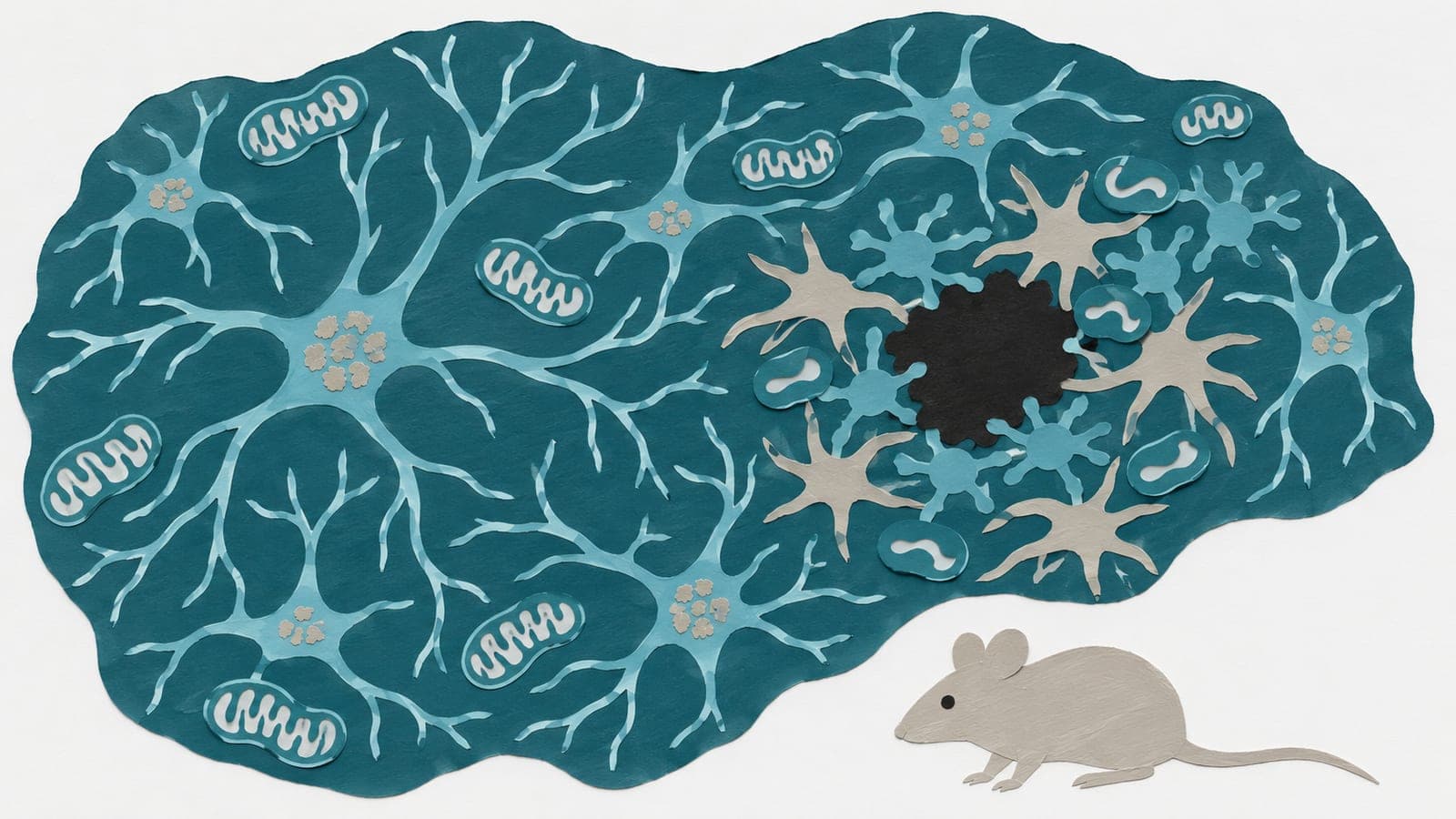
Aging was the predominant factor associated with changes in brain protein patterns. Changes involving protein production and nerve-cell processes occurred independently of amyloid-beta pathology. Amyloid-beta pathology was linked to changes in selected age-related processes. These included reduced machinery for energy production in mitochondria, the cell’s energy-producing structures, and stronger activation patterns in brain support cells called astrocytes and immune cells called microglia. Key aging- and disease-related patterns were also highly similar in human Alzheimer’s brain protein datasets.
Why it matters
Brain aging and Alzheimer’s pathology involve overlapping molecular processes. Separating their contributions may help identify which aspects of human aging and disease researchers can study in mouse models.
Caveats
Protein patterns alone do not show how memory or brain function changed. The work is a preprint and has not been peer-reviewed.
The paper
University of Florida; Yale University
bioRxiv, Nov 6, 2026, Open access, Preprint, not yet peer-reviewed
Comments
Be the first to comment.