Aged marrow support cells alter human blood stem cell function
Experiments with human bone marrow cells found that support cells’ ability to protect blood-forming stem cells during regeneration-related stress was impaired with age.
Limit: Myeloid-biased differentiation measures cell-type balance rather than overall blood-forming capacity
Edited by Boris Djordjevic · AgingResearch.News
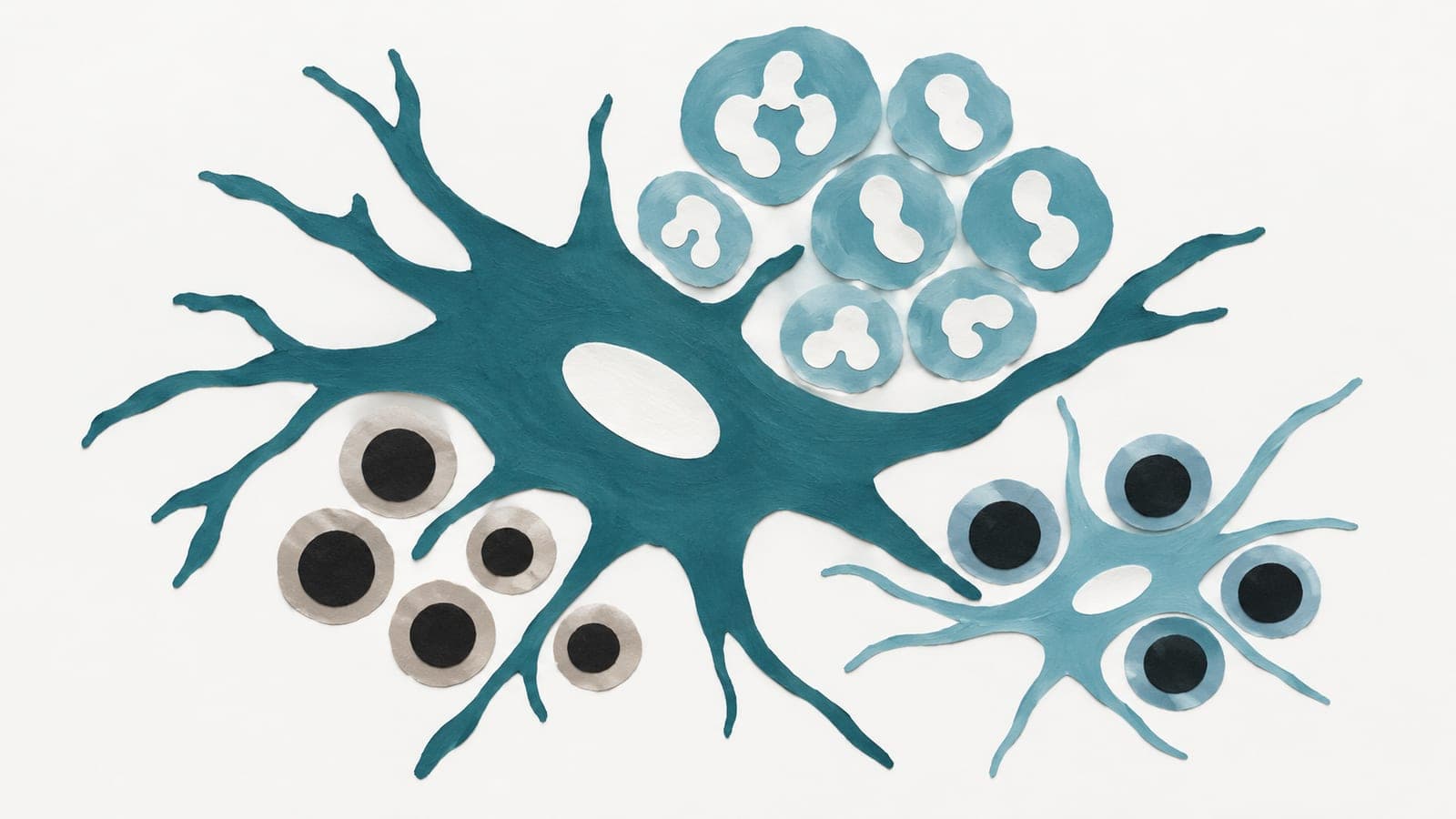
In cell experiments, researchers examined human bone marrow mesenchymal stromal cells, support cells that help maintain the environment where blood-forming stem cells live. Blood-forming stem cells produce blood cells throughout life, but their ability to function declines with age. Aged support cells contributed to a bias in young human blood-forming stem cells toward producing myeloid cells, a group that includes several types of immune cells.
The support cells also played a crucial role in protecting human blood-forming stem cells during stress associated with regeneration. This protective function was impaired with age.
Why it matters
Blood-forming stem cells lose functional capacity with age. This work addresses how their surroundings may contribute, alongside changes within the stem cells themselves.
Caveats
The findings came from cell experiments and do not establish effects in people. The work is a preprint and has not been peer-reviewed.
The paper
University of Ulm
bioRxiv, Oct 28, 2026, Open access, CC BY, Preprint, not peer-reviewed