Brain pigment accumulated with age in long-lived mole rats
Staining brain samples from mole rats of different ages revealed pigment accumulation beginning after two years of age.
Limit: The study included no comparison group of mice or rats
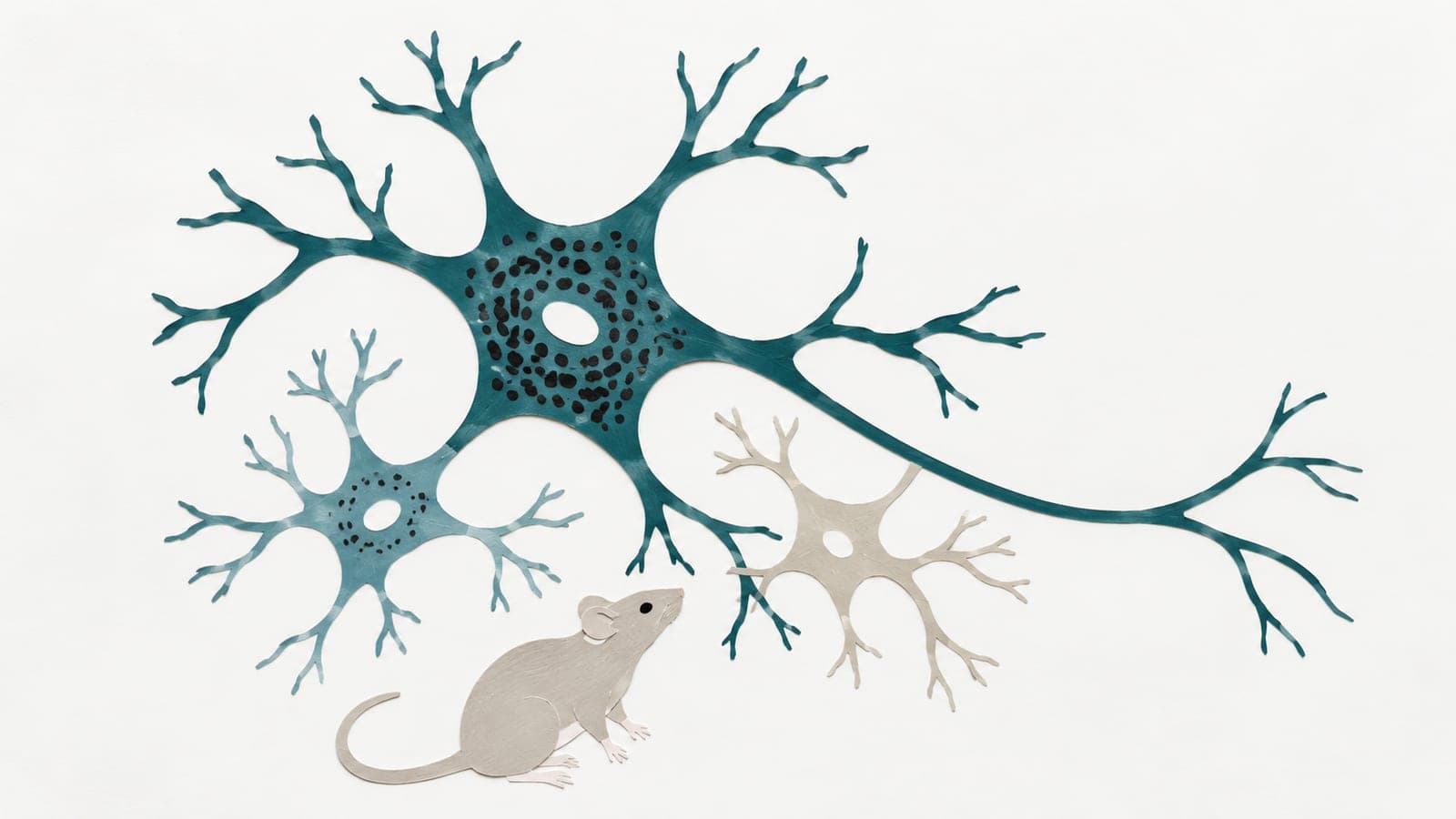
Researchers stained brain samples from mole rats of different ages to look for neuromelanin, a pigment found in some nerve cells. This animal study asked whether long-lived rodents accumulate the pigment, which remains undetectable in mouse and rat brains despite their having the machinery to make it.
The researchers found clear age-dependent accumulation beginning after two years of age. Neurons in the locus coeruleus, a brain region, had the highest pigmentation levels. The authors concluded that neuromelanin accumulates slowly and requires extended longevity to reach detectable levels. They attributed its absence in common laboratory rodents to their shorter lives.
Why it matters
Neuromelanin accumulation and release contribute to the loss of dopamine-producing nerve cells in Parkinson’s disease. The work addresses how lifespan might shape the build-up of this disease-linked pigment.
Caveats
Comparisons of stained mole rat brain samples do not by themselves establish why mice and rats lack detectable pigment. The work is a preprint, and the abstract did not report the sample size.
The paper
When longevity becomes chemistry: Why rodent brains lack neuromelanin
CNS Gene Therapy Program, Center for Applied Medical Research (CIMA), University of Navarra, Pamplona, Spain
bioRxiv, 16 Oct 2026, Open access, CC BY, Preprint, not peer-reviewed


