Brain weight shows no significant change in aging great apes
The study covered the full adult age range in chimpanzees, bonobos, gorillas and orangutans, including individuals of advanced age.
PNAS
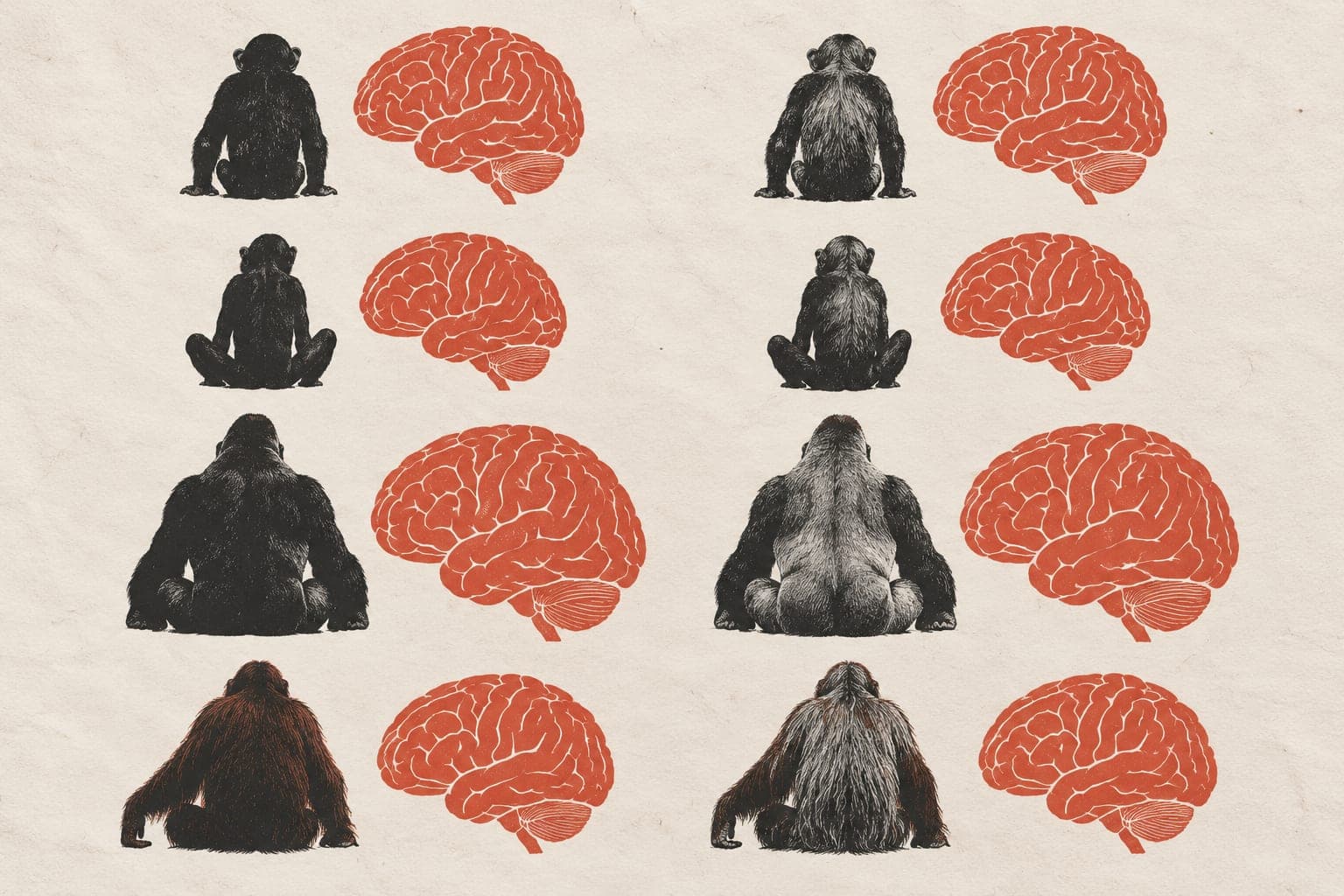
In chimpanzees, bonobos, gorillas and orangutans, brain weight showed no significant change across adulthood and into advanced age. Researchers examined age-related patterns across the full adult age range in each species. The sample included individuals reaching ages comparable to those at which age-related brain changes become apparent in humans.
The pattern held when researchers included body weight in an analysis of a subsample of chimpanzees. The findings indicate that marked brain weight loss is not a general feature of great ape aging and instead appears largely specific to humans. They address whether this feature of human aging reflects a shared primate aging process or a vulnerability particular to humans.
Why it matters
The findings suggest that comparisons with other great apes may help researchers understand human susceptibility to late-life brain pathology.
Caveats
Brain weight is a broad measure, not a complete assessment of brain aging. The abstract does not report sample sizes, limiting assessment of the finding of no significant change.
The paper
Brain weight across the adult lifespan in great apes
Show 8 more authors
Madison E Hillegas, Bridget Wicinski, Todd M Preuss, Patrick R Hof, Mary Ann Raghanti, Melissa K Edler, Elaine E Guevara, William D Hopkins,The George Washington University
PNAS · 5 Oct 2026