Recapitulating the notochord to nucleus pulposus transition from human mesendoderm progenitors in 3D
Abstract
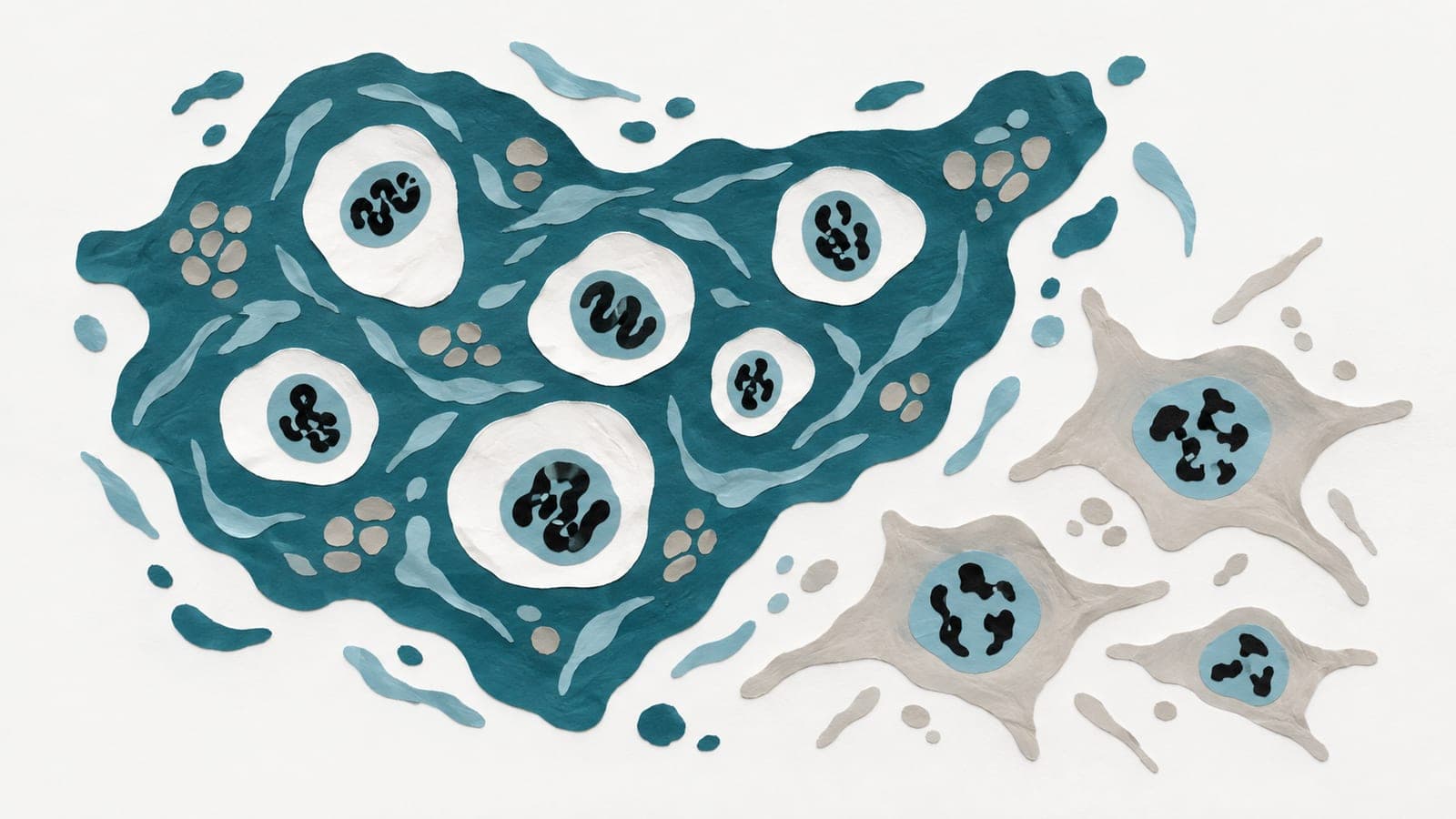
Intervertebral disc (IVD) degeneration, a major cause of low back pain, is driven by the disruption of nucleus pulposus (NP) tissue homeostasis. The NP arises from embryonic notochord cells that differentiate and adapt to the hypoxic, matrix-rich environment of the developing disc. Recapitulating the developmental trajectory from notochordal progenitors to NP-like cells in vitro remains challenging, as most protocols bypass early specification steps and fail to capture this understudied lineage. Here, using a three-dimensional (3D) system, we reconstruct this developmental path from human pluripotent stem cells into mesendoderm progenitor cells (MEPCs), notochord-like cells (NLCs), and NP-like cells, guided by single-cell transcriptomics and spatial profiling. We identify MEPCs as a distinct progenitor population with a unique gene signature and conserved regulatory networks (GSC, KLF8, LHX1, MIXL1) shared with early organizer and mesendodermal cells. Self-organization in MEPCs-derived aggregates induced spontaneous expression of NOTO, a key transcription factor orchestrating notochordal identity, and enhanced commitment to notochordal fate. Long-term culture in a medium containing TGF-{beta}1 and GDF-5 promoted maturation into SOX9+, KRT8+, CD109+ NP-like cells exhibiting robust matrix deposition and prominent LAMP1-positive intracytoplasmic vacuoles. This scalable, physiologically relevant model enables fundamental studies of human disc biology and early degenerative processes, while advancing regenerative strategies.
The paper
Inserm
bioRxiv, 6 Oct 2026, Open access, CC BY-NC, Preprint, not peer-reviewed