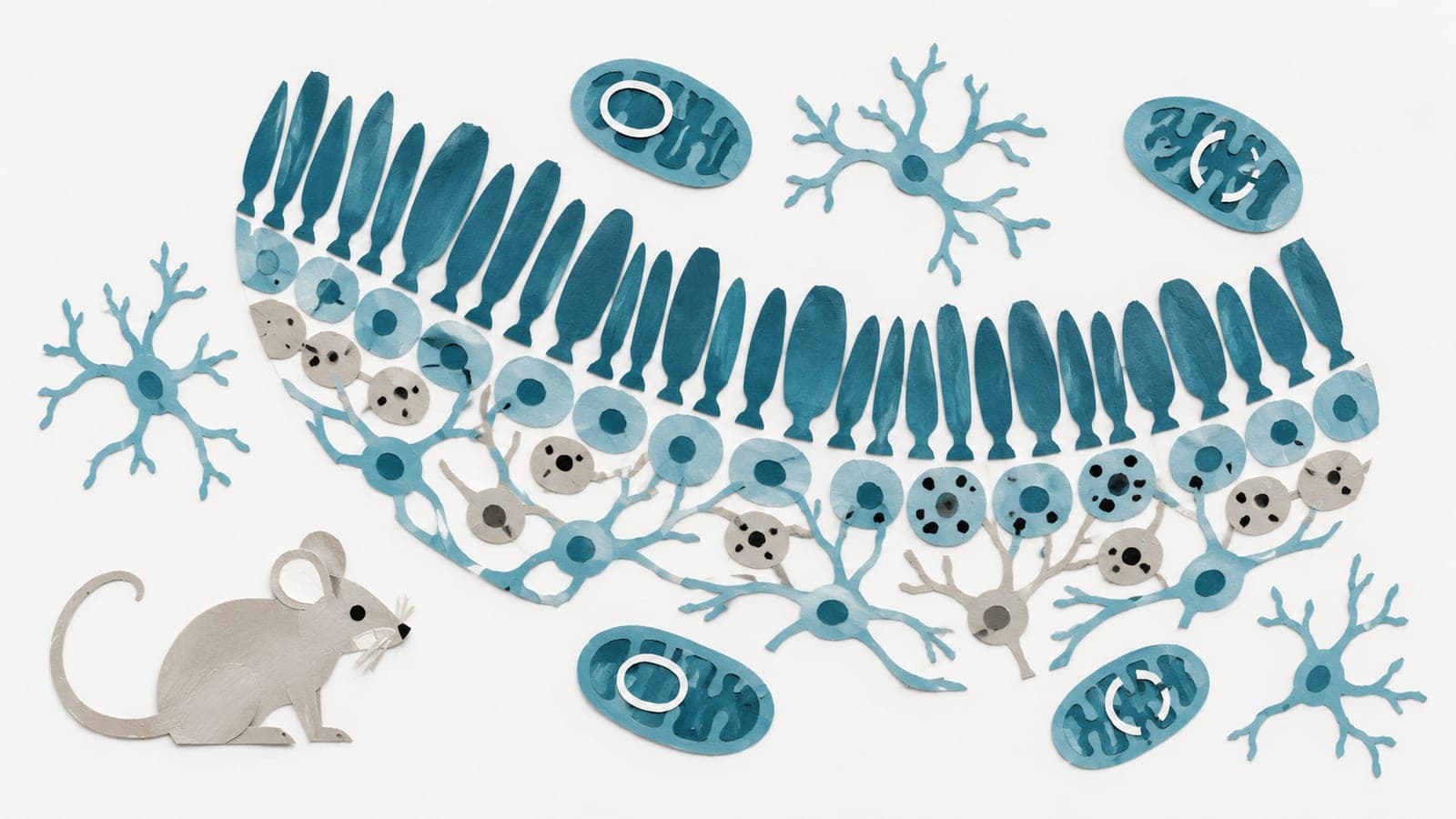
A new mouse model for a high-risk AMD variant, ARMS2A69S
Abstract
Age-related macular degeneration (AMD) is the leading cause of irreversible central vision loss in older adults. The highest genetic risk for AMD maps to Chromosome 10q26. However, due to strong linkage disequilibrium between two genes, ARMS2 and HTRA1 located in this region, it has been difficult to determine whether one or both genes contribute to the AMD-disease risk. Functional studies of ARMS2 have been hampered due to the lack of animal models, as orthologs are only found in the higher primates and the gene is absent in rodents. To model ARMS2 biology in vivo, we used CRISPR-Cas9 to insert the complete human ARMS2 gene carrying the A69S risk variant (rs10490924), into a region of homology between humans and mice, on mouse Chromosome 7, 3.5 kb upstream of Htra1, preserving its native promoter, spacing, and orientation. We also generated a mouse model bearing its wild-type counterpart ARMS2A69 (ARMS2WT). RNA analysis revealed tissue- and cell-type-specific pattern of ARMS2 expression enriched in neural tissues, testis, and eye, and within the eye, in retinal horizontal cells and the retinal pigment epithelium (RPE). ARMS2 expression was consistent with human expression data and unaltered by the A69S mutation. By 12 months, ARMS2A69S mice develop AMD-relevant phenotypes including increased fundus spots, A69S-specific thinning of the outer nuclear layer, and reduced scotopic ERG amplitudes. Transcriptomic profiling of postnatal day 14 retina and RPE-enriched fractions revealed reduced mitochondrial oxidative-phosphorylation genes, corroborated by reduced retinal mtDNA copy number and lower maximal respiration, alongside preliminary results that suggest sphingolipid remodeling in the RPE. This humanized model links the ARMS2 A69S variant to mitochondrial dysfunction and provides an in vivo platform for defining AMD mechanisms and testing therapies.
The paper
Jackson Laboratory
bioRxiv, 5 Oct 2026, Open access, CC BY, Preprint, not peer-reviewed