Model predicts disease from human gut microbe profiles
On excluded cohorts, disease-discrimination scores reached 0.838 for colorectal cancer, 0.736 for type 2 diabetes and 0.722 for inflammatory bowel disease.
Limit: Reported AUROCs omit sensitivity and specificity at a diagnostic threshold
Edited by Boris Djordjevic · AgingResearch.News
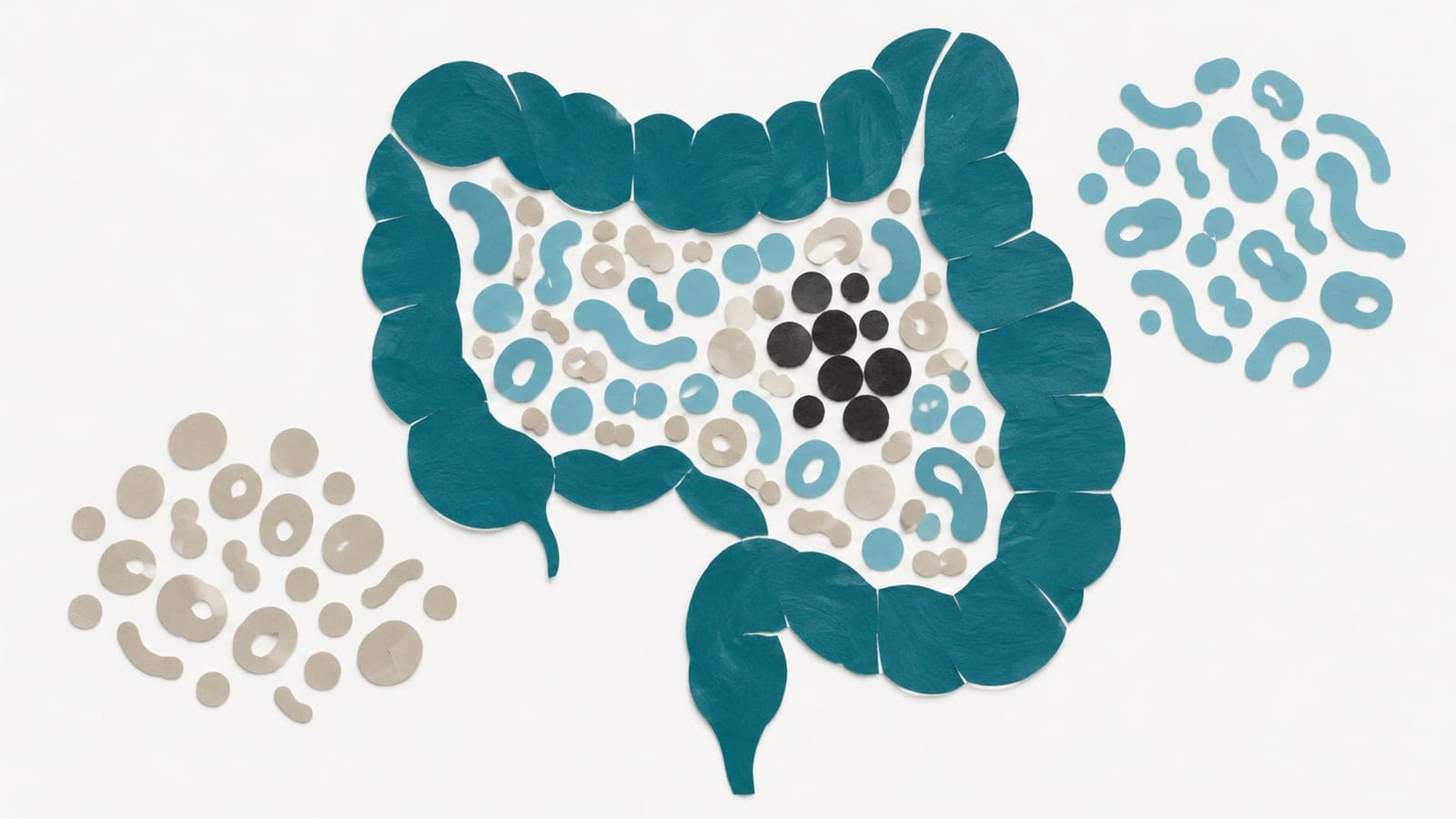
Researchers developed TaxoMFM, a computational model using profiles of the human gut microbiome—the community of microbes in the gut. They also assembled a dataset of 100,806 profiles from 231 source cohorts, covering 40 tasks that assigned profiles to categories and eight that predicted numerical values.
The model learned patterns in microbe abundance across levels of biological classification, as well as relative proportions within groups. It performed competitively in predicting disease, gut health, people's characteristics and liver ultrasound findings. For the disease-prediction results above, researchers excluded test cohorts from both initial learning and later task-specific training. The reported scores measured how well the model distinguished disease groups, not the proportion of correct predictions. Further analyses found that it captured changes in microbial communities across classification levels.
Why it matters
For aging research, the work bears on whether gut microbial patterns can help characterize age-related diseases, including colorectal cancer and type 2 diabetes.
Caveats
This computational analysis assessed prediction, not whether gut microbes caused disease or whether using the model improved care. The work is a preprint and has not been peer-reviewed.
- Foundation models
- Resources: datasets, atlases and tools
- Microbiome composition
- Colorectal cancer
- Type 2 diabetes
- Humans
The paper
TaxoMFM: A Taxonomy-Aware Foundation Model for the Human Gut Microbiome
arXiv, Oct 29, 2026, Open access, Preprint, not peer-reviewed