A fatty acid triggers death in cells that stopped dividing
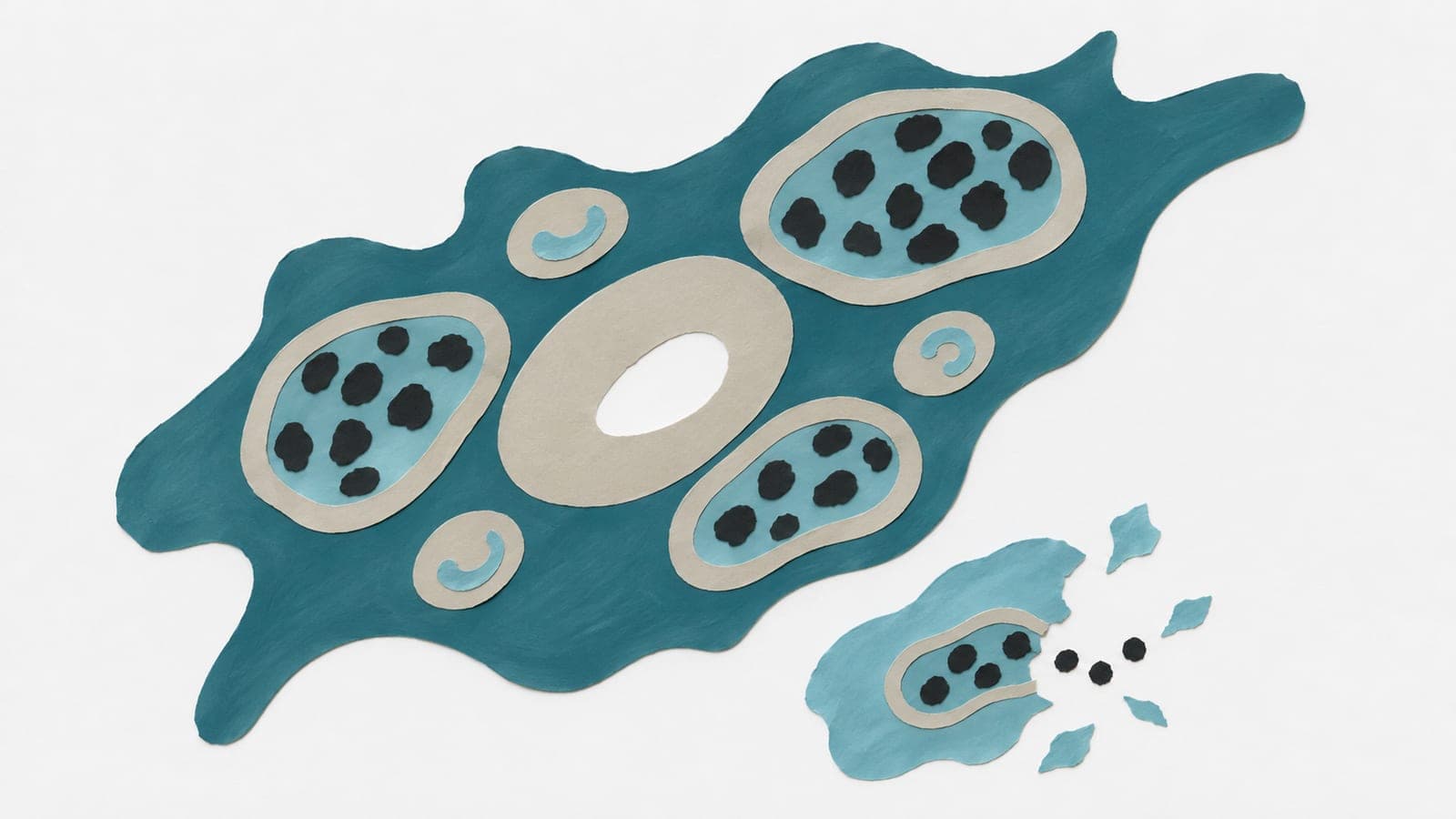
Laboratory experiments found that restoring one fatty acid caused senescent cells to die through an iron-dependent process called ferroptosis.

Our read
Interventions- Studied:
- Experiments in senescent cells
- What changed:
- Adding DGLA back caused senescent cells to die by ferroptosis
- The catch:
- Senescence markers were measured in mice; senescent cell elimination was not measured
- In the record:
- One of 8 papers on dihomo-gamma-linolenic acid on record: 1 with results in people, 4 in animals.
Editor of record: Boris Djordjevic · AgingResearch.News
Senescent cells—cells that have stopped dividing—imported more of several polyunsaturated fatty acids, a type of fat, and accumulated more in their membranes in laboratory experiments. But levels of one fatty acid, dihomo-gamma-linolenic acid (DGLA), fell. Adding DGLA back caused the cells to die by ferroptosis, a form of cell death involving iron and damage to membrane fats.
In aged mice, oral DGLA supplements lowered markers of senescence and improved age-related functional outcomes. In obese humans, lower rates of DGLA desaturation, a process that changes the fat’s chemical structure, were associated with lower senescence markers in fat tissue. The authors concluded that shifts in polyunsaturated fat metabolism help drive cells’ decisions between senescence and ferroptosis.
Why it matters
Senescence is one response to cell damage and stress. Understanding how cells choose it over cell death may inform research on how tissues maintain themselves during aging.
Caveats
Lower senescence markers in mice do not by themselves show that senescent cells were eliminated, and the human association does not show cause and effect. The abstract does not identify the cell types tested or report the mouse supplement dose, duration or specific functional outcomes.
The paper
Fatty acid desaturation controls cellular fate decisions between senescence and ferroptosis
Tufts University
Cell, Nov 2, 2026, Open access, CC BY-NC-ND

Comments
Be the first to comment.