Playing music shares genetic links with healthy aging
A genetic study of 23,782 people linked active music engagement to better cognition and motor function, but also higher mood disorder risk.
Limit: The analysis was limited to participants with genetically inferred European ancestry
Edited by Boris Djordjevic · AgingResearch.News
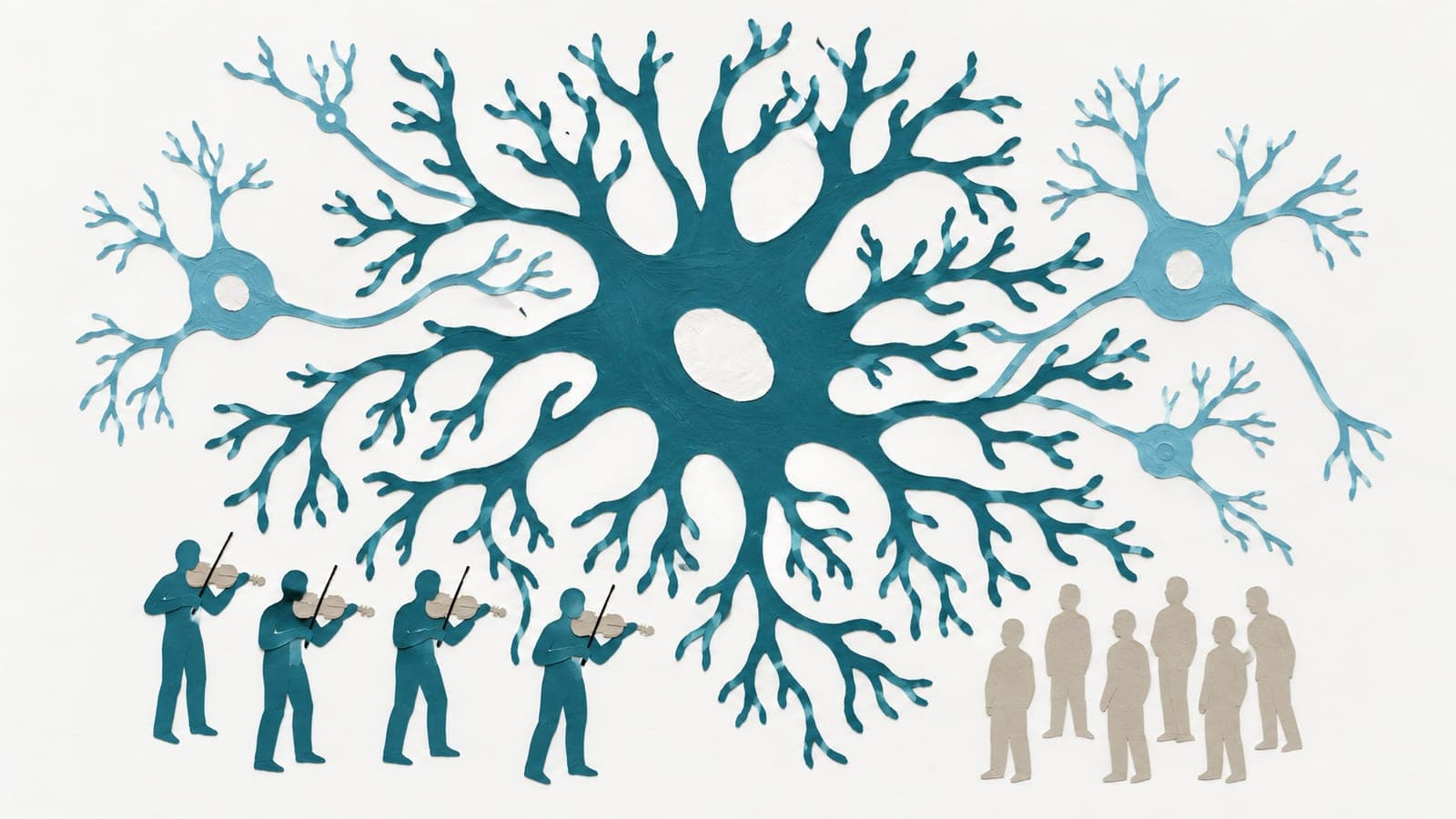
In a preprint study, researchers analyzed genetic data from 23,782 people with genetically inferred European ancestry from the Canadian Longitudinal Study on Aging. The genome-wide association study examined active music engagement, defined as playing an instrument or singing. Common genetic variants accounted for an estimated 11% of the variation in music engagement frequency, pointing to 21 suggestive genetic regions. These regions showed enrichment in regulatory areas of adult brain cells, specifically for astrocytes, which support nerve cells. Genetic correlation analyses linked active music engagement to enhanced cognition, motor function, social engagement, and resilience to psychological distress, but also to an increased risk of mood disorders. In addition, an analysis suggested that a genetic propensity for rhythm makes people more likely to play music or sing.
Why it matters
Active music engagement may support resilience against age-related decline. These findings suggest that the biological processes underlying musical activity share common pathways with healthy aging, particularly in brain cell regulation.
Caveats
The paper is a preprint that has not yet been peer-reviewed. The findings reflect genetic correlations rather than proof of a direct protective effect, and the analysis was limited to participants with genetically inferred European ancestry.
The paper
GWAS of Active Music Engagement Frequency in the Canadian Longitudinal Study on Aging
University of Colorado Boulder; Vanderbilt University Medical Center
Research Square, Oct 21, 2026, Open access, Preprint, not peer-reviewed