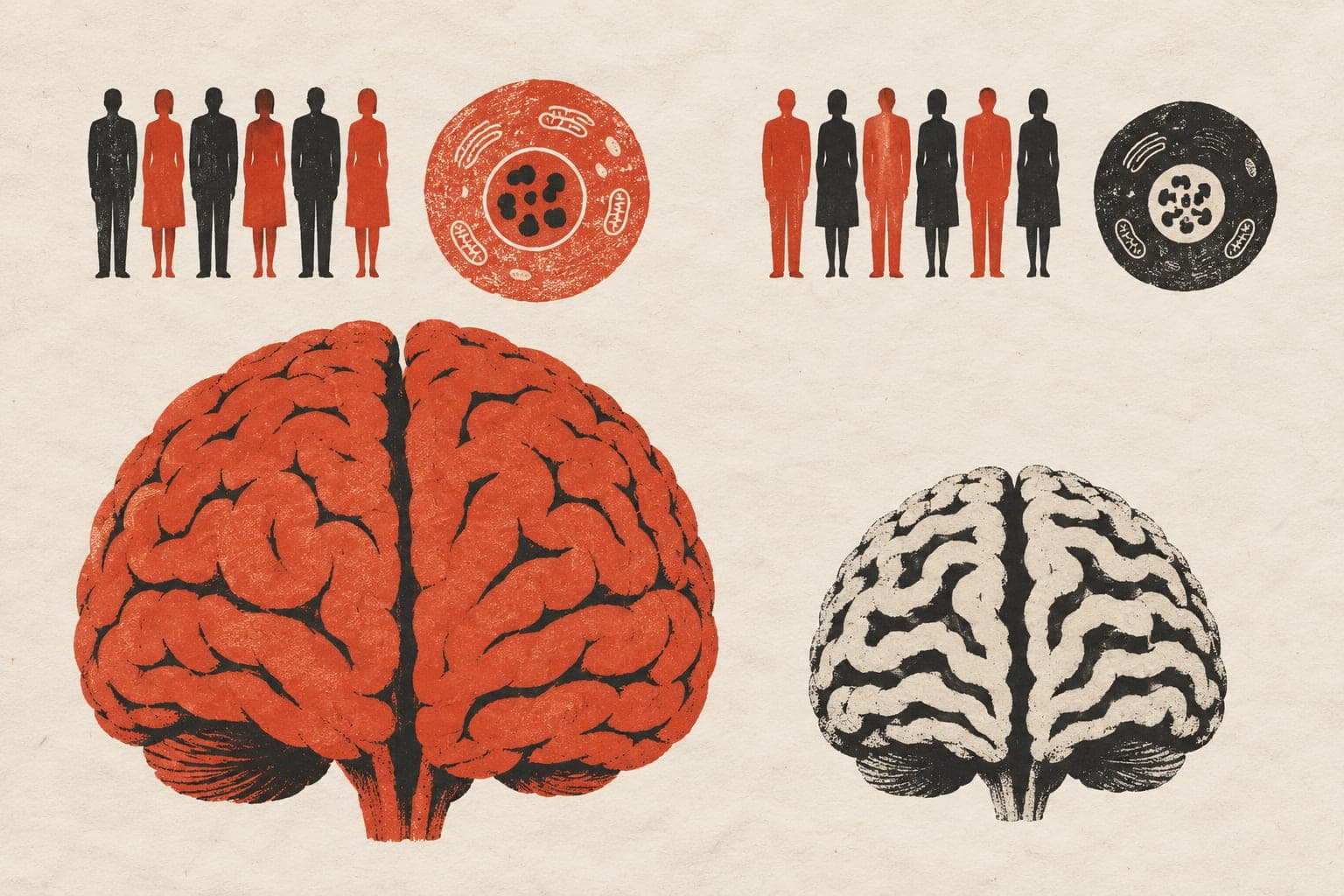
Estimates of genetic effects across age differ by study design
Comparing people at different ages and tracking the same people over time agreed on effect direction for 84.21% of 57 identified DNA variants.
Nature Aging
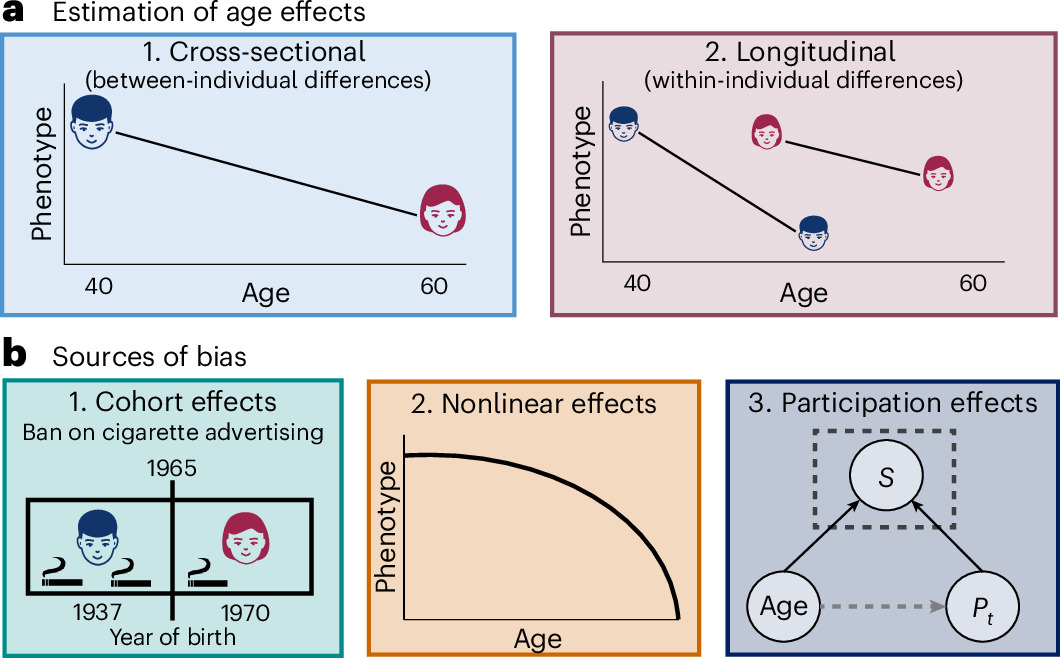
In an observational analysis of human traits, researchers compared two approaches to estimating how genetic effects varied with age. One was cross-sectional, comparing different people at different ages. The other was longitudinal, tracking changes within the same people. The designs agreed on the direction of effects for 84.21% of 57 identified DNA variants, but agreement on their size was moderate.
Among these variants, genetic effects linked to birth year accounted for 70.8% of the variation in effect-size differences between designs. Bias related to who took part accounted for another 11.6%. Age-related changes that did not follow a straight line and were left out of the models contributed 4.2%. The researchers recommended combining both designs to make more reliable estimates.
Why it matters
Understanding how genetic influences on traits change over the lifespan is a central question in aging research. The paper addresses how researchers can distinguish age-related patterns from differences between generations.
Caveats
Neither approach was immune to design-specific limitations. Differences between estimates from the two designs were driven principally by cohort confounding and participation bias.
The paper
Design and model choices shape inference of age-varying genetic effects on complex traits
University of Lausanne
Nature Aging · 6 Oct 2026